
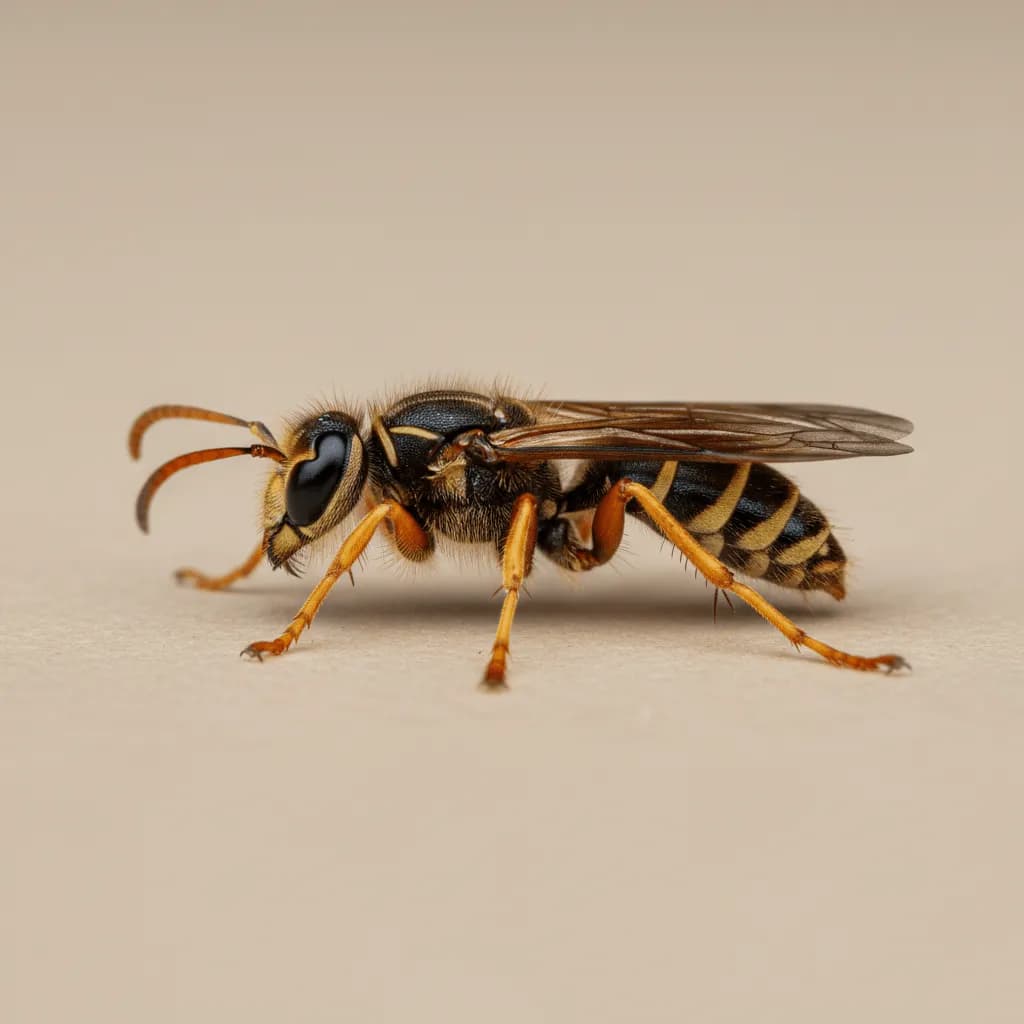
Great Golden Digger Wasp
Sphex ichneumoneus
Also known as: Golden Digger Wasp
The Great Golden Digger Wasp is a large, strikingly colored solitary wasp that nests in the ground. Despite its imposing size and appearance, it is not aggressive toward humans and stings only when directly handled. Females dig burrows in sandy soil and stock them with paralyzed grasshoppers, katydids, and crickets as food for their larvae.
Identification
Size
18-25 mm
Color
Orange-red thorax and legs with a black head and black-and-orange banded abdomen; golden hairs on head and thorax
Key Trait
Large solitary wasp with bright orange coloration; digs burrows in sandy or loose soil; non-aggressive despite intimidating appearance; provisions nest with paralyzed katydids and crickets.
Behavior & Habitat
Solitary nesting females dig burrows in sandy or loose soil, often in pathways, garden beds, and sandy areas. Hunts katydids and crickets, paralyzing them with a sting and dragging them to the burrow. Males patrol territories but cannot sting. Non-aggressive toward humans.
Habitat: Sandy or loose soil in yards, garden beds, pathways, playgrounds, and along sidewalks. Open sunny areas with exposed soil are preferred nesting sites.
Diet: Adults feed on flower nectar. Larvae consume paralyzed katydids, crickets, and grasshoppers provided by the mother.
Signs of Infestation
- Large orange-and-black wasps hovering low over sandy soil areas
- Small mounds of excavated soil with finger-width burrow entrances in lawns or garden beds
- Wasps carrying large paralyzed grasshoppers or katydids across the ground
Risks & Damage
Their large size and conspicuous digging activity cause alarm, though they are not aggressive and are beneficial predators of pest insects.
Prevention Tips
- 1.Maintain dense turf grass or mulch cover to eliminate bare sandy soil areas
- 2.Water bare soil areas regularly to make them unsuitable for nesting
- 3.Understand that these wasps are beneficial and generally do not require control
Why DIY Treatment Often Falls Short
These wasps are solitary and beneficial; killing individuals does not address the site conditions (bare sandy soil) that attract them. Chemical treatments are unnecessary and harm beneficial insects.
Professional Treatment
Professional intervention is rarely needed. When nesting locations conflict with high-traffic areas, professionals recommend habitat modification by covering bare soil with mulch, sod, or ground cover plants rather than chemical treatment.
Frequently Asked Questions
Will this wasp sting me?
Why are they digging in my yard?
Should I kill them?
Need Help With Great golden digger wasp?
If you're seeing signs of great golden digger wasp in or around your home, professional treatment is the fastest way to stop the problem. Lotus Pest Control offers free inspections to identify the issue and recommend the right solution.
At a Glance
- Category
- Stinging Insects
- Scientific Name
- Sphex ichneumoneus
- Size
- 18-25 mm
- Color
- Orange-red thorax and legs with a black head and black-and-orange banded abdomen; golden hairs on head and thorax
- Key Trait
- Large solitary wasp with bright orange coloration; digs burrows in sandy or loose soil; non-aggressive despite intimidating appearance; provisions nest with paralyzed katydids and crickets.
- Regions
- Southeast, Midwest, Northeast, Great Plains, Mid Atlantic, Southwest
- Threat Level
- Very Low
- Risk Types
- nuisance
- Seasonal Activity
- MarAprMayJunJulAugSepOctNovDecJanFebnonelowmoderatehighpeak