
Thief Ants
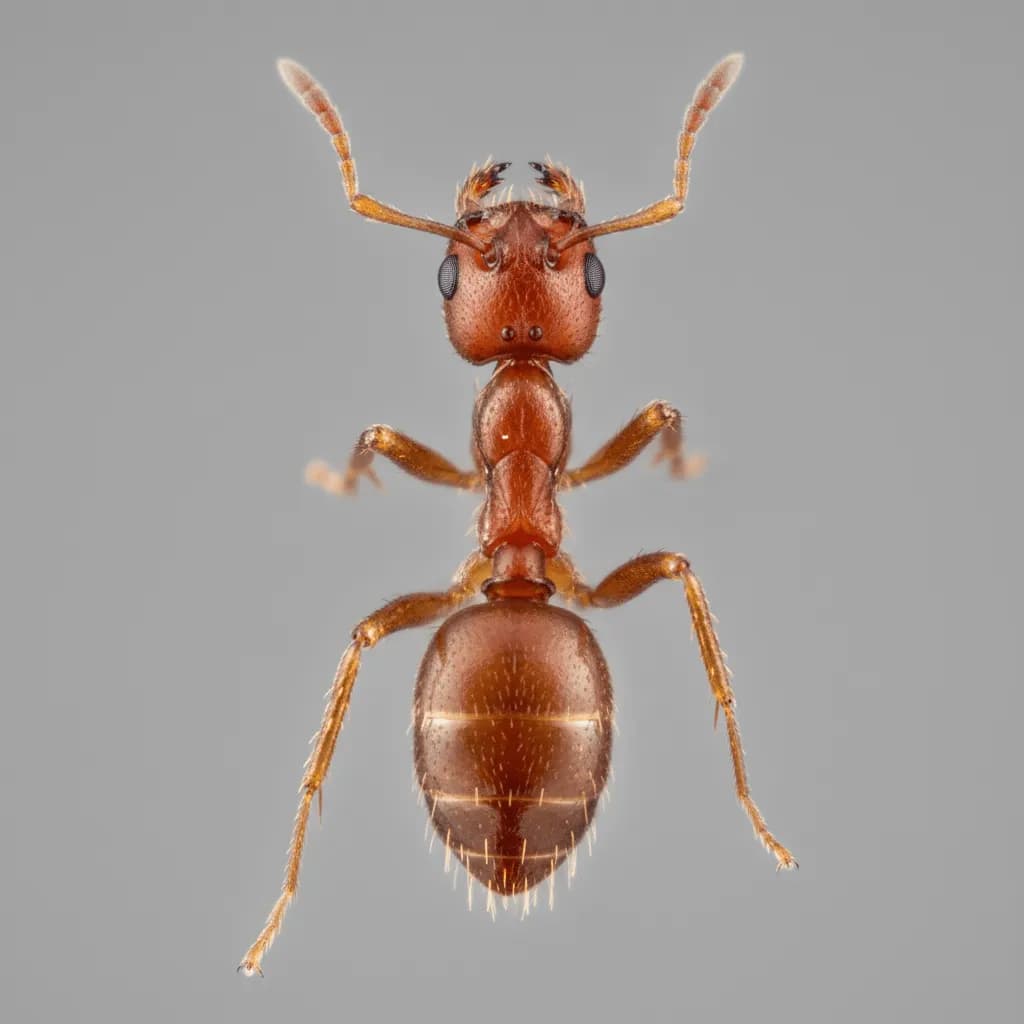
Thief ants are among the smallest household-invading ants, measuring just 1 to 1.5 mm long. They get their name from their habit of nesting near larger ant species and stealing their food and brood. Their extremely small size allows them to enter packaging and containers that exclude larger ant species, making them a particular nuisance in kitchens and pantries. Colonies can contain multiple queens and up to several hundred thousand workers. They are frequently misidentified as pharaoh ants due to their similar size and color.
Species in This Group (1)
Key Behaviors
Thief ants prefer high-protein and greasy foods, unlike most other household ants that prefer sweets. They trail along baseboards, countertops, and inside cabinets, often entering food packaging through seams and folds. Their tiny size allows them to pass through mesh screens and seal gaps that stop other ant species.
Risks & Concerns
Thief ants contaminate food products and are mechanical vectors for bacteria. Their small size makes them extremely difficult to exclude from food storage areas. They can be confused with pharaoh ants, leading to misapplied treatments that fail to address the infestation.
Identification Tip
Distinguished from pharaoh ants by their 10-segmented antennae with a 2-segmented club (pharaoh ants have 12 segments with a 3-segmented club). Thief ants prefer greasy and protein-based baits rather than the sweet baits that attract most other species.
Need Help With Thief ants?
If you're seeing signs of thief ants in or around your home, professional treatment is the fastest way to stop the problem. Lotus Pest Control offers free inspections to identify the issue and recommend the right solution.