
Chiggers
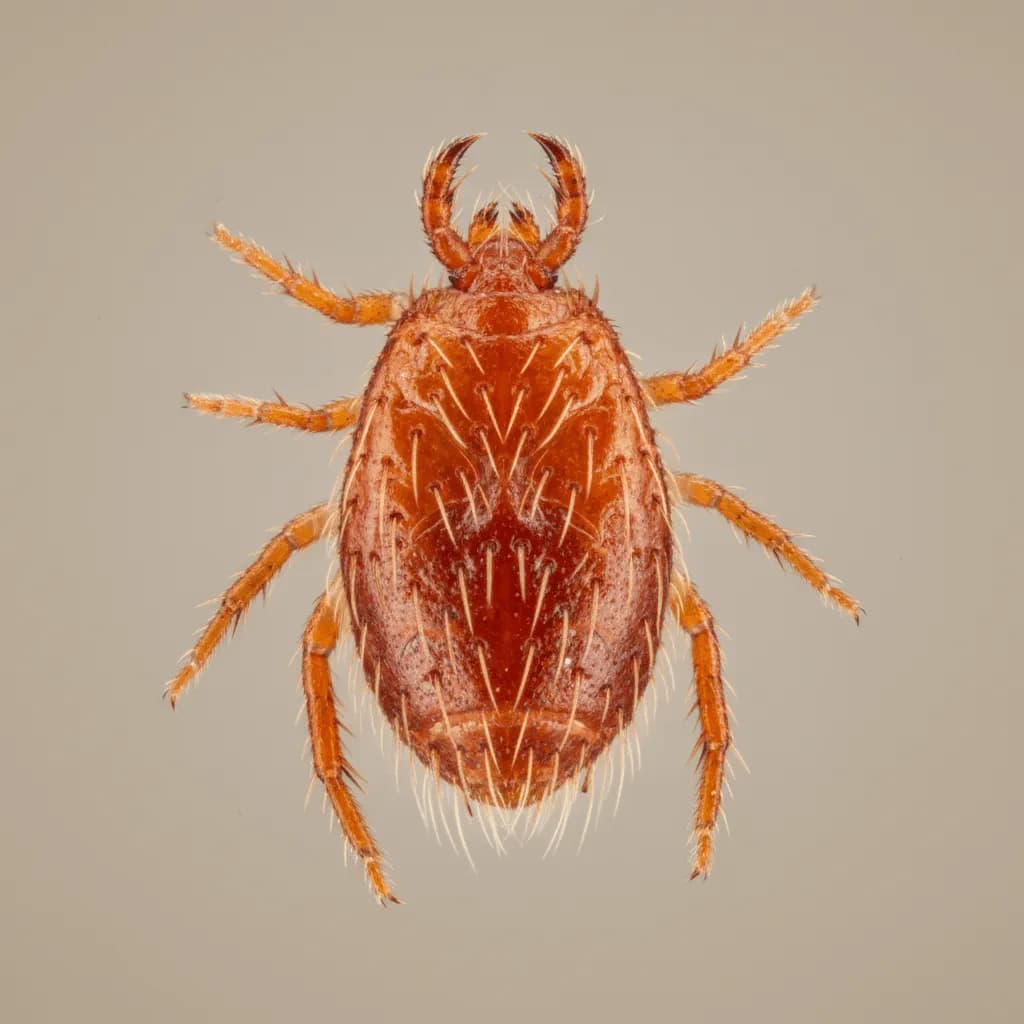
Chiggers are the larval stage of trombiculid mites that are common in grassy, weedy, and wooded areas throughout the southeastern and central United States. They are nearly microscopic, measuring less than 1/150 of an inch, and are orange to red in color. Only the six-legged larval stage feeds on hosts, attaching to skin in areas where clothing is tight - waistbands, sock lines, and groin areas. They inject digestive enzymes that dissolve skin cells, which they consume through a feeding tube called a stylostome. Adults and nymphs are free-living predators that feed on insect eggs.
Species in This Group (1)
Key Behaviors
Chigger larvae climb to the tips of grass and low vegetation and transfer to passing hosts. They cluster in areas where clothing presses against skin and attach to skin, but they do not burrow into the skin as commonly believed. They feed for several hours and then drop off. The intense itching does not begin until several hours after attachment as the body reacts to the digestive enzymes and stylostome. Peak chigger season is late spring through early fall.
Risks & Concerns
Chigger bites produce intensely itchy, red welts that persist for days to weeks and are among the itchiest of all arthropod bites. Scratching can lead to secondary infection. Dozens of bites in a single exposure are common. In the United States, chiggers do not transmit disease, though related species in Asia transmit scrub typhus. Tucking pants into socks, using DEET or permethrin on clothing, and showering promptly after outdoor activity are effective prevention measures.
Need Help With Chiggers?
If you're seeing signs of chiggers in or around your home, professional treatment is the fastest way to stop the problem. Lotus Pest Control offers free inspections to identify the issue and recommend the right solution.