
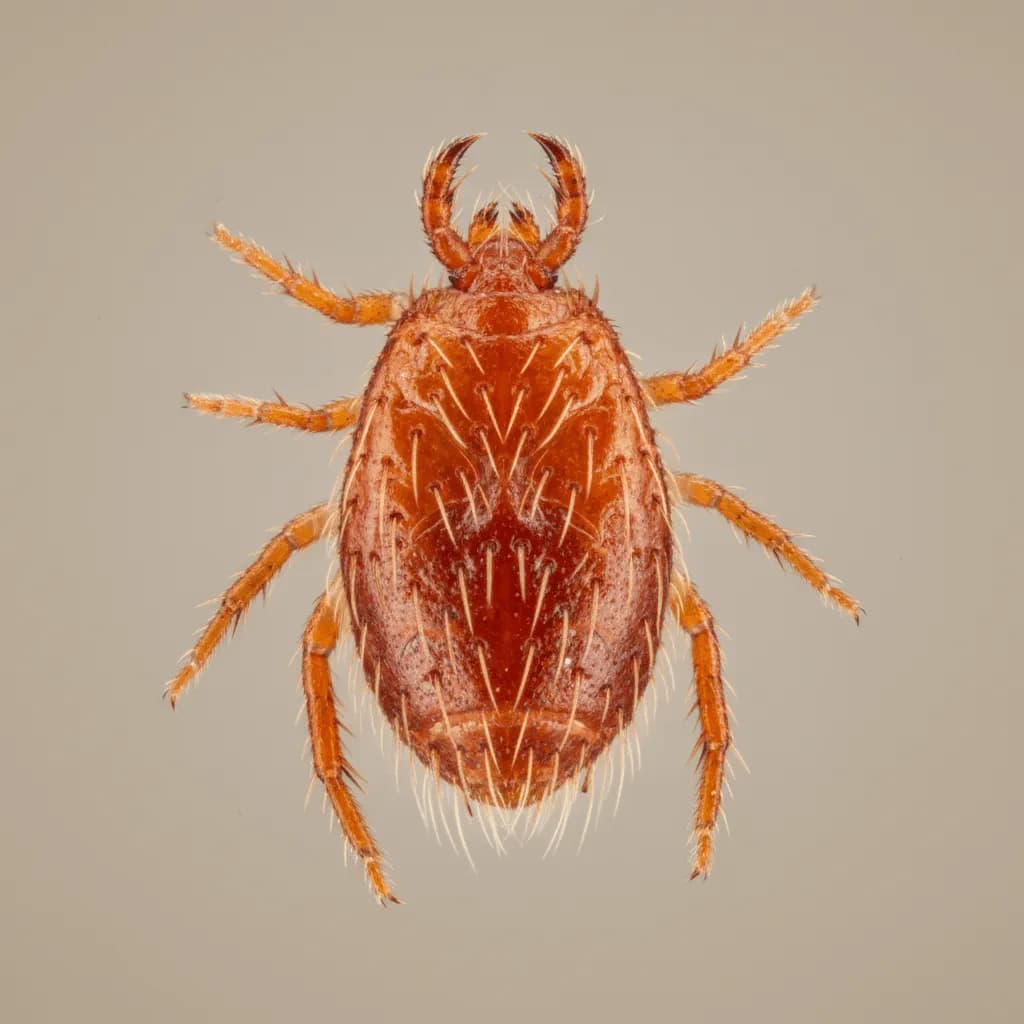
Chigger
Trombicula alfreddugesi
Also known as: Red Bug, Harvest Mite, Berry Bug
Chiggers are the larval stage of trombiculid mites and are among the most common causes of intensely itchy bites in the southeastern and central United States. Contrary to popular belief, they do not burrow into skin or feed on blood. Instead, they inject enzymes that dissolve skin cells, which they then consume through a hardened feeding tube called a stylostome.
Identification
Size
0.15-0.3 mm (larval stage that bites); barely visible to the naked eye
Color
Bright red to orange-red (larval stage)
Key Trait
Microscopic bright red larvae; only the larval stage feeds on humans. Does not burrow into skin but injects digestive enzymes that dissolve tissue, creating a stylostome (feeding tube) that causes intense itching.
Behavior & Habitat
Larvae climb vegetation and attach to passing hosts at ground level. They migrate to areas where clothing is tight against the skin (waistband, sock line, underarms). After 3-4 days of feeding, they drop off and molt into predatory nymphs and adults that pose no threat to humans.
Habitat: Tall grass, weedy fields, berry patches, forest edges, and any overgrown vegetation in warm, humid environments. Most abundant in transitional zones between wooded and open areas.
Diet: Larvae feed on dissolved skin cells of humans, reptiles, birds, and small mammals. Nymphs and adults are predators of small arthropods and insect eggs.
Signs of Infestation
- Intensely itchy red welts appearing 3-6 hours after outdoor activity in grassy areas
- Clusters of bites around the waistband, ankles, and areas where clothing is tight
- Bright red specks visible on skin or clothing immediately after walking through infested vegetation
Risks & Damage
Causes extremely intense itching that can last 1-2 weeks. Scratching can lead to secondary bacterial infections.
Prevention Tips
- 1.Apply sulfur-based repellent or DEET to skin and clothing before entering grassy areas
- 2.Shower and scrub with a washcloth immediately after outdoor activity in infested areas
- 3.Tuck pants into socks and wear long sleeves when walking through tall grass
Why DIY Treatment Often Falls Short
Chiggers inhabit vast areas of vegetation and are reintroduced continuously by wildlife. Yard sprays offer only temporary reduction and cannot treat the broader landscape where exposure often occurs.
Professional Treatment
Professionals apply residual acaricides to lawns, field edges, and transition zones during peak activity. Habitat modification including mowing, brush removal, and reducing ground moisture significantly decreases chigger populations in the treated area.
Related Pests
Frequently Asked Questions
Do chiggers burrow under the skin?
Does nail polish or bleach kill chiggers?
When are chiggers most active?
Need Help With Chigger?
If you're seeing signs of chigger in or around your home, professional treatment is the fastest way to stop the problem. Lotus Pest Control offers free inspections to identify the issue and recommend the right solution.
At a Glance
- Category
- Fleas And Ticks
- Scientific Name
- Trombicula alfreddugesi
- Size
- 0.15-0.3 mm (larval stage that bites); barely visible to the naked eye
- Color
- Bright red to orange-red (larval stage)
- Key Trait
- Microscopic bright red larvae; only the larval stage feeds on humans. Does not burrow into skin but injects digestive enzymes that dissolve tissue, creating a stylostome (feeding tube) that causes intense itching.
- Regions
- Southeast, Gulf Coast, Midwest, Mid Atlantic, Great Plains, Southwest
- Threat Level
- Low
- Risk Types
- nuisance
- Seasonal Activity
- MarAprMayJunJulAugSepOctNovDecJanFebnonelowmoderatehighpeak