
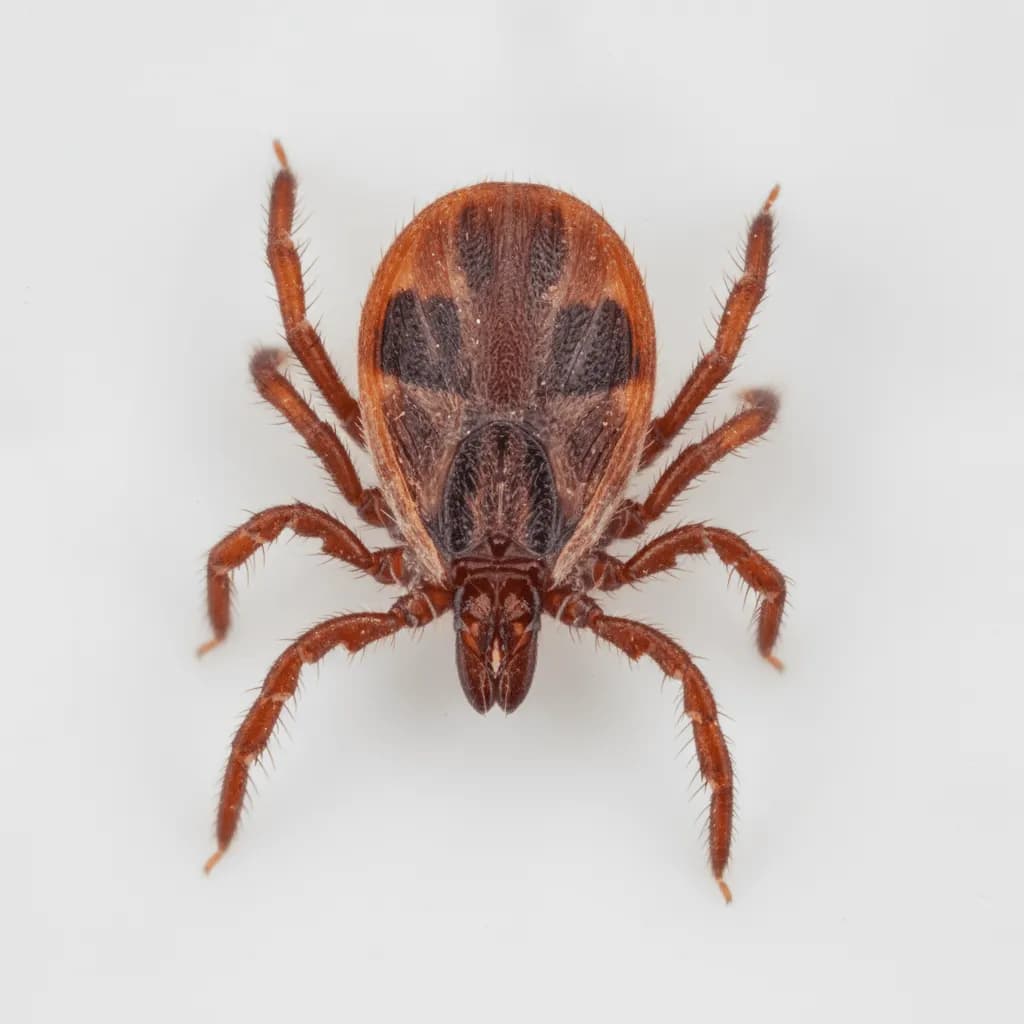
American Dog Tick
Dermacentor variabilis
Also known as: Wood Tick
The American Dog Tick is one of the most frequently encountered ticks in the eastern two-thirds of the United States. It is the primary vector of Rocky Mountain spotted fever east of the Rockies and can also transmit tularemia. Dogs are the preferred adult host, but it readily feeds on humans.
Identification
Size
5 mm unfed, up to 15 mm engorged
Color
Brown with white or yellowish mottled markings on the dorsal shield
Key Trait
Ornate white mottled pattern on the scutum (dorsal shield); one of the most commonly encountered ticks in the eastern United States. Larger than blacklegged ticks.
Behavior & Habitat
A three-host tick that quests on vegetation with outstretched front legs waiting for passing hosts. Larvae and nymphs feed on small rodents while adults target larger mammals including dogs and humans. Can survive up to two years without feeding.
Habitat: Grassy fields, meadows, roadsides, trails, and the margins between wooded areas and open land. Most commonly encountered along paths and trails frequented by dogs and hikers.
Diet: Blood from dogs, humans, deer, raccoons, and rodents at various life stages.
Signs of Infestation
- Ticks found attached to dogs after outdoor activity, especially around ears and between toes
- Engorged ticks discovered on clothing or skin after hiking
- Multiple ticks found in a yard or along property edges near tall grass
Risks & Damage
Primary vector of Rocky Mountain spotted fever (Rickettsia rickettsii) and tularemia (Francisella tularensis) in the eastern U.S.
Heavy infestations on dogs cause blood loss, irritation, and risk of tick-borne disease transmission.
Prevention Tips
- 1.Keep grass mowed short and remove brush along property edges
- 2.Apply tick prevention products to dogs as recommended by a veterinarian
- 3.Wear long pants and use DEET or permethrin-based repellents when hiking
Why DIY Treatment Often Falls Short
Yard sprays provide only temporary relief as ticks are continually reintroduced by wildlife. Without addressing the habitat and wildlife corridors, tick populations persist.
Professional Treatment
Professionals apply targeted acaricides to tick habitat zones, focusing on yard perimeters, trails, and transition areas between woods and lawn. Habitat modification recommendations reduce long-term tick pressure.
Related Pests
Frequently Asked Questions
Do American dog ticks carry Lyme disease?
When are American dog ticks most active?
How do I safely remove a tick?
Need Help With American dog tick?
If you're seeing signs of american dog tick in or around your home, professional treatment is the fastest way to stop the problem. Lotus Pest Control offers free inspections to identify the issue and recommend the right solution.
At a Glance
- Category
- Fleas And Ticks
- Scientific Name
- Dermacentor variabilis
- Size
- 5 mm unfed, up to 15 mm engorged
- Color
- Brown with white or yellowish mottled markings on the dorsal shield
- Key Trait
- Ornate white mottled pattern on the scutum (dorsal shield); one of the most commonly encountered ticks in the eastern United States. Larger than blacklegged ticks.
- Regions
- Southeast, Mid Atlantic, Northeast, Midwest, Great Plains, Gulf Coast
- Threat Level
- Moderate
- Risk Types
- healthpets
- Seasonal Activity
- MarAprMayJunJulAugSepOctNovDecJanFebnonelowmoderatehighpeak