
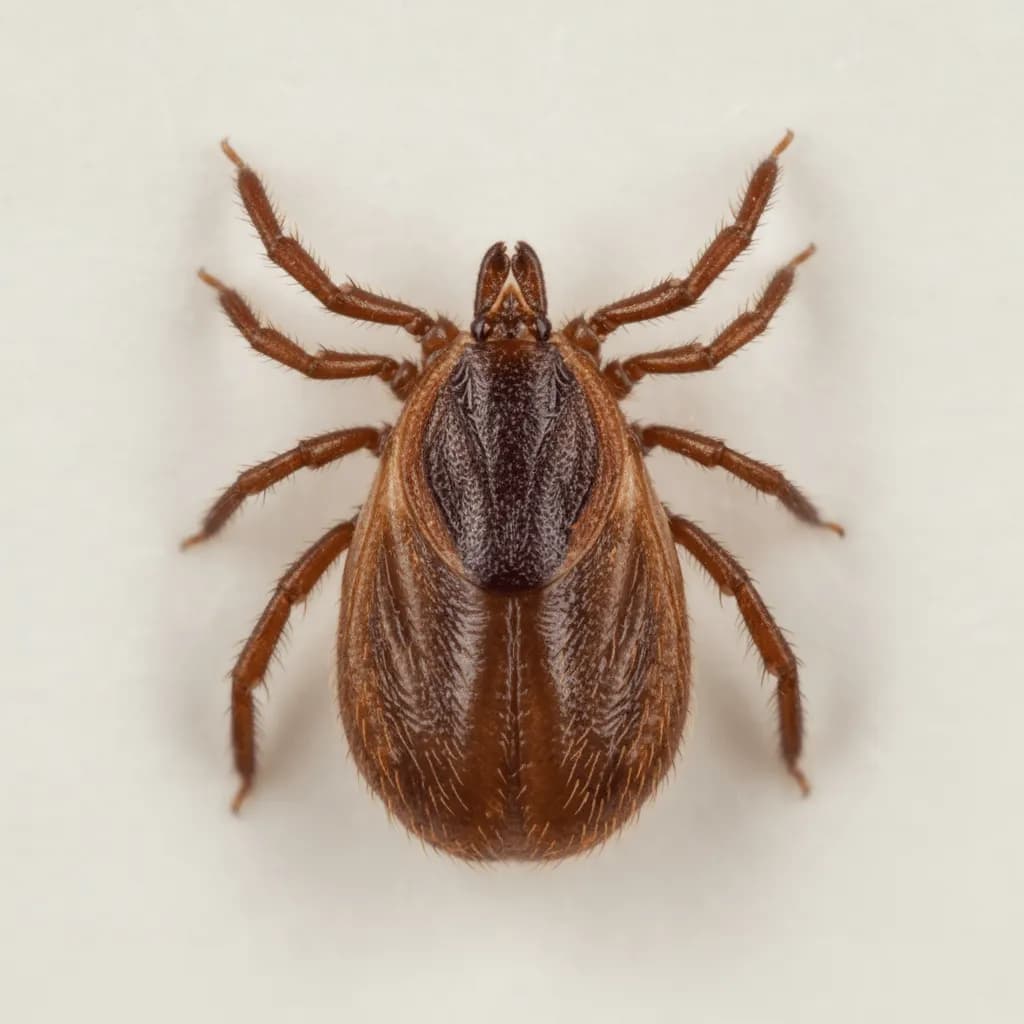
Brown Dog Tick
Rhipicephalus sanguineus
Also known as: Kennel Tick
The Brown Dog Tick is unique among North American ticks in its ability to complete its entire life cycle indoors, making it a serious pest of homes and kennels. It feeds almost exclusively on dogs and can establish massive indoor infestations. While it rarely bites humans, it can transmit Rocky Mountain spotted fever in the southwestern U.S. and along the U.S.-Mexico border.
Identification
Size
3-5 mm unfed, up to 12 mm engorged
Color
Uniformly reddish-brown with no ornate markings
Key Trait
Uniformly brown with no white markings or patterns; the only tick species in North America that can complete its entire life cycle indoors. Readily infests kennels and homes.
Behavior & Habitat
All life stages prefer dogs as hosts. After feeding, ticks crawl into cracks, behind baseboards, and into wall voids to molt or lay eggs. A single female lays up to 5,000 eggs, enabling explosive indoor population growth. Climbs walls and ceilings seeking hosts.
Habitat: Dog kennels, veterinary clinics, homes with dogs, and sheltered outdoor areas. Can complete its entire life cycle indoors in cracks, crevices, wall voids, and behind baseboards.
Diet: Blood from dogs almost exclusively; rarely feeds on humans or other mammals.
Signs of Infestation
- Ticks crawling on walls, ceilings, and curtains inside the home
- Numerous ticks found on dogs, especially around ears and between toes
- Clusters of ticks hiding behind baseboards, in door frames, and in furniture crevices
Risks & Damage
Causes anemia, skin irritation, and transmits canine ehrlichiosis and babesiosis to dogs.
Can transmit Rocky Mountain spotted fever to humans in the southwestern U.S., particularly in Native American communities.
Prevention Tips
- 1.Inspect dogs regularly for ticks, especially after visits to kennels or dog parks
- 2.Maintain consistent tick prevention treatment on all household dogs
- 3.Seal cracks around baseboards, door frames, and window casings to eliminate harborage
Why DIY Treatment Often Falls Short
Brown dog ticks hide deep inside wall voids, behind baseboards, and in structural crevices where sprays cannot reach. Their enormous reproductive capacity means missed pockets quickly repopulate the entire home.
Professional Treatment
Professionals apply residual acaricides to all cracks, crevices, baseboards, and wall voids throughout the home. Treatment of the dog with veterinarian-prescribed acaricides is conducted simultaneously. Multiple follow-up treatments spaced 2-3 weeks apart are needed to address emerging life stages.
Related Pests
Frequently Asked Questions
Can brown dog ticks really infest my entire house?
Will brown dog ticks bite me?
How do I prevent reinfestation?
Need Help With Brown dog tick?
If you're seeing signs of brown dog tick in or around your home, professional treatment is the fastest way to stop the problem. Lotus Pest Control offers free inspections to identify the issue and recommend the right solution.
At a Glance
- Category
- Fleas And Ticks
- Scientific Name
- Rhipicephalus sanguineus
- Size
- 3-5 mm unfed, up to 12 mm engorged
- Color
- Uniformly reddish-brown with no ornate markings
- Key Trait
- Uniformly brown with no white markings or patterns; the only tick species in North America that can complete its entire life cycle indoors. Readily infests kennels and homes.
- Regions
- Southwest, Southeast, Gulf Coast, West Coast, Mid Atlantic, Midwest
- Threat Level
- Moderate
- Risk Types
- petshealthnuisance
- Seasonal Activity
- MarAprMayJunJulAugSepOctNovDecJanFebnonelowmoderatehighpeak