
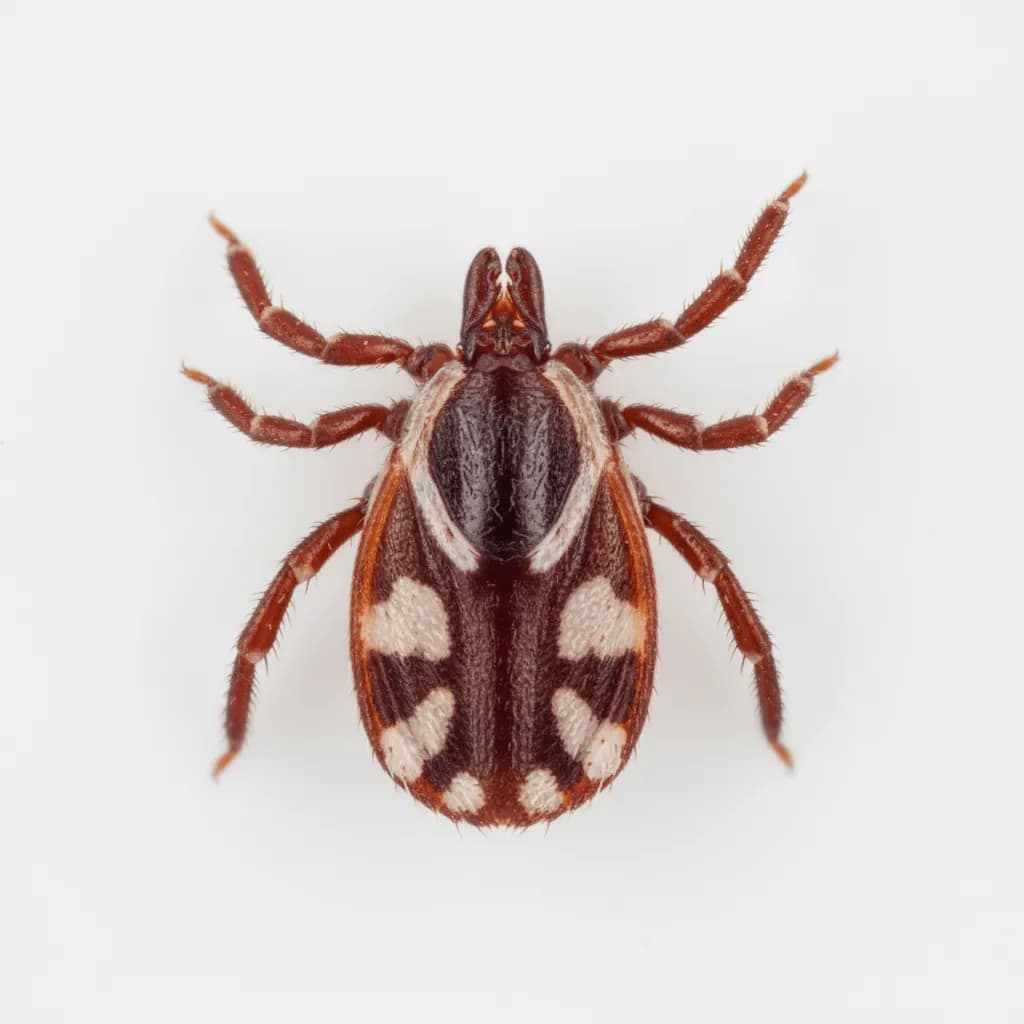
Gulf Coast Tick
Amblyomma maculatum
Also known as: Spotted Tick
The Gulf Coast Tick is found primarily along the Atlantic and Gulf coasts of the United States, though its range has expanded inland in recent years. It transmits Rickettsia parkeri, which causes a milder form of spotted fever in humans. Immature stages parasitize ground-dwelling birds while adults feed on larger mammals including deer, cattle, and humans.
Identification
Size
4-6 mm unfed, up to 15 mm engorged
Color
Brown with silver-white ornate markings on the dorsal shield
Key Trait
Ornate silver-white markings on the scutum similar in size to lone star tick; primarily found along the Gulf Coast and southeastern coastline. Known vector of Rickettsia parkeri.
Behavior & Habitat
Larvae and nymphs feed on ground-nesting birds and small mammals. Adults quest on vegetation and are active from mid-summer through fall, a later peak than most other tick species. Known to be an aggressive feeder on cattle in coastal prairie habitats.
Habitat: Coastal prairies, salt marshes, upland meadows, and transitional grassland-woodland habitats along the Gulf and Atlantic coasts.
Diet: Blood from ground-dwelling birds (immatures), deer, cattle, horses, dogs, and humans (adults).
Signs of Infestation
- Ticks found attached to ears and head of cattle in coastal areas
- Ornate silver-marked ticks found on skin or clothing after visiting coastal habitats
- Spotted fever symptoms developing after a tick bite in the Gulf Coast region
Risks & Damage
Transmits Rickettsia parkeri rickettsiosis, causing fever, eschar at the bite site, and rash. Generally milder than Rocky Mountain spotted fever.
Heavy infestations on cattle cause ear damage (gotch ear), secondary infections, and reduced weight gain.
Prevention Tips
- 1.Use tick repellents containing DEET or permethrin when visiting coastal prairie habitats
- 2.Perform thorough tick checks after outdoor activities in Gulf Coast regions
- 3.Manage vegetation height in pastures and property edges
Why DIY Treatment Often Falls Short
Gulf Coast ticks inhabit expansive coastal habitats where wildlife maintain large populations. Property-level treatments provide only partial relief as ticks are continuously reintroduced by birds, deer, and other wildlife.
Professional Treatment
Professionals apply targeted acaricides to property perimeters and high-traffic areas during the adult activity period. For agricultural settings, coordinated area-wide management including pasture rotation and host-targeted treatments may be recommended.
Related Pests
Frequently Asked Questions
Is Rickettsia parkeri as dangerous as Rocky Mountain spotted fever?
Is the Gulf Coast tick expanding its range?
When should I watch for Gulf Coast ticks?
Need Help With Gulf coast tick?
If you're seeing signs of gulf coast tick in or around your home, professional treatment is the fastest way to stop the problem. Lotus Pest Control offers free inspections to identify the issue and recommend the right solution.
At a Glance
- Category
- Fleas And Ticks
- Scientific Name
- Amblyomma maculatum
- Size
- 4-6 mm unfed, up to 15 mm engorged
- Color
- Brown with silver-white ornate markings on the dorsal shield
- Key Trait
- Ornate silver-white markings on the scutum similar in size to lone star tick; primarily found along the Gulf Coast and southeastern coastline. Known vector of Rickettsia parkeri.
- Regions
- Gulf Coast, Southeast, Mid Atlantic
- Threat Level
- Moderate
- Risk Types
- healthagricultural
- Seasonal Activity
- MarAprMayJunJulAugSepOctNovDecJanFebnonelowmoderatehighpeak