
Flesh Flies
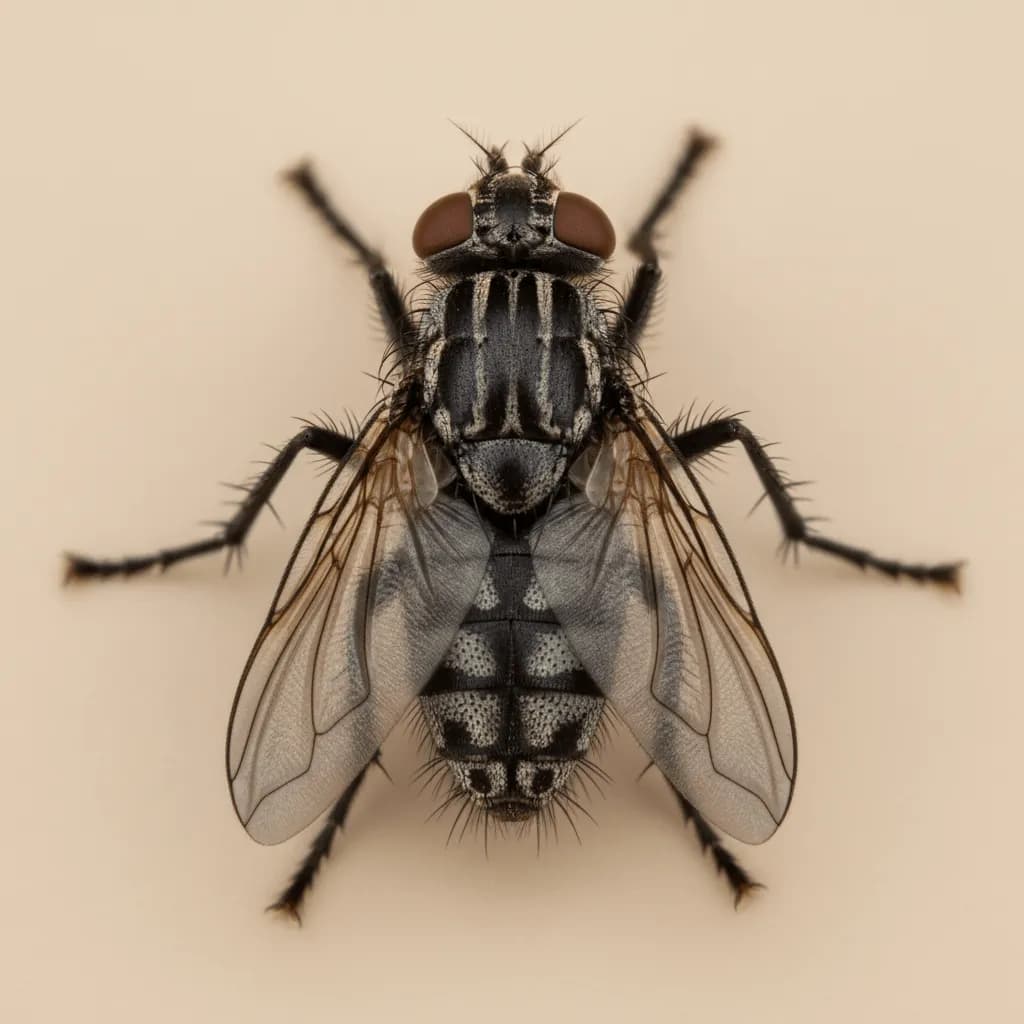
Flesh flies are medium to large gray flies with three dark longitudinal stripes on the thorax and a distinctive checkerboard pattern on the abdomen. Unlike most flies, they give birth to live larvae rather than laying eggs, depositing maggots directly on decaying animal matter, garbage, and pet waste. They are common around garbage dumpsters, pet areas, and wherever animal waste accumulates. They are similar in habitat and behavior to blow flies but are distinguished by their live birth reproduction strategy.
Species in This Group (1)
Key Behaviors
Flesh flies deposit live larvae on decomposing animal matter, feces, and open garbage. Their larvae develop rapidly in warm conditions. Adults are attracted to the same odors as blow flies and are often found in mixed populations at food sources. They are frequently found around outdoor garbage and dumpster areas. Their live larval deposition allows them to exploit food sources that may dry before egg-laid larvae could hatch.
Risks & Concerns
Flesh flies are mechanical vectors for bacteria and pathogens from the decomposing matter where they breed. Their presence indicates sanitation deficiencies, particularly around garbage handling areas. In food service and healthcare settings, they are unacceptable. Like blow flies, their sudden indoor appearance may indicate a dead animal in a wall void or crawl space.
Need Help With Flesh flies?
If you're seeing signs of flesh flies in or around your home, professional treatment is the fastest way to stop the problem. Lotus Pest Control offers free inspections to identify the issue and recommend the right solution.