
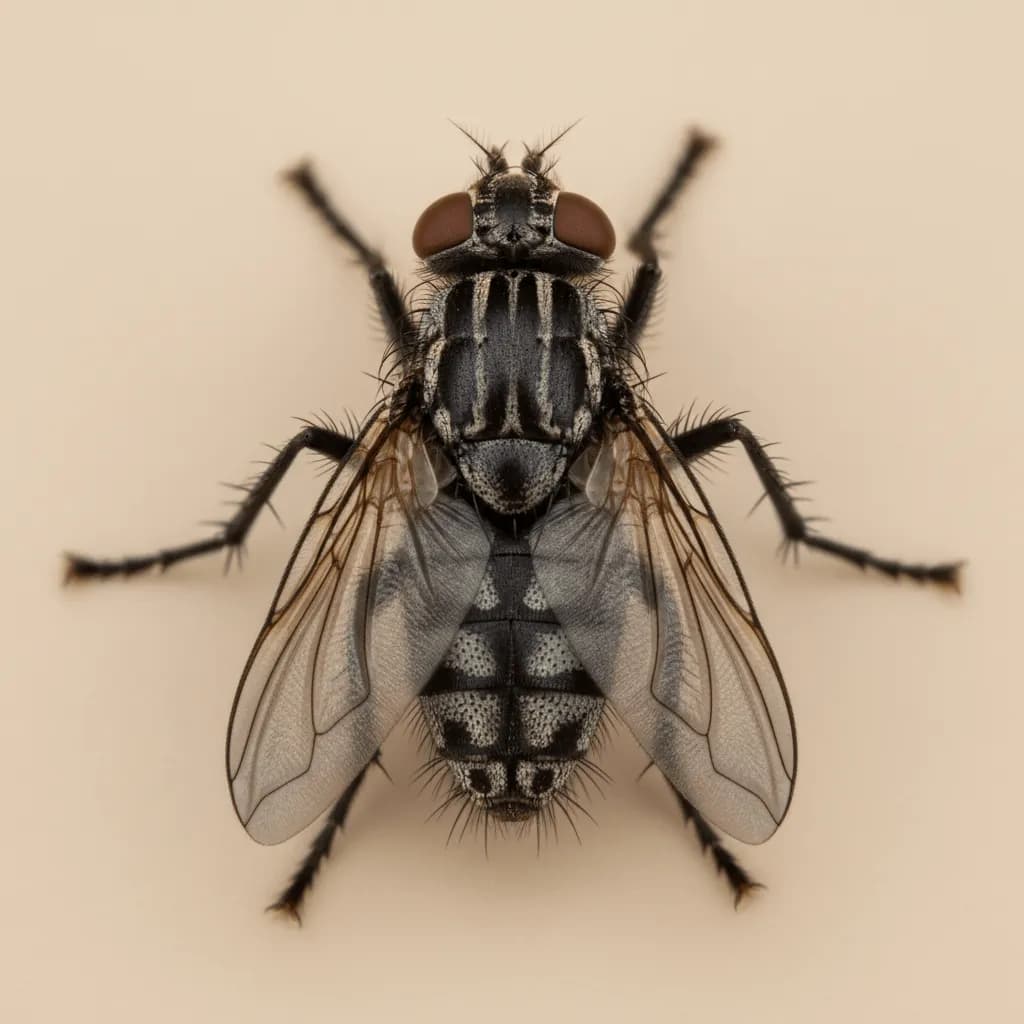
Flesh Fly
Sarcophaga spp.
Flesh Flies are large gray flies that deposit live larvae (rather than eggs) on decaying meat, animal carcasses, garbage, and open wounds. Their presence indoors typically indicates a dead animal or garbage issue. They are similar to blow flies in significance.
Identification
Size
10-14 mm
Color
Gray with three dark stripes on the thorax and a checkered gray-and-black abdomen
Key Trait
Larger than house flies; three dark thoracic stripes; checkered abdomen; deposits live larvae rather than eggs.
Behavior & Habitat
Females give birth to live larvae on decaying matter. Attracted to the same sources as blow flies. Good indicator of sanitation issues.
Habitat: Near garbage, dead animals, pet feces, and compost. Enters homes when attracted to a carcass in walls or attics.
Diet: Decaying animal matter and garbage. Larvae develop on carrion.
Signs of Infestation
- Large gray flies with checkered abdomens indoors
- Strong odor indicating decaying organic matter
Risks & Damage
Contaminates surfaces with bacteria from decaying matter.
Prevention Tips
- 1.Same as blow fly prevention - seal animal entries, manage garbage
Why DIY Treatment Often Falls Short
The decaying source must be located and removed.
Professional Treatment
Same approach as blow flies: locate and remove the carcass, treat for odor, seal wildlife entry points.
Frequently Asked Questions
Are flesh flies different from blow flies?
Why are they called flesh flies?
Can they infest open wounds?
Need Help With Flesh fly?
If you're seeing signs of flesh fly in or around your home, professional treatment is the fastest way to stop the problem. Lotus Pest Control offers free inspections to identify the issue and recommend the right solution.
At a Glance
- Category
- Flies
- Scientific Name
- Sarcophaga spp.
- Size
- 10-14 mm
- Color
- Gray with three dark stripes on the thorax and a checkered gray-and-black abdomen
- Key Trait
- Larger than house flies; three dark thoracic stripes; checkered abdomen; deposits live larvae rather than eggs.
- Regions
- Southeast, Northeast, Midwest, South Central
- Threat Level
- Low
- Risk Types
- health
- Seasonal Activity
- MarAprMayJunJulAugSepOctNovDecJanFebnonelowmoderatehighpeak