
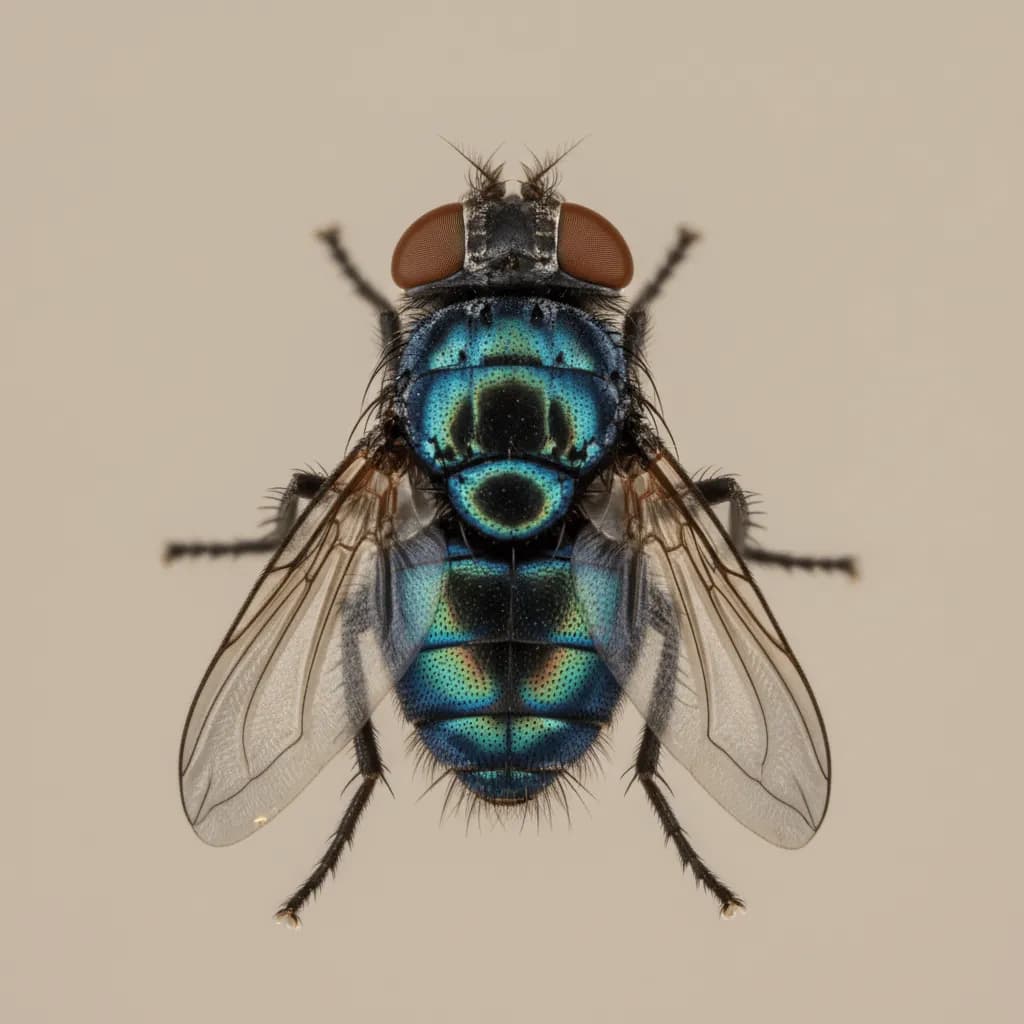
Blue Bottle Fly
Calliphora vomitoria
Also known as: Blow Fly
The Blue Bottle Fly is a large, noisy blow fly associated with decaying organic matter. Like the green bottle fly, sudden indoor appearance often indicates a dead animal. It is one of the first insects to arrive at a carcass, often within minutes.
Identification
Size
10-14 mm
Color
Metallic blue with a slightly hairy thorax
Key Trait
Metallic blue body; slightly larger than green bottle fly; buzzes loudly.
Behavior & Habitat
Strong flier with a loud buzz. Arrives at carcasses within minutes. Indoor presence indicates decaying organic matter nearby.
Habitat: Same as green bottle fly - near decaying animal matter, garbage, and feces.
Diet: Decaying animal matter and garbage.
Signs of Infestation
- Large, loud metallic blue flies indoors
- Strong decomposition odor
- Flies concentrated near one wall or ceiling area
Risks & Damage
Carries pathogens from filth sources; indicates decaying organic matter nearby.
Prevention Tips
- 1.Same as green bottle fly - seal rodent entries, manage garbage, remove dead animals promptly
Why DIY Treatment Often Falls Short
The dead animal source must be found and removed. Swatting flies is only a temporary measure.
Professional Treatment
Same as green bottle fly - locate and remove the carcass, treat for odor and secondary pests, seal wildlife entry points.
Frequently Asked Questions
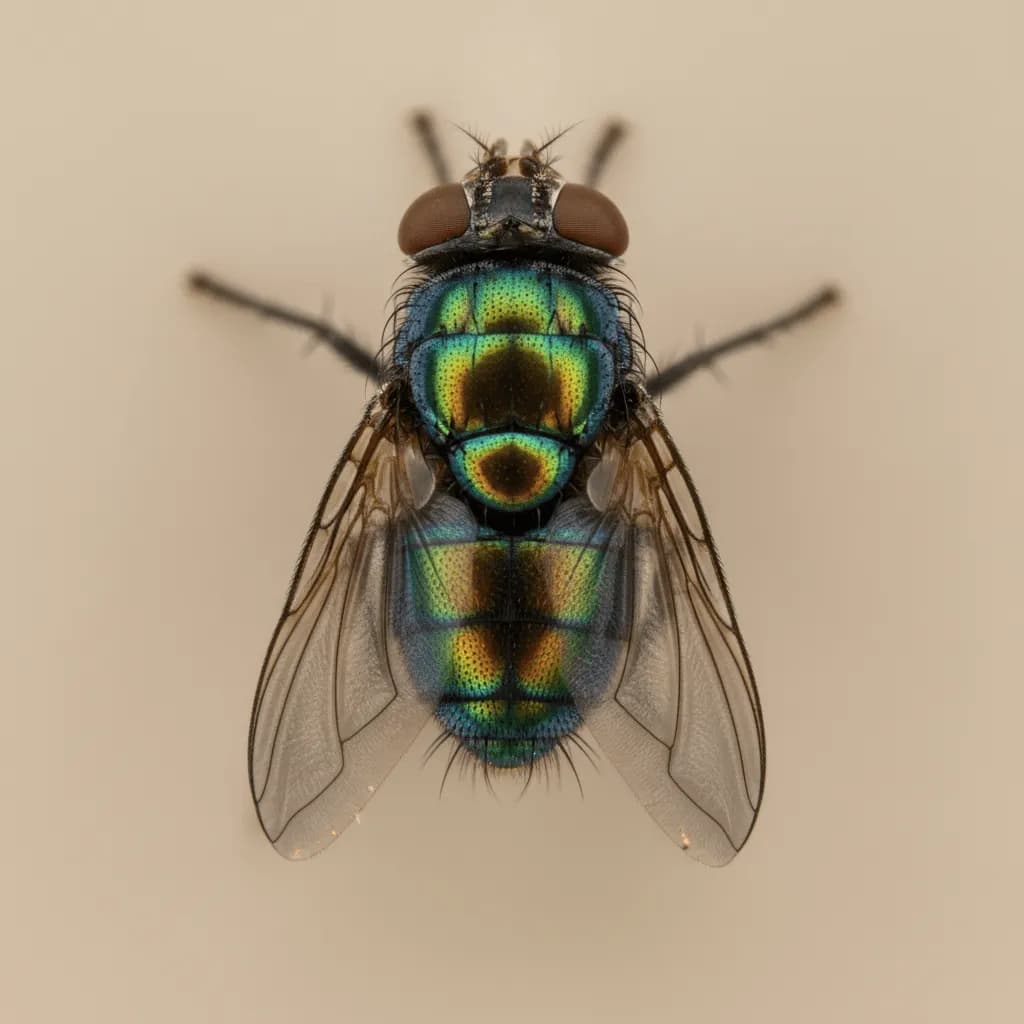
How is it different from the green bottle fly?
Why are they so loud?
Can they breed in my garbage can?
Need Help With Blue bottle fly?
If you're seeing signs of blue bottle fly in or around your home, professional treatment is the fastest way to stop the problem. Lotus Pest Control offers free inspections to identify the issue and recommend the right solution.
At a Glance
- Category
- Flies
- Scientific Name
- Calliphora vomitoria
- Size
- 10-14 mm
- Color
- Metallic blue with a slightly hairy thorax
- Key Trait
- Metallic blue body; slightly larger than green bottle fly; buzzes loudly.
- Regions
- Northeast, Midwest, Southeast, Pacific Northwest
- Threat Level
- Low
- Risk Types
- healthnuisance
- Seasonal Activity
- MarAprMayJunJulAugSepOctNovDecJanFebnonelowmoderatehighpeak