
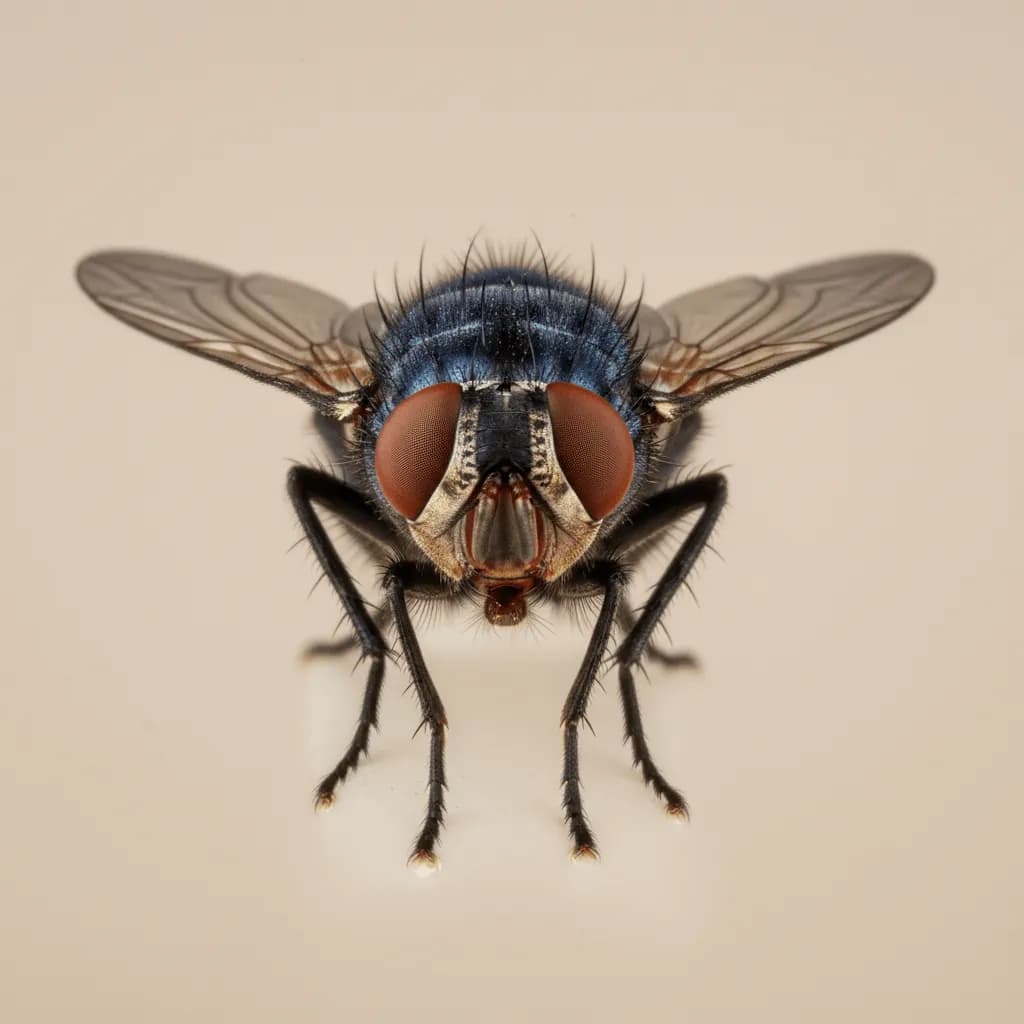
Common House Fly
Musca domestica
Also known as: Filth Fly
The Common House Fly is one of the most widespread and familiar insects in the world. It breeds in decaying organic matter and garbage, then enters homes where it lands on food, regurgitating digestive fluids and depositing bacteria from its previous meals. A single fly can carry over 100 different pathogens.
Identification
Size
6-7 mm
Color
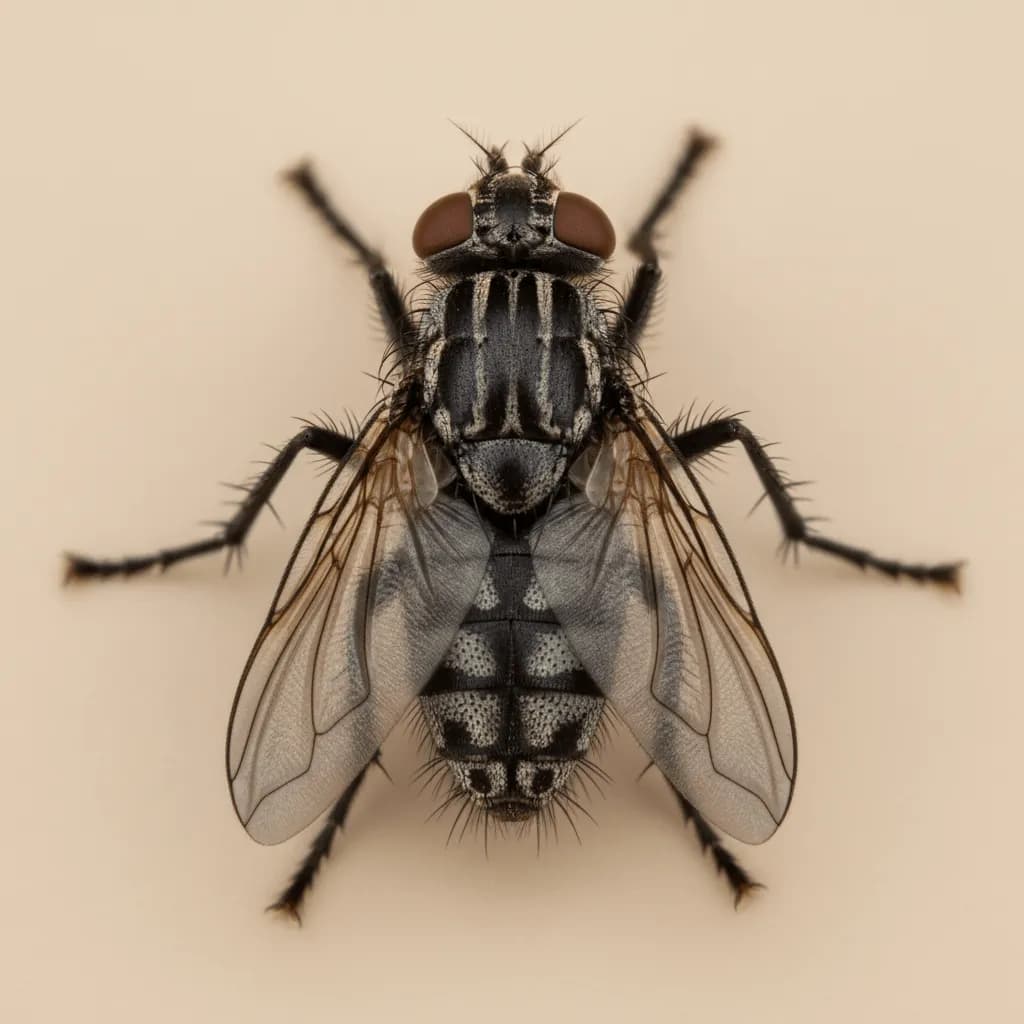
Gray with four dark longitudinal stripes on the thorax
Key Trait
Four dark stripes on the thorax; sponging mouthparts; lands on food and regurgitates to liquefy it before feeding.
Behavior & Habitat
Feeds by regurgitating saliva onto food, liquefying it, and sucking it up with sponging mouthparts. Defecates every few minutes. Breeds explosively in warm weather - a single pair can produce millions of offspring in one season under ideal conditions.
Habitat: Anywhere humans live and produce waste. Breeds in garbage, animal feces, compost, and decaying organic matter. Adults are found in kitchens, restaurants, and around food sources.
Diet: Decaying organic matter, garbage, feces, and human food.
Signs of Infestation
- Flies buzzing around kitchens and dining areas
- Fly specks (dark spots) on walls, ceilings, and light fixtures
- Larvae (maggots) in garbage cans or compost bins
Risks & Damage
Mechanically transmits over 100 pathogens including Salmonella, E. coli, and Shigella by landing on food after visiting filth sources.
Contaminates food and food preparation surfaces through regurgitation and defecation.
Prevention Tips
- 1.Keep garbage cans tightly sealed and clean
- 2.Install door and window screens
- 3.Clean up pet waste promptly
- 4.Do not leave food uncovered on counters
- 5.Clean drains and garbage disposal regularly
Why DIY Treatment Often Falls Short
Fly traps and swatters address individual flies but not the breeding source. Without eliminating the organic matter where larvae develop, new adults emerge continuously.
Professional Treatment
Professionals identify and eliminate breeding sources, install light traps in commercial settings, apply targeted residual treatments to resting surfaces, and recommend sanitation improvements for long-term control.
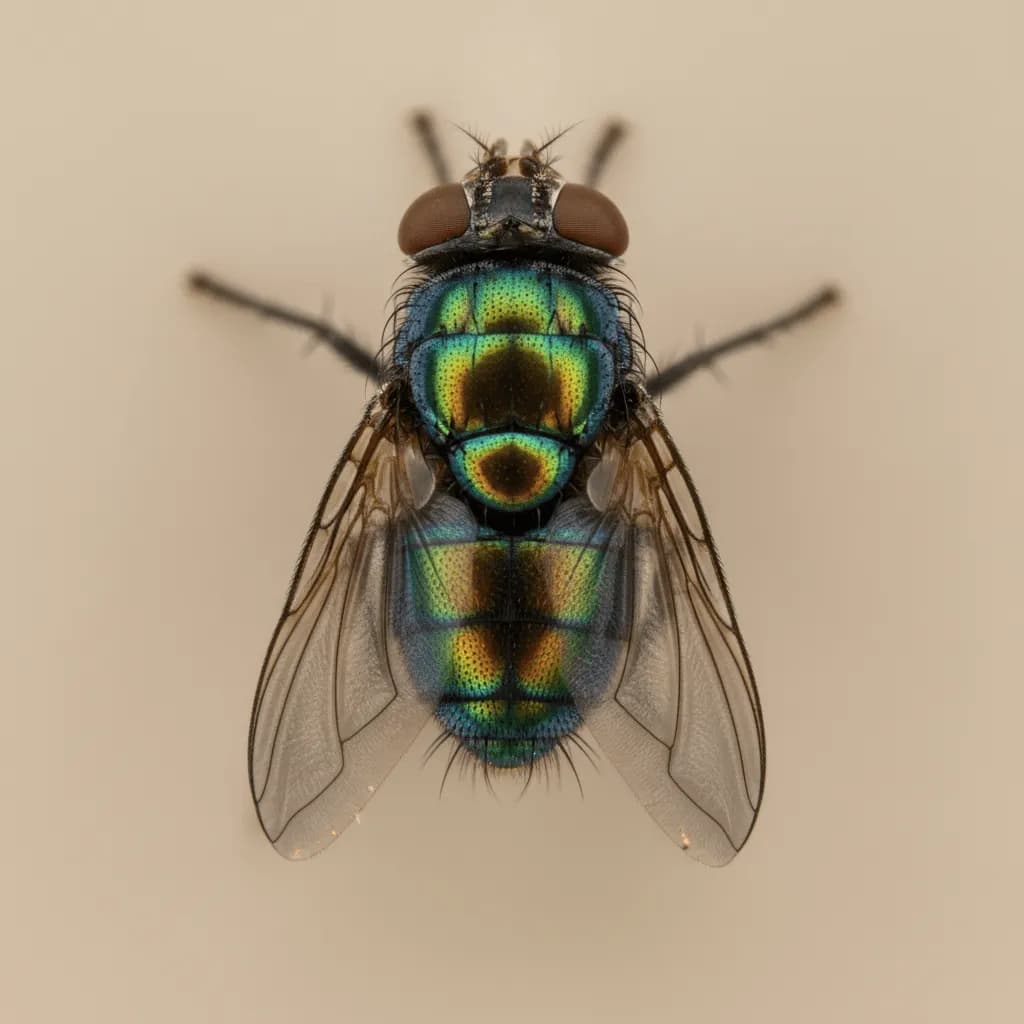
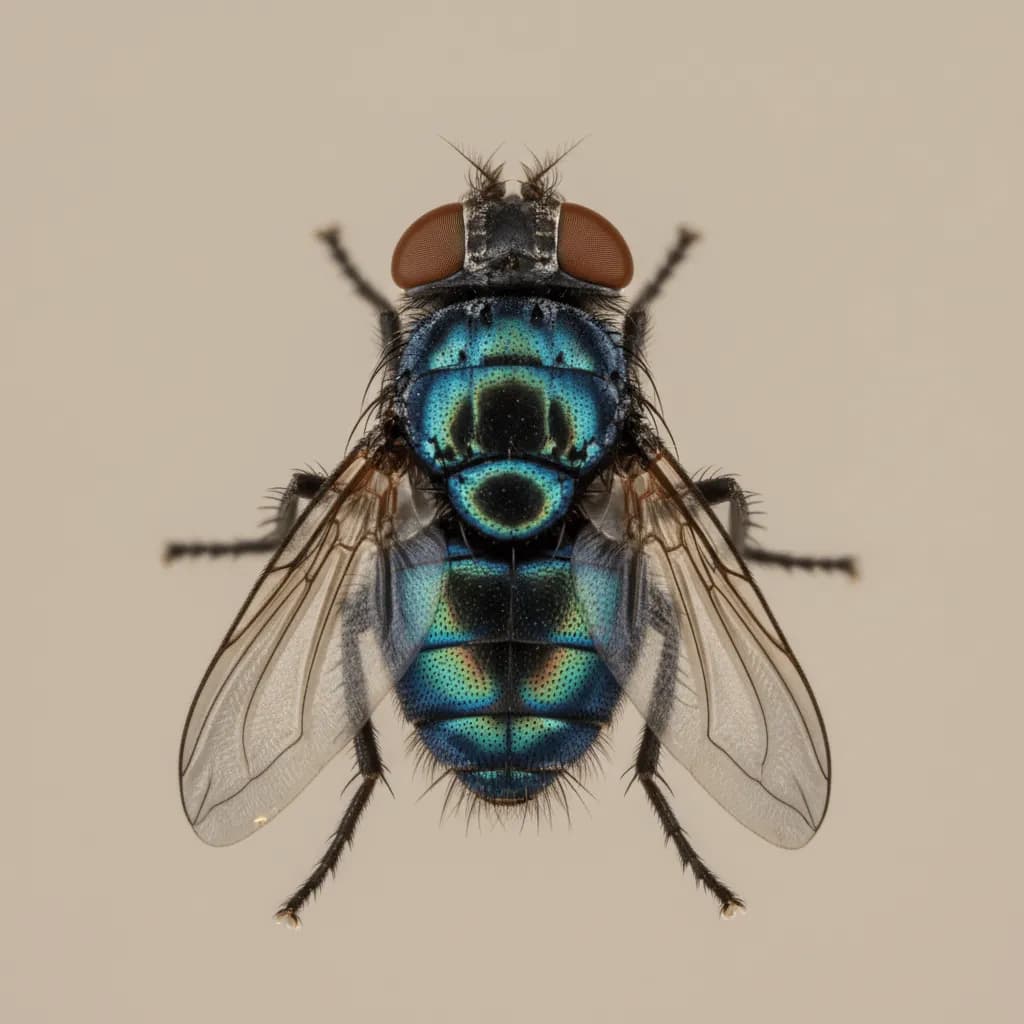
Frequently Asked Questions
How do house flies spread disease?
How fast do house flies reproduce?
Why do flies keep coming back?
Need Help With Common house fly?
If you're seeing signs of common house fly in or around your home, professional treatment is the fastest way to stop the problem. Lotus Pest Control offers free inspections to identify the issue and recommend the right solution.
At a Glance
- Category
- Flies
- Scientific Name
- Musca domestica
- Size
- 6-7 mm
- Color
- Gray with four dark longitudinal stripes on the thorax
- Key Trait
- Four dark stripes on the thorax; sponging mouthparts; lands on food and regurgitates to liquefy it before feeding.
- Regions
- Northeast, Southeast, Midwest, Southwest, South Central
- Threat Level
- Moderate
- Risk Types
- healthfood
- Seasonal Activity
- MarAprMayJunJulAugSepOctNovDecJanFebnonelowmoderatehighpeak