
House Flies
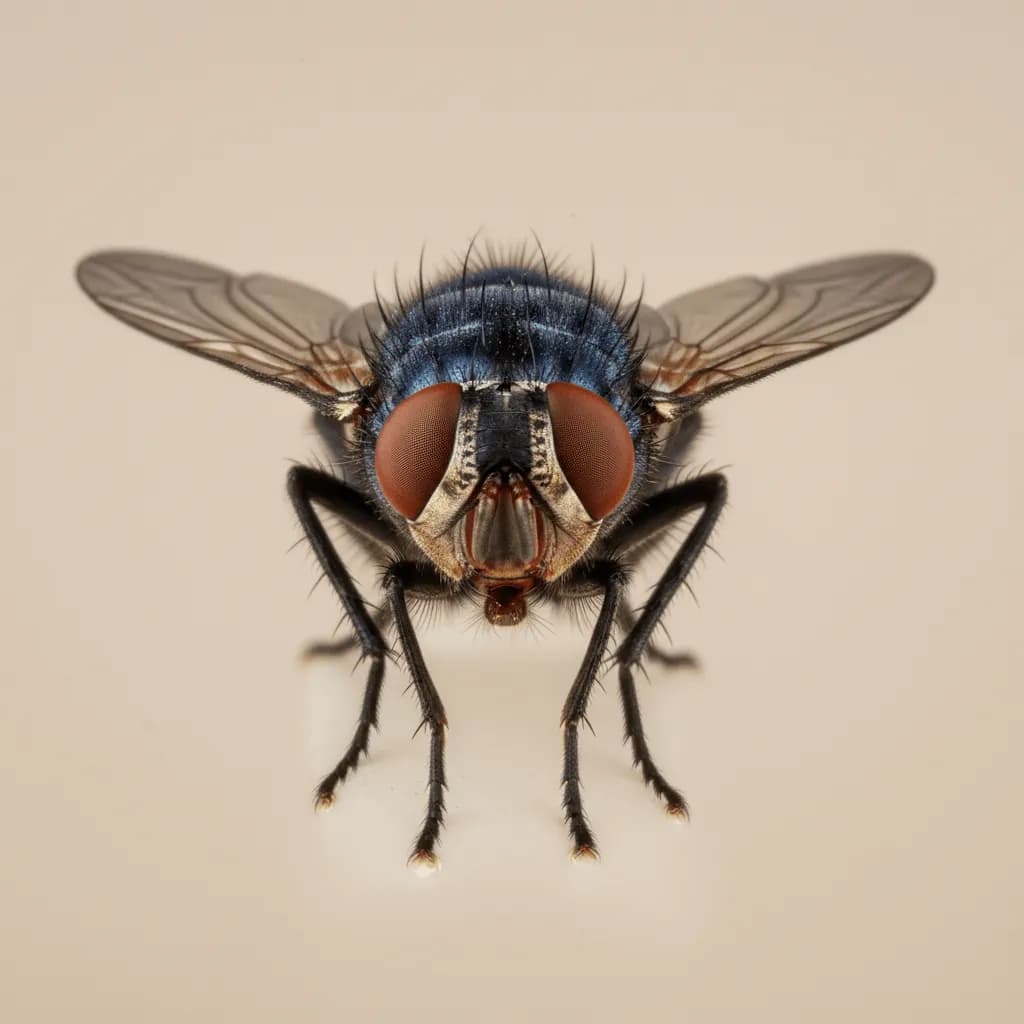
House flies are the most common fly species associated with human habitation worldwide. They are medium-sized gray flies with four dark longitudinal stripes on the thorax and sponging mouthparts that cannot bite. A single female can lay 500 or more eggs in her lifetime, and development from egg to adult can occur in as little as seven days in warm conditions. They breed in decaying organic matter, garbage, animal waste, and compost. Their constant movement between filth and food makes them prolific mechanical disease vectors.
Species in This Group (1)
Key Behaviors
House flies are attracted to odors from garbage, pet waste, and food. They feed by regurgitating digestive fluids onto food and sucking up the resulting liquid, depositing bacteria with each feeding event. They rest on walls, ceilings, and overhead surfaces, leaving dark fecal spots. They are active during the day and rest at night on surfaces near food sources.
Risks & Concerns
House flies mechanically transmit over 100 pathogens including Salmonella, E. coli, Shigella, and parasitic organisms. Their feeding behavior of regurgitation and defecation on food surfaces makes them efficient disease vectors. They are a significant public health concern in food service, healthcare, and agricultural settings. High fly populations indicate sanitation deficiencies that require correction.
Identification Tip
Distinguished from blow flies by their gray coloring and lack of metallic sheen. Smaller and more uniformly colored than horse flies. Unlike stable flies, house flies have sponging rather than piercing mouthparts and do not bite.
Need Help With House flies?
If you're seeing signs of house flies in or around your home, professional treatment is the fastest way to stop the problem. Lotus Pest Control offers free inspections to identify the issue and recommend the right solution.