
Phorid Flies
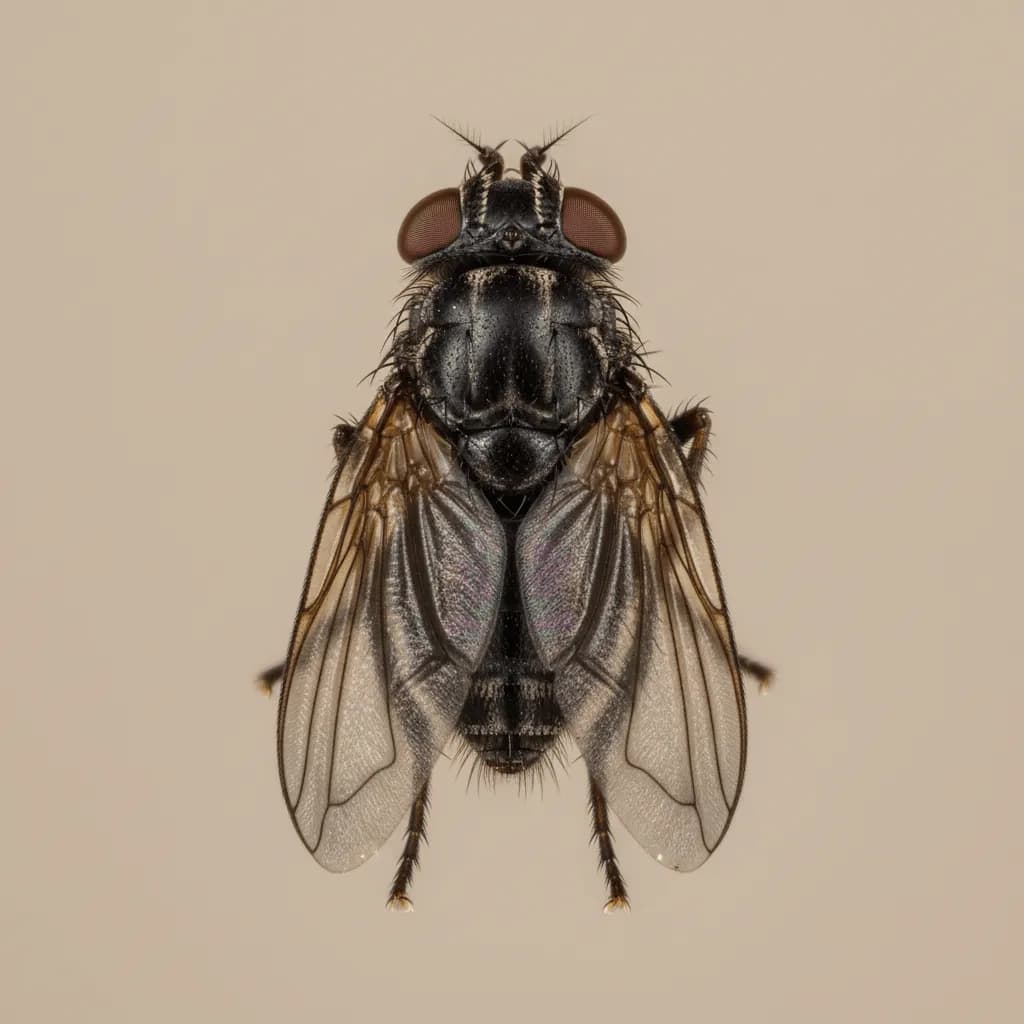
Phorid flies, also known as humpbacked flies or scuttle flies, are tiny flies recognizable by their humped thorax and distinctive running behavior across surfaces rather than immediately taking flight. They breed in a wider variety of decaying organic matter than almost any other fly, including decomposing food, drain biofilm, broken sewer lines, dead animals, damp soil, and even the adhesive on duct tape. In commercial settings, they are one of the most difficult small flies to eliminate because their breeding sources can be extremely cryptic, including under floor slabs where broken sewer lines leak.
Species in This Group (1)
Key Behaviors
Phorid flies run in a rapid, jerky, scuttling pattern across surfaces before flying, which distinguishes them from other small flies. They breed in any moist, decomposing organic material and can exploit extremely small amounts of material in cracks and crevices. In commercial kitchens, they commonly breed in grout lines, under equipment legs, in floor drains, and beneath cracked floor tiles where organic debris accumulates. Broken sewer lines beneath slab foundations are a classic breeding source.
Risks & Concerns
Phorid flies are a serious concern in food service, healthcare, and laboratory settings due to the unsanitary materials in which they breed. Their breeding in broken sewer lines can indicate plumbing failures that require costly repair. In hospitals, they have been documented infesting wounds and sterile areas. They are a persistent quality control issue in food processing and pharmaceutical manufacturing.
Identification Tip
Distinguished from fruit flies by their humped thorax, lack of red eyes, and scuttling running behavior. Distinguished from drain flies by their smooth, non-fuzzy appearance. Their wider range of breeding sources makes identification critical, as management strategies differ significantly from fruit flies and drain flies.
Need Help With Phorid flies?
If you're seeing signs of phorid flies in or around your home, professional treatment is the fastest way to stop the problem. Lotus Pest Control offers free inspections to identify the issue and recommend the right solution.