
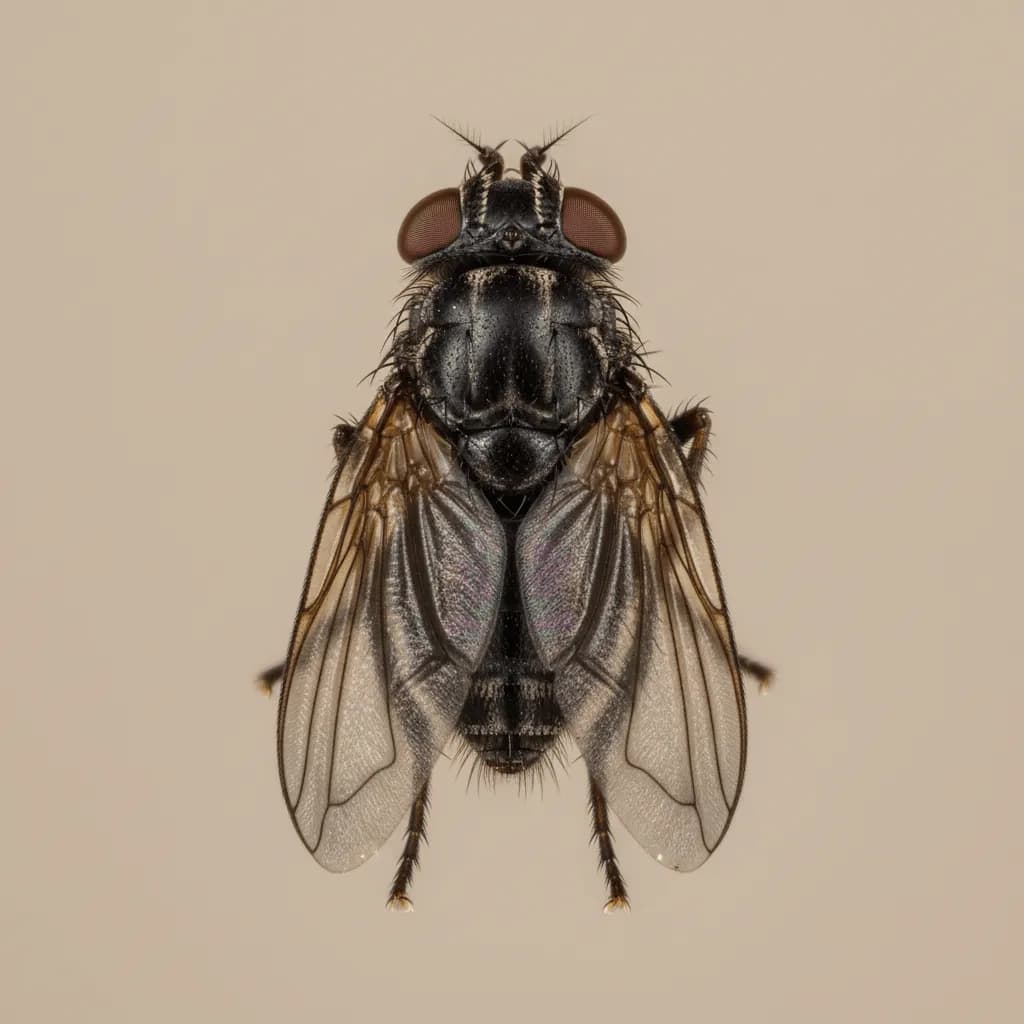
Phorid Fly
Megaselia scalaris
Also known as: Humpbacked Fly, Coffin Fly, Scuttle Fly
Phorid Flies are tiny humpbacked flies that scuttle rapidly across surfaces. They breed in decomposing organic matter, especially in broken sewer lines, drain sludge, and decaying material under floor slabs. Persistent phorid fly infestations often indicate a broken sewer pipe that requires plumbing repair.
Identification
Size
2-4 mm
Color
Tan to dark brown with a distinctive humpbacked profile
Key Trait
Humpbacked appearance; runs rapidly across surfaces in a scuttling motion rather than taking flight; breeds in decomposing organic matter in drains and broken sewer lines.
Behavior & Habitat
Runs quickly across surfaces instead of flying readily. Breeds in decomposing organic matter, especially in broken sewer lines and under floor slabs. Persistent infestations indicate plumbing problems.
Habitat: Broken sewer lines, drains with organic buildup, decaying material under slabs, and in hospitals around decomposing matter.
Diet: Decaying organic matter, fungi, and bacteria.
Signs of Infestation
- Tiny flies scuttling rapidly across kitchen counters and bathroom surfaces
- Flies emerging from floor and wall cracks near slab foundations
- Persistent infestations that do not respond to drain cleaning
Risks & Damage
In hospitals, can contaminate sterile areas. In homes, indicates potential broken sewer pipe requiring repair.
Prevention Tips
- 1.Investigate persistent phorid infestations for broken sewer lines
- 2.Keep drains clean with enzymatic products
- 3.Seal cracks in slab foundations
Why DIY Treatment Often Falls Short
Phorid flies often breed in organic matter under floor slabs or in broken sewer pipes - sources that drain cleaning cannot reach. A plumbing inspection may be necessary.
Professional Treatment
Professionals investigate potential sewer line breaks using dye testing or camera inspection. Treatment includes repairing the plumbing source, treating accessible breeding areas, and monitoring with sticky traps.
Frequently Asked Questions
Why do phorid flies mean I might have a broken sewer line?
How do I tell phorid flies from fruit flies?
Can cleaning my drains solve a phorid fly problem?
Need Help With Phorid fly?
If you're seeing signs of phorid fly in or around your home, professional treatment is the fastest way to stop the problem. Lotus Pest Control offers free inspections to identify the issue and recommend the right solution.
At a Glance
- Category
- Flies
- Scientific Name
- Megaselia scalaris
- Size
- 2-4 mm
- Color
- Tan to dark brown with a distinctive humpbacked profile
- Key Trait
- Humpbacked appearance; runs rapidly across surfaces in a scuttling motion rather than taking flight; breeds in decomposing organic matter in drains and broken sewer lines.
- Regions
- Southeast, Northeast, Midwest, Southwest
- Threat Level
- Low
- Risk Types
- healthnuisance
- Seasonal Activity
- MarAprMayJunJulAugSepOctNovDecJanFebnonelowmoderatehighpeak