
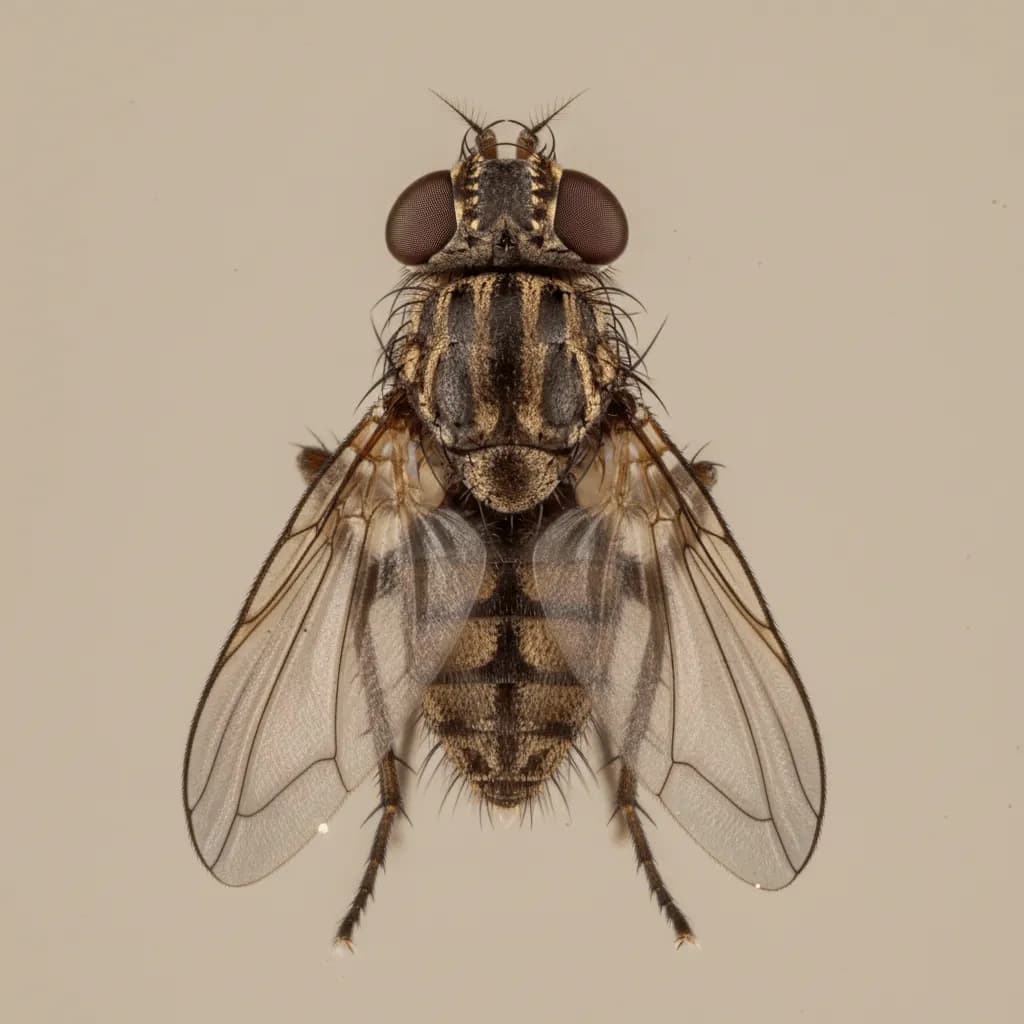
Dark-Eyed Fruit Fly
Drosophila repleta
The Dark-Eyed Fruit Fly is frequently confused with the common fruit fly but has dark eyes and tends to breed more in drain biofilm and decaying organic matter than in fruit. It is especially common in commercial kitchens and bars.
Identification
Size
3-4 mm
Color
Dark brown to black with dark eyes
Key Trait
Similar to common fruit fly but with dark eyes instead of red; associated with drains and decaying organic matter rather than fruit.
Behavior & Habitat
Breeds primarily in drains, mop water, and organic buildup rather than on fruit surfaces. Behavior otherwise similar to the common fruit fly.
Habitat: Commercial kitchens, bars, restrooms, and any area with organic buildup in drains and crevices.
Diet: Bacteria and yeasts in decaying organic matter and drain biofilm.
Signs of Infestation
- Small dark-eyed flies near drains and sinks
- Flies emerging from floor drains in commercial kitchens
Risks & Damage
Contaminates food preparation surfaces in commercial and residential kitchens.
Prevention Tips
- 1.Clean drains thoroughly with enzymatic products
- 2.Fix leaks and eliminate standing water
- 3.Mop with clean water and wring mops dry after use
Why DIY Treatment Often Falls Short
Focus on fruit removal misses the primary breeding source - drain biofilm and organic accumulation in floor cracks and under equipment.
Professional Treatment
Professionals identify all drain and organic buildup breeding sources, apply enzymatic drain treatments, and install monitoring traps in commercial settings.
Related Pests
Frequently Asked Questions
How is this different from a regular fruit fly?
Why are they in my bathroom?
How do I get rid of them?
Need Help With Dark-eyed fruit fly?
If you're seeing signs of dark-eyed fruit fly in or around your home, professional treatment is the fastest way to stop the problem. Lotus Pest Control offers free inspections to identify the issue and recommend the right solution.
At a Glance
- Category
- Flies
- Scientific Name
- Drosophila repleta
- Size
- 3-4 mm
- Color
- Dark brown to black with dark eyes
- Key Trait
- Similar to common fruit fly but with dark eyes instead of red; associated with drains and decaying organic matter rather than fruit.
- Regions
- Southeast, Northeast, Midwest, South Central
- Threat Level
- Low
- Risk Types
- foodnuisance
- Seasonal Activity
- MarAprMayJunJulAugSepOctNovDecJanFebnonelowmoderatehighpeak