
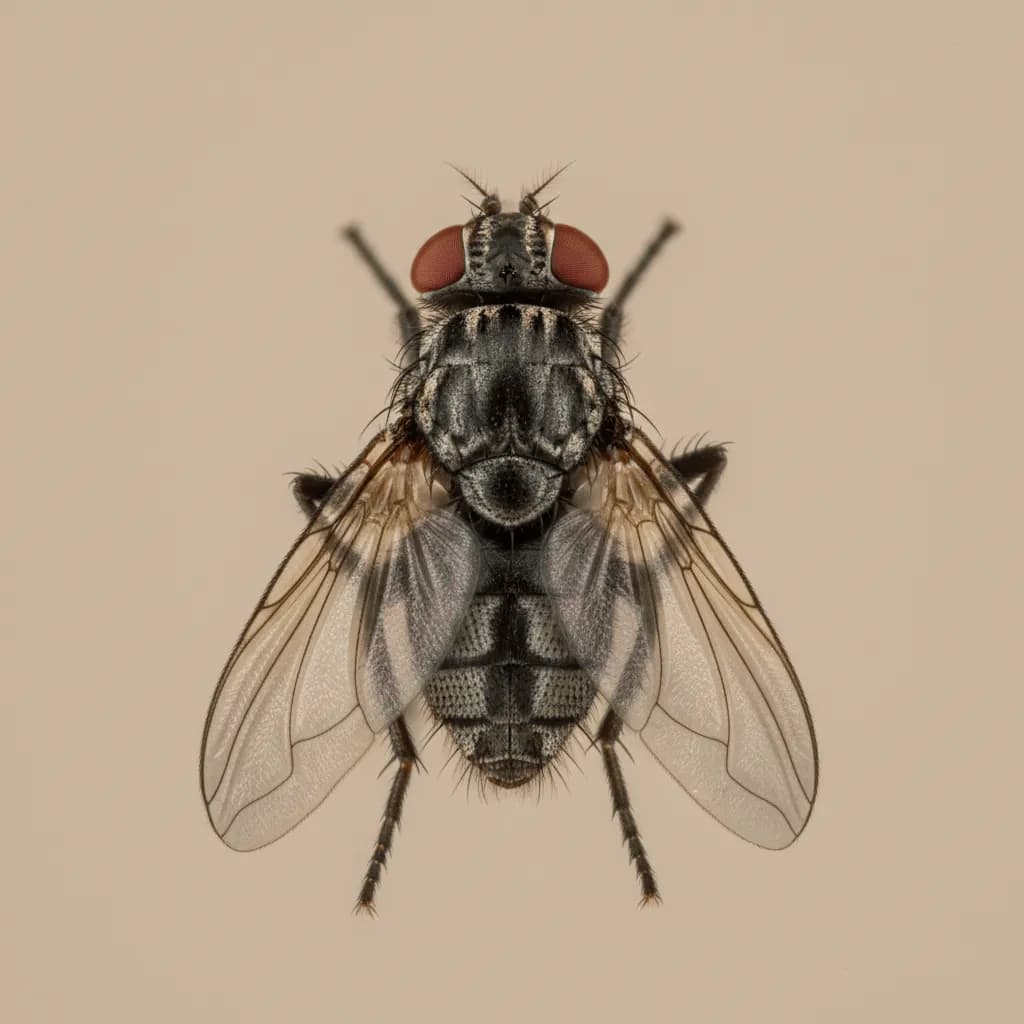
Common Fruit Fly
Drosophila melanogaster
Also known as: Vinegar Fly
The Common Fruit Fly is one of the most persistent kitchen pests, attracted to ripening and fermenting fruit, vegetables, and beverages. A female can lay up to 500 eggs on moist, fermenting surfaces, and the entire life cycle can be completed in about one week, allowing populations to explode seemingly overnight.
Identification
Size
2-4 mm
Color
Tan to yellowish-brown with bright red eyes
Key Trait
Very small size; bright red eyes; swarms around overripe fruit and fermentation sources.
Behavior & Habitat
Attracted to fermentation odors from ripening fruit, wine, beer, and vinegar. Breeds on the surfaces of overripe fruit and in drain biofilm. Populations can build from a few flies to hundreds within a week.
Habitat: Kitchens, bars, grocery stores, and anywhere fruit and fermentation are present. Breeds in overripe fruit, drains, mop water, and recycling bins.
Diet: Yeasts and bacteria on fermenting fruit and organic matter.
Signs of Infestation
- Small flies with red eyes hovering around fruit bowls and sinks
- Flies emerging from drains and garbage disposals
- Rapid population increase seemingly out of nowhere
Risks & Damage
Contaminates fruit and food preparation surfaces with bacteria from drain biofilm and decaying matter.
Prevention Tips
- 1.Refrigerate or consume ripe fruit promptly
- 2.Clean drains and garbage disposals weekly with a drain brush
- 3.Empty and clean recycling bins regularly
- 4.Wipe down counters to remove fermenting residues
- 5.Cover compost containers tightly
Why DIY Treatment Often Falls Short
Vinegar traps catch adult flies but do not address the hundreds of eggs laid in drain biofilm and on decaying produce. The breeding source must be found and eliminated.
Professional Treatment
Professionals identify all breeding sources, treat drains with enzymatic cleaners and growth regulators, install light traps in commercial settings, and provide sanitation guidance.
Frequently Asked Questions
Where do fruit flies come from so suddenly?
Why do vinegar traps only partially work?
Can fruit flies come from drains?
Need Help With Common fruit fly?
If you're seeing signs of common fruit fly in or around your home, professional treatment is the fastest way to stop the problem. Lotus Pest Control offers free inspections to identify the issue and recommend the right solution.
At a Glance
- Category
- Flies
- Scientific Name
- Drosophila melanogaster
- Size
- 2-4 mm
- Color
- Tan to yellowish-brown with bright red eyes
- Key Trait
- Very small size; bright red eyes; swarms around overripe fruit and fermentation sources.
- Regions
- Northeast, Southeast, Midwest, Southwest, Pacific Northwest
- Threat Level
- Low
- Risk Types
- foodnuisance
- Seasonal Activity
- MarAprMayJunJulAugSepOctNovDecJanFebnonelowmoderatehighpeak