
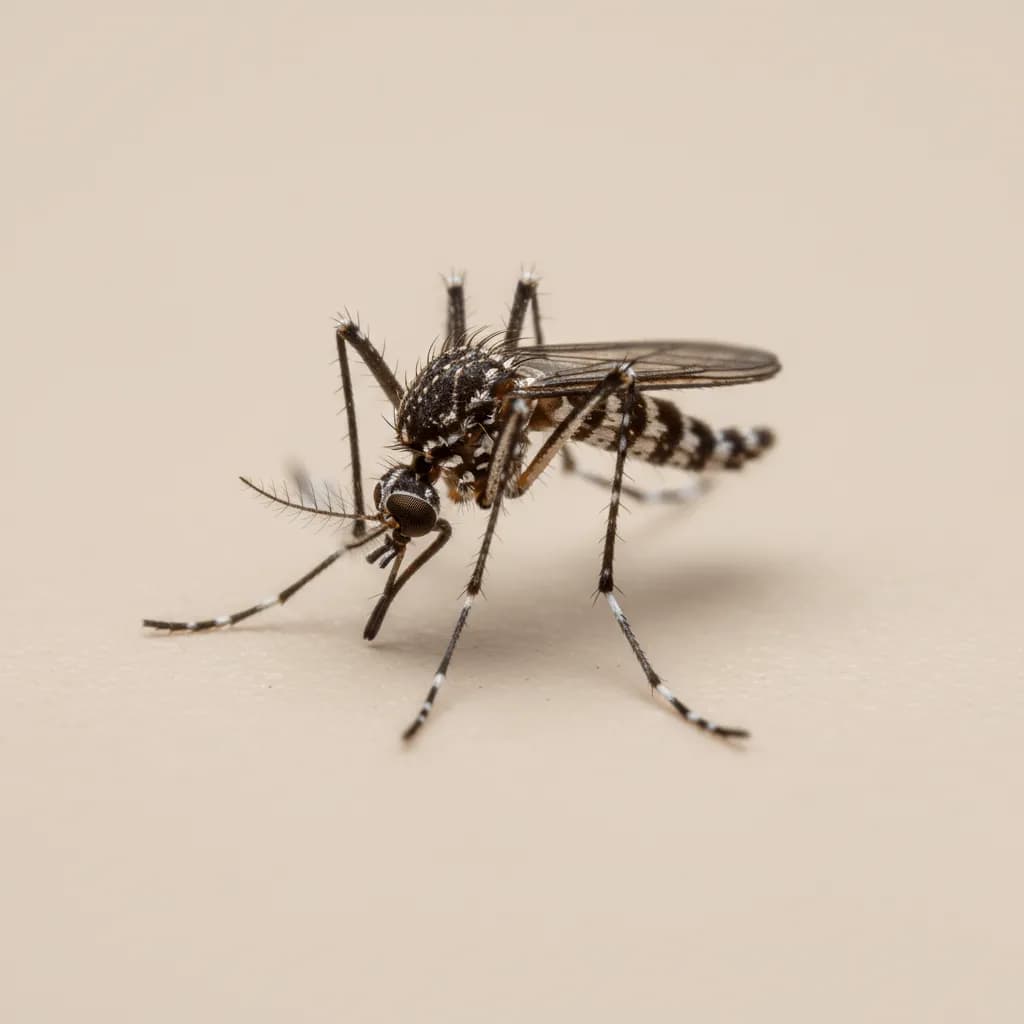
Asian Tiger Mosquito
Aedes albopictus
Also known as: Forest Day Mosquito
The Asian Tiger Mosquito is an invasive species that has spread across the eastern United States since the 1980s. It is an aggressive daytime biter and a competent vector for dengue, chikungunya, and Zika viruses. It breeds in small containers of standing water, making suburban yards ideal habitat.
Identification
Size
2-10 mm
Color
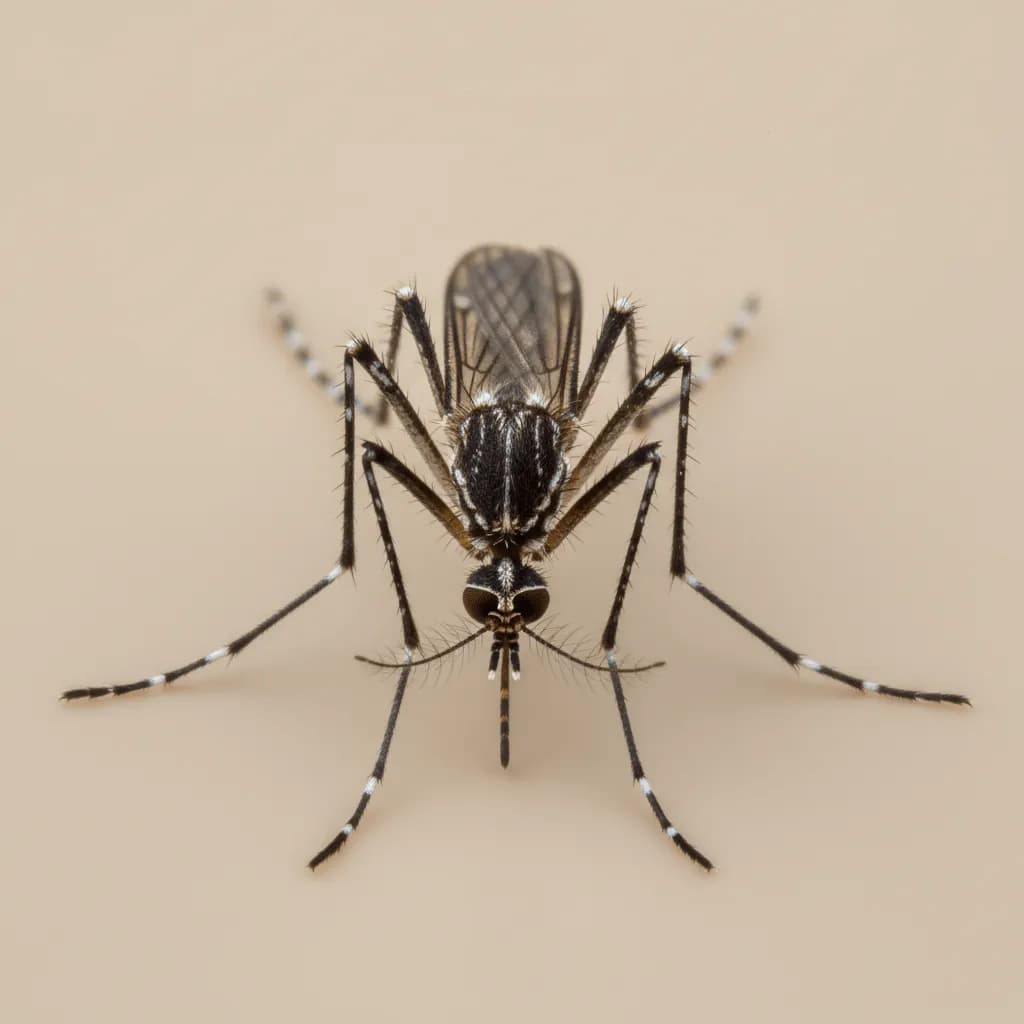
Black with distinctive white stripes on the body and legs
Key Trait
Bold black-and-white striped pattern; aggressive daytime biter.
Behavior & Habitat
Aggressive daytime biter, most active in early morning and late afternoon. Flies close to the ground and bites below the knees. Breeds in any small container holding standing water, including bottle caps, saucers, and tires.
Habitat: Suburban yards, parks, and wooded edges. Breeds in tree holes, tires, flower pot saucers, bird baths, clogged gutters, and any object holding even a small amount of stagnant water.
Diet: Females feed on blood from humans and animals; males feed on nectar.
Signs of Infestation
- Aggressive daytime mosquito bites, especially below the knees
- Striped mosquitoes resting on shaded surfaces in the yard
- Larvae found in standing water in small containers
Risks & Damage
Vector of dengue, chikungunya, and Zika viruses, as well as dog heartworm.
Transmits dog heartworm through bites.
Prevention Tips
- 1.Dump and clean all standing water containers weekly
- 2.Clean gutters and downspout extensions to eliminate standing water
- 3.Change bird bath water every 2-3 days
- 4.Store tires, buckets, and toys upside down to prevent water collection
- 5.Use larvicide dunks in ponds and rain barrels that cannot be drained
Why DIY Treatment Often Falls Short
Consumer foggers provide only temporary relief lasting hours, not days. Asian tiger mosquitoes breed in micro-habitats (a single bottle cap of water can produce dozens), making comprehensive source reduction nearly impossible without professional assessment and recurring treatment.
Professional Treatment
Professionals conduct a thorough property assessment to identify breeding sites, apply targeted larvicide to water sources that cannot be eliminated, and treat resting areas with residual barrier sprays. Monthly service during mosquito season maintains suppression.
Related Pests
Frequently Asked Questions
Why do Asian tiger mosquitoes bite during the day?
Can they spread Zika virus?
Where do they breed?
Need Help With Asian tiger mosquito?
If you're seeing signs of asian tiger mosquito in or around your home, professional treatment is the fastest way to stop the problem. Lotus Pest Control offers free inspections to identify the issue and recommend the right solution.
At a Glance
- Category
- Mosquitoes
- Scientific Name
- Aedes albopictus
- Size
- 2-10 mm
- Color
- Black with distinctive white stripes on the body and legs
- Key Trait
- Bold black-and-white striped pattern; aggressive daytime biter.
- Regions
- Southeast, Mid Atlantic, South Central, Northeast
- Threat Level
- High
- Risk Types
- healthpets
- Seasonal Activity
- MarAprMayJunJulAugSepOctNovDecJanFebnonelowmoderatehighpeak