
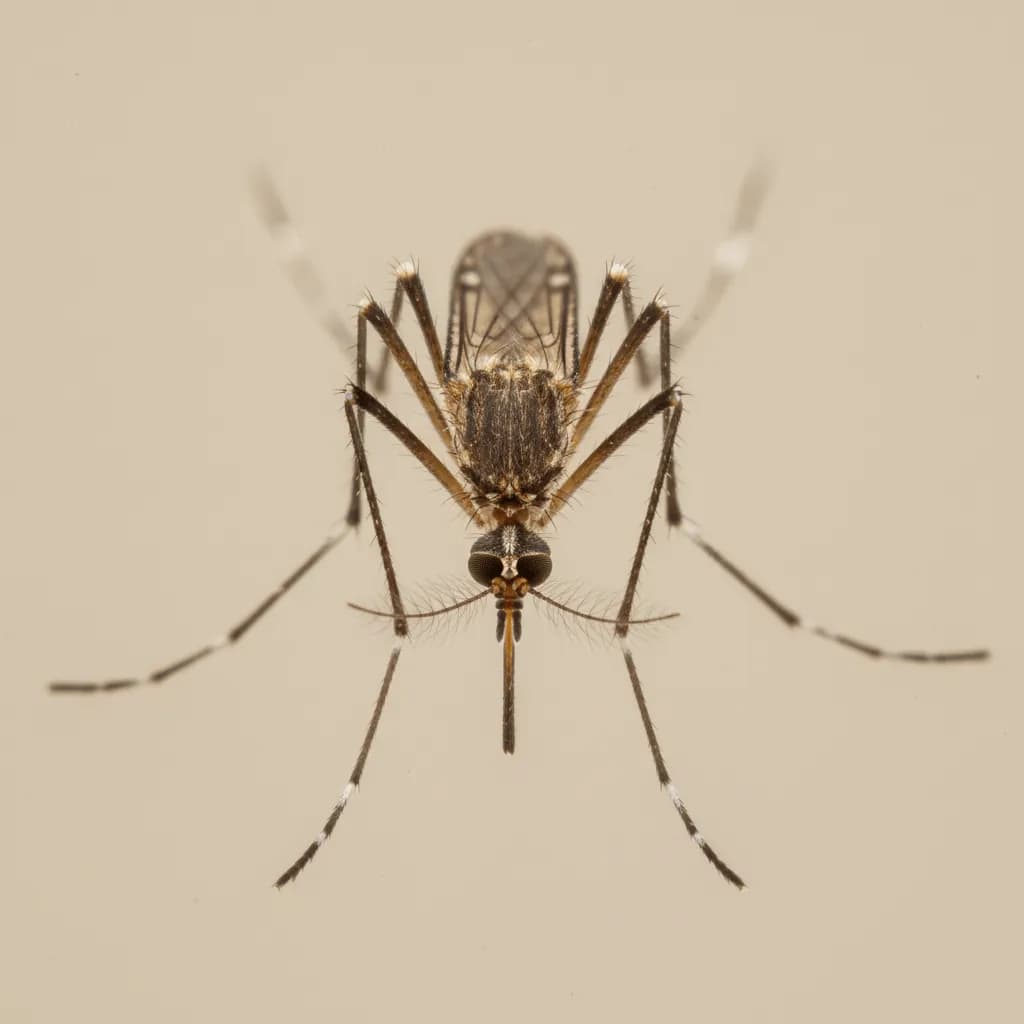
Common Malaria Mosquito
Anopheles quadrimaculatus
The Common Malaria Mosquito was historically the primary vector of malaria in the United States. While malaria was eliminated from the US in the 1950s, this mosquito remains present and could serve as a vector if malaria were reintroduced. It breeds in clean, still water with aquatic vegetation.
Identification
Size
4-6 mm
Color
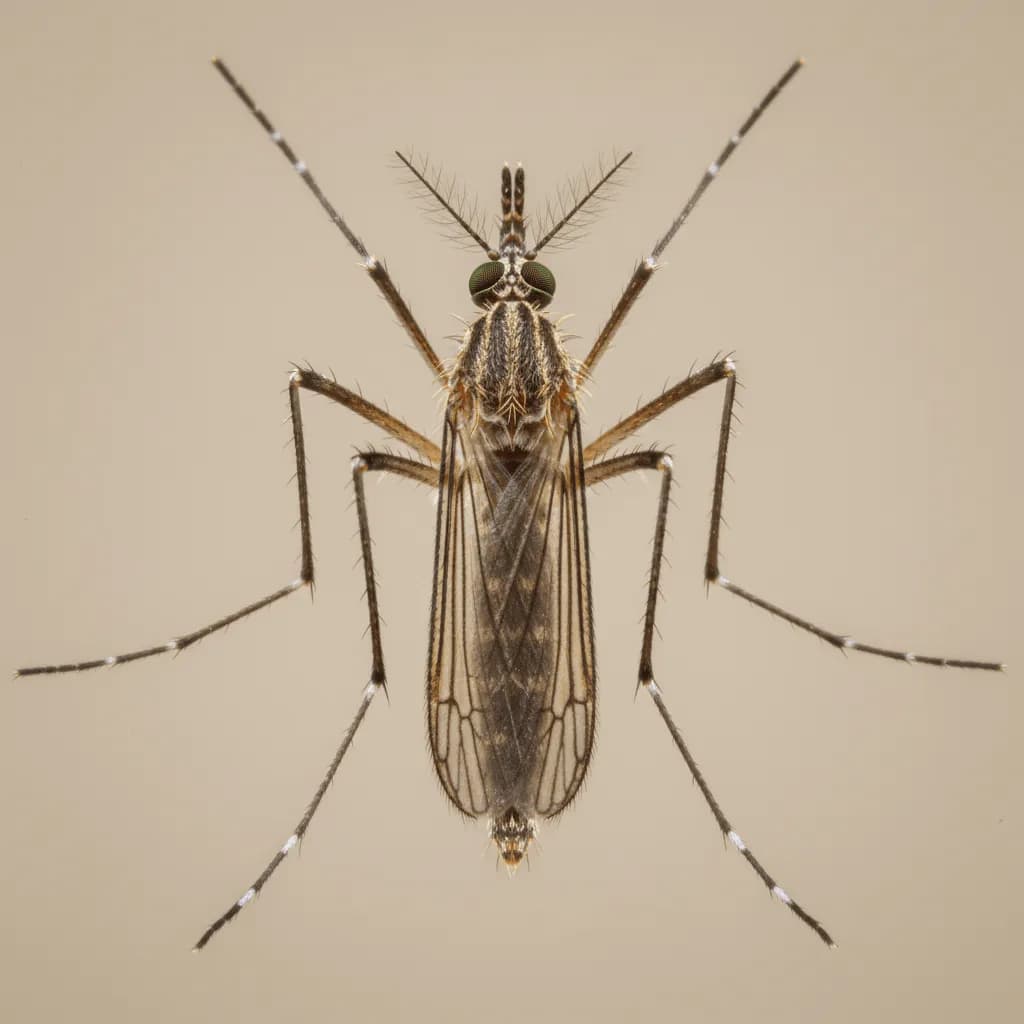
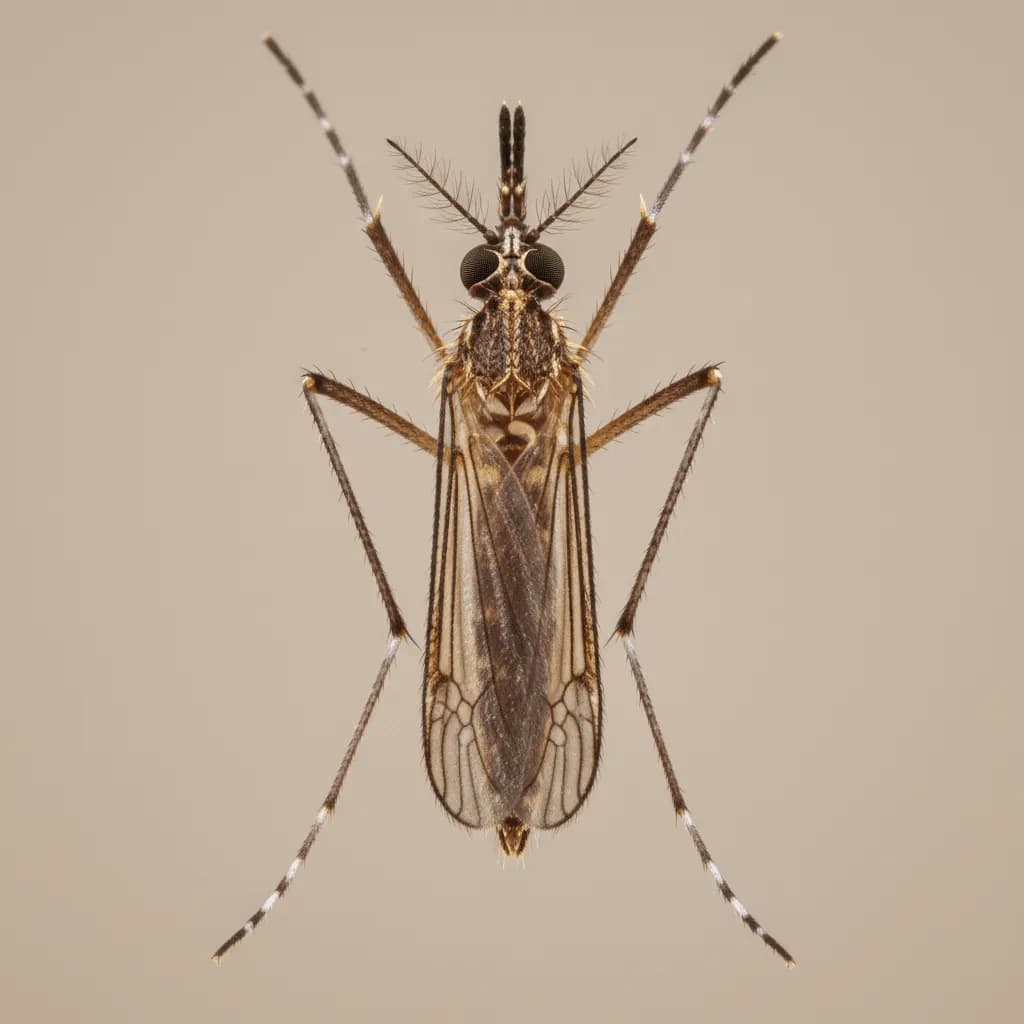
Dark brown with four dark spots on each wing
Key Trait
Rests at a 45-degree angle to the surface with abdomen pointing upward; four dark wing spots.
Behavior & Habitat
Rests at a distinctive 45-degree angle. Nocturnal biter that enters homes. Breeds in clean, permanent water bodies with emergent vegetation. Adults are strong fliers that can travel several miles.
Habitat: Margins of lakes, ponds, streams, swamps, and rice fields with emergent vegetation. Adults rest in dark sheltered areas.
Diet: Females feed on human and animal blood; males feed on nectar.
Signs of Infestation
- Mosquitoes resting at an angle on walls
- Bites in rural areas near lakes and marshes
- Larvae in clean vegetated water bodies
Risks & Damage
Historical vector of malaria in the US; remains competent to transmit the parasite if reintroduced.
Prevention Tips
- 1.Manage aquatic vegetation in ponds and lake margins
- 2.Screen homes and use bed nets in rural areas near wetlands
- 3.Support local mosquito abatement programs
Why DIY Treatment Often Falls Short
Breeding sites are large natural water bodies that homeowners cannot treat. Community-level mosquito abatement is required.
Professional Treatment
Control is typically handled by mosquito abatement districts using larviciding of breeding habitat and aerial or ground-based adulticiding during outbreaks. Residential barrier treatments can reduce biting on individual properties.
Frequently Asked Questions
Can I get malaria from this mosquito?
How do I recognize an Anopheles mosquito?
Where are they most common?
Need Help With Common malaria mosquito?
If you're seeing signs of common malaria mosquito in or around your home, professional treatment is the fastest way to stop the problem. Lotus Pest Control offers free inspections to identify the issue and recommend the right solution.
At a Glance
- Category
- Mosquitoes
- Scientific Name
- Anopheles quadrimaculatus
- Size
- 4-6 mm
- Color
- Dark brown with four dark spots on each wing
- Key Trait
- Rests at a 45-degree angle to the surface with abdomen pointing upward; four dark wing spots.
- Regions
- Southeast, South Central, Midwest
- Threat Level
- Moderate
- Risk Types
- health
- Seasonal Activity
- MarAprMayJunJulAugSepOctNovDecJanFebnonelowmoderatehighpeak