
Earwigs
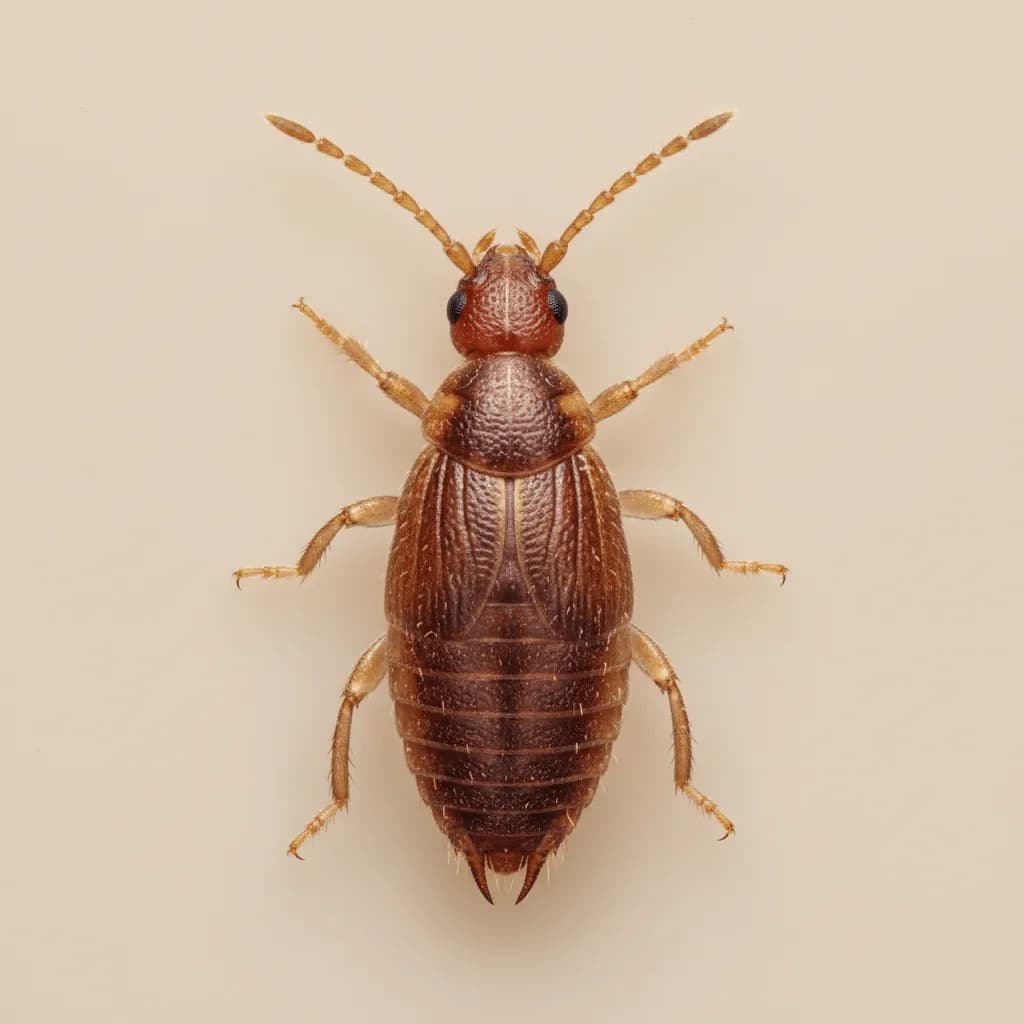
Earwigs are slender, reddish-brown insects with distinctive pincer-like cerci at the tip of the abdomen. The European earwig is the most common pest species in North America. They are nocturnal omnivores that hide during the day under mulch, stones, flower pots, and other ground-level debris. They enter homes through foundation gaps and door thresholds, often in large numbers during periods of heavy rain or hot, dry weather. Despite their alarming appearance and the folklore that they crawl into ears, they are essentially harmless to humans.
Species in This Group (1)
Key Behaviors
Earwigs are nocturnal and strongly attracted to lights, which draws them to porches, entries, and garage doors. They aggregate in large numbers in moist, confined spaces during the day. They feed on decaying plant material, soft fruits, seedlings, and occasionally other insects. Their maternal care behavior is unusual among insects - females guard their eggs and tend young nymphs. They are most abundant in mulched, irrigated landscape beds adjacent to foundations.
Risks & Concerns
Earwigs occasionally damage seedlings, soft fruits, and flower petals in gardens. Their primary impact is nuisance when they invade homes in numbers. The pincers can produce a mild pinch but do not break skin. They do not spread disease or damage structures. Their aggregation behavior means that finding one earwig often means many more are present nearby.
Need Help With Earwigs?
If you're seeing signs of earwigs in or around your home, professional treatment is the fastest way to stop the problem. Lotus Pest Control offers free inspections to identify the issue and recommend the right solution.