
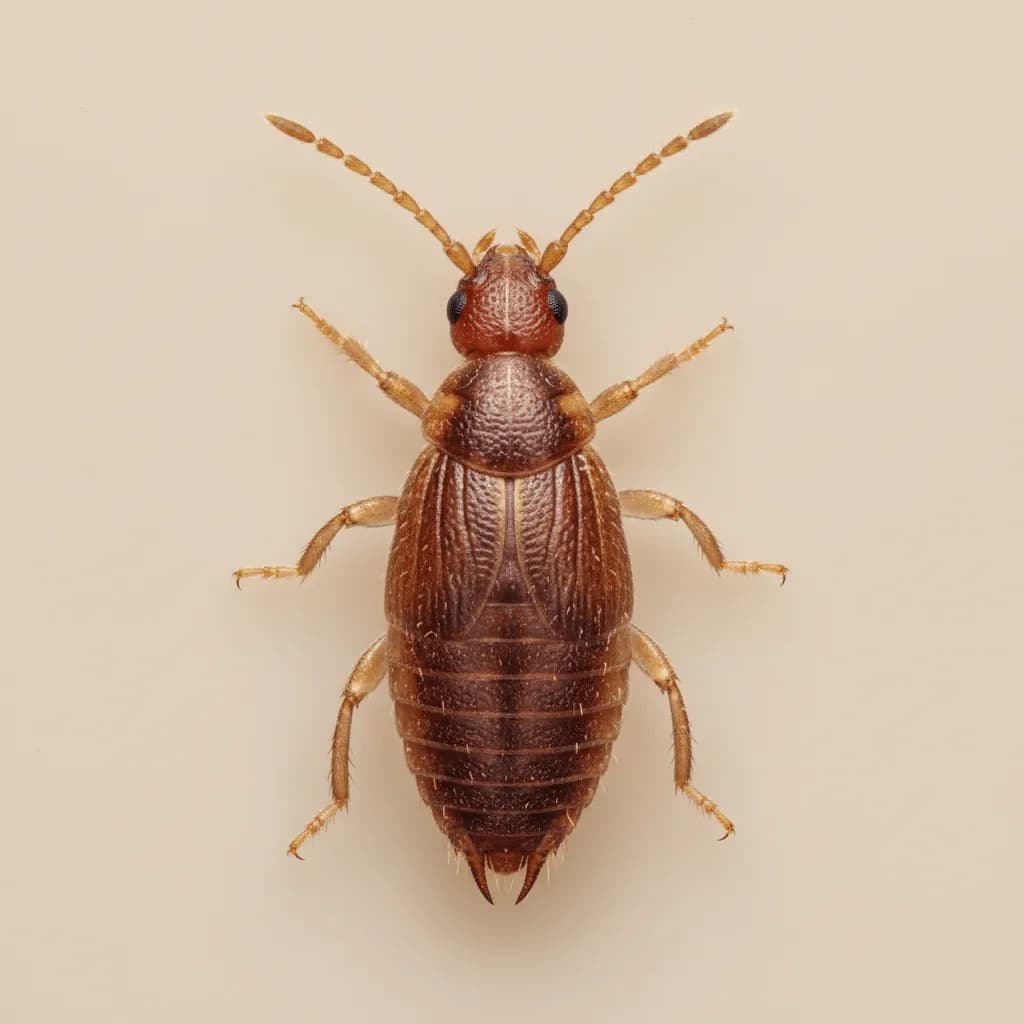
Earwig
Forficula auricularia
Also known as: European Earwig, Pincher Bug
The European Earwig is the most common earwig species in North America. It is primarily an outdoor pest that feeds on plants and insects, but frequently invades homes seeking shelter. Despite myths, it does not enter human ears intentionally.
Identification
Size
12-25 mm
Color
Dark reddish-brown with lighter yellowish legs and wing covers
Key Trait
Prominent pincer-like cerci (forceps) at the rear of the abdomen; short, leathery forewings.
Behavior & Habitat
Nocturnal and strongly attracted to lights. Hides in tight, dark, moist crevices during the day. Uses pincers for defense and prey capture. Females exhibit unusual maternal care, guarding eggs and young nymphs.
Habitat: Under mulch, stones, boards, and flower pots outdoors; door frames, window sills, basements, and kitchens indoors.
Diet: Omnivorous - aphids, mites, insect eggs, decaying organic matter, flower petals, seedlings, and soft fruit.
Signs of Infestation
- Earwigs congregating under doormats, flower pots, and outdoor furniture
- Ragged holes in flower petals and young plant leaves
- Earwigs found in door frames, window tracks, and kitchen areas at night
Risks & Damage
Alarming appearance and garden damage to flowers and seedlings.
Can damage ornamental plants, seedlings, and soft fruit in gardens.
Prevention Tips
- 1.Remove mulch, leaf litter, and debris directly adjacent to the foundation
- 2.Switch exterior lighting to yellow or sodium vapor bulbs to reduce attraction
- 3.Seal gaps around doors, windows, and utility penetrations
Why DIY Treatment Often Falls Short
Earwigs breed prolifically in moist outdoor harborage. Killing individuals indoors does not address the large population in surrounding mulch and garden beds.
Professional Treatment
Professionals apply targeted granular and residual treatments to outdoor harborage zones, treat perimeters, and advise on habitat modification to reduce populations long-term.
Related Pests
Frequently Asked Questions
Do earwigs really crawl into ears?
Can they pinch?
Are they harmful to my garden?
Need Help With Earwig?
If you're seeing signs of earwig in or around your home, professional treatment is the fastest way to stop the problem. Lotus Pest Control offers free inspections to identify the issue and recommend the right solution.
At a Glance
- Category
- Occasional Invaders
- Scientific Name
- Forficula auricularia
- Size
- 12-25 mm
- Color
- Dark reddish-brown with lighter yellowish legs and wing covers
- Key Trait
- Prominent pincer-like cerci (forceps) at the rear of the abdomen; short, leathery forewings.
- Regions
- Pacific Northwest, Northeast, Midwest, West Coast
- Threat Level
- Low
- Risk Types
- nuisanceagricultural
- Seasonal Activity
- MarAprMayJunJulAugSepOctNovDecJanFebnonelowmoderatehighpeak