
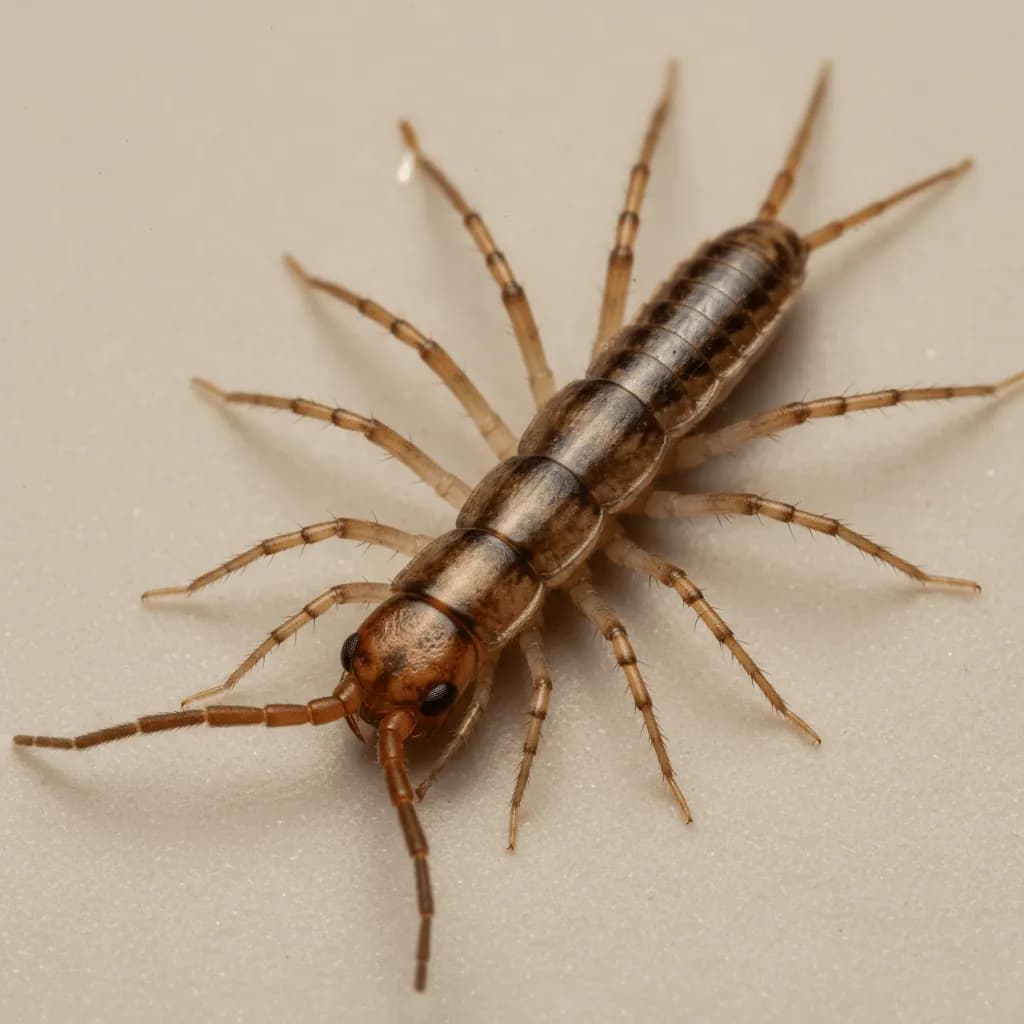
House Centipede
Scutigera coleoptrata
Also known as: Hundred-legger
The House Centipede is a nocturnal predator commonly found in damp indoor areas. Despite its alarming appearance, it is beneficial because it feeds on other household pests such as spiders, silverfish, and cockroaches. It is the most commonly encountered centipede indoors across North America.
Identification
Size
25-35 mm body; up to 75 mm with legs
Color
Yellowish-gray with three dark dorsal stripes
Key Trait
Extremely long, banded legs that give the body a feathery appearance; 15 pairs of legs; very fast runner.
Behavior & Habitat
Nocturnal hunter that relies on speed to chase down prey. Prefers dark, moist areas but may be seen darting across walls and floors at night. Can survive indoors year-round.
Habitat: Basements, bathrooms, crawl spaces, closets, and other damp indoor areas with harborage.
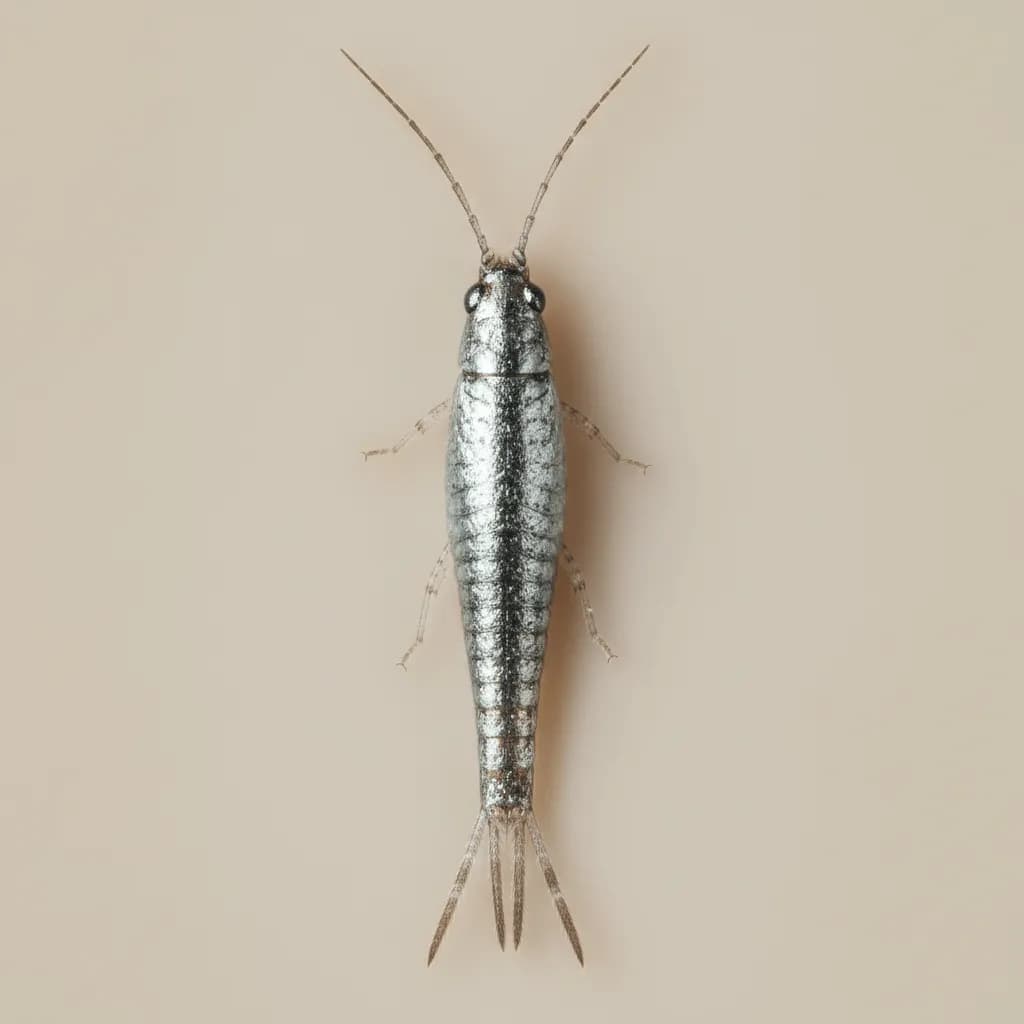
Diet: Spiders, silverfish, cockroach nymphs, carpet beetle larvae, ants, and other small arthropods.
Signs of Infestation
- Frequent sightings of fast-moving, many-legged insects on walls or floors at night
- Shed exoskeletons in basements and bathrooms
- Presence in drains and bathtubs where moisture collects
Risks & Damage
Alarming appearance causes distress; can deliver a mild, bee-sting-like bite if handled.
Prevention Tips
- 1.Reduce indoor humidity with dehumidifiers and ventilation
- 2.Seal cracks and gaps around foundation and utility penetrations
- 3.Remove clutter in basements and storage areas to eliminate harborage
Why DIY Treatment Often Falls Short
House centipedes are fast and nocturnal, making direct contact with sprays unlikely. Their presence usually indicates a prey population that must also be addressed.
Professional Treatment
Professionals address both centipedes and their prey with targeted residual treatments in harborage areas, moisture reduction recommendations, and exclusion work.
Frequently Asked Questions
Are house centipedes dangerous?
Why do I see them in my bathtub?
Does seeing one mean I have an infestation?
Need Help With House centipede?
If you're seeing signs of house centipede in or around your home, professional treatment is the fastest way to stop the problem. Lotus Pest Control offers free inspections to identify the issue and recommend the right solution.
At a Glance
- Category
- Occasional Invaders
- Scientific Name
- Scutigera coleoptrata
- Size
- 25-35 mm body; up to 75 mm with legs
- Color
- Yellowish-gray with three dark dorsal stripes
- Key Trait
- Extremely long, banded legs that give the body a feathery appearance; 15 pairs of legs; very fast runner.
- Regions
- Northeast, Midwest, Southeast, Mid Atlantic
- Threat Level
- Very Low
- Risk Types
- nuisance
- Seasonal Activity
- MarAprMayJunJulAugSepOctNovDecJanFebnonelowmoderatehighpeak