
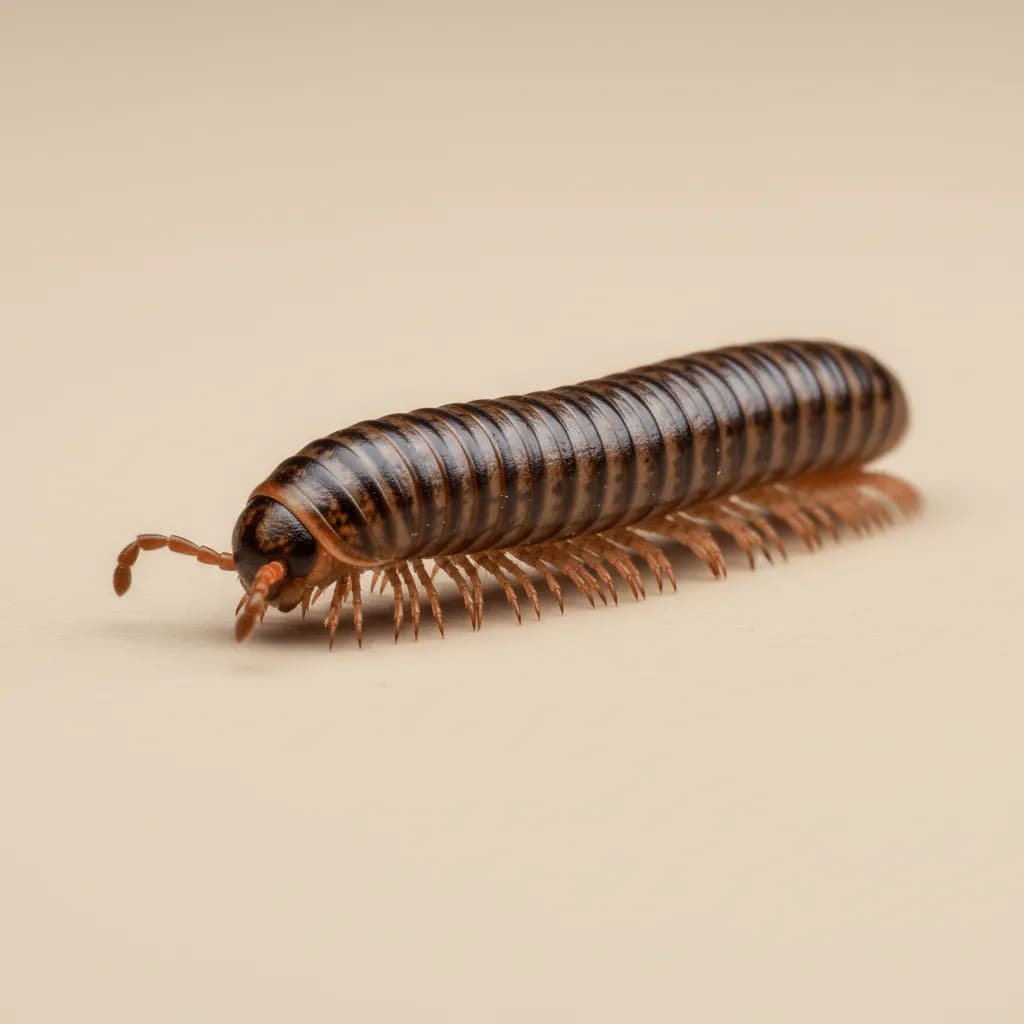
Millipede
Narceus americanus
Also known as: Thousand-legger, American Giant Millipede
Millipedes are slow-moving, cylindrical arthropods that primarily feed on decaying organic matter outdoors. They invade homes in large numbers during heavy rains or drought, seeking moisture or drier conditions. They are harmless but can stain surfaces with defensive secretions.
Identification
Size
25-100 mm
Color
Dark brown to black, sometimes with reddish or orange banding on segments
Key Trait
Cylindrical body with two pairs of legs per body segment; curls into a tight spiral when disturbed.
Behavior & Habitat
Primarily nocturnal detritivores. Mass migrations into structures occur after heavy rain or during drought. Curl into a spiral and release foul-smelling defensive secretions when threatened.
Habitat: Leaf litter, mulch beds, under logs and stones outdoors; basements, garages, and ground-level rooms indoors.
Diet: Decaying plant matter, leaf litter, rotting wood, and occasionally seedlings or soft fruit.
Signs of Infestation
- Large numbers found along foundation walls or in window wells
- Dead millipedes curled into spirals in basements and garages
- Brown staining on surfaces from crushed defensive secretions
Risks & Damage
Mass invasions cause distress; defensive secretions can stain floors and fabrics.
Prevention Tips
- 1.Pull mulch and leaf litter at least 12 inches away from the foundation
- 2.Seal gaps at the base of doors, windows, and foundation joints
- 3.Reduce outdoor lighting near entry points that attracts them at night
Why DIY Treatment Often Falls Short
Millipede invasions involve hundreds of individuals migrating from outdoor breeding sites. Killing those already indoors does nothing to stop the source population in surrounding soil and mulch.
Professional Treatment
Professionals apply perimeter barrier treatments, address moisture and mulch conditions near the foundation, and seal entry points to stop mass migrations.
Related Pests
Frequently Asked Questions
Are millipedes poisonous?
Why are hundreds suddenly inside?
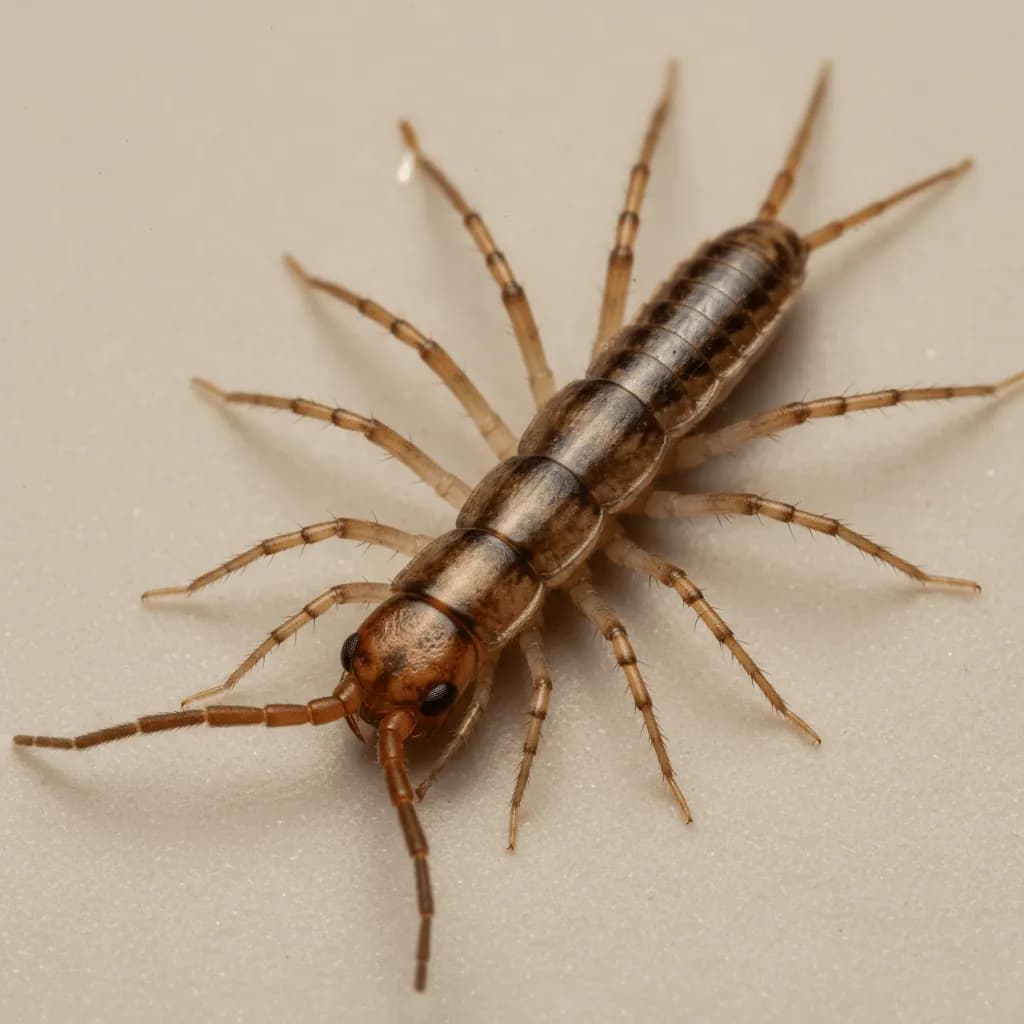
How are they different from centipedes?
Need Help With Millipede?
If you're seeing signs of millipede in or around your home, professional treatment is the fastest way to stop the problem. Lotus Pest Control offers free inspections to identify the issue and recommend the right solution.
At a Glance
- Category
- Occasional Invaders
- Scientific Name
- Narceus americanus
- Size
- 25-100 mm
- Color
- Dark brown to black, sometimes with reddish or orange banding on segments
- Key Trait
- Cylindrical body with two pairs of legs per body segment; curls into a tight spiral when disturbed.
- Regions
- Southeast, Midwest, Northeast, Mid Atlantic
- Threat Level
- Very Low
- Risk Types
- nuisance
- Seasonal Activity
- MarAprMayJunJulAugSepOctNovDecJanFebnonelowmoderatehighpeak