
Silverfish
Silverfish are primitive, wingless insects with a distinctive teardrop-shaped body covered in silvery scales and three long tail-like appendages. They are among the most ancient insect groups, predating the dinosaurs. They thrive in dark, humid environments and feed on starches, sugars, paper, book bindings, wallpaper paste, and textiles. They are long-lived insects, with individual silverfish surviving three to six years. They are a persistent pest in libraries, archives, museums, and homes with high humidity. Firebrats are a closely related species that prefers hotter, drier environments.
Species in This Group (2)
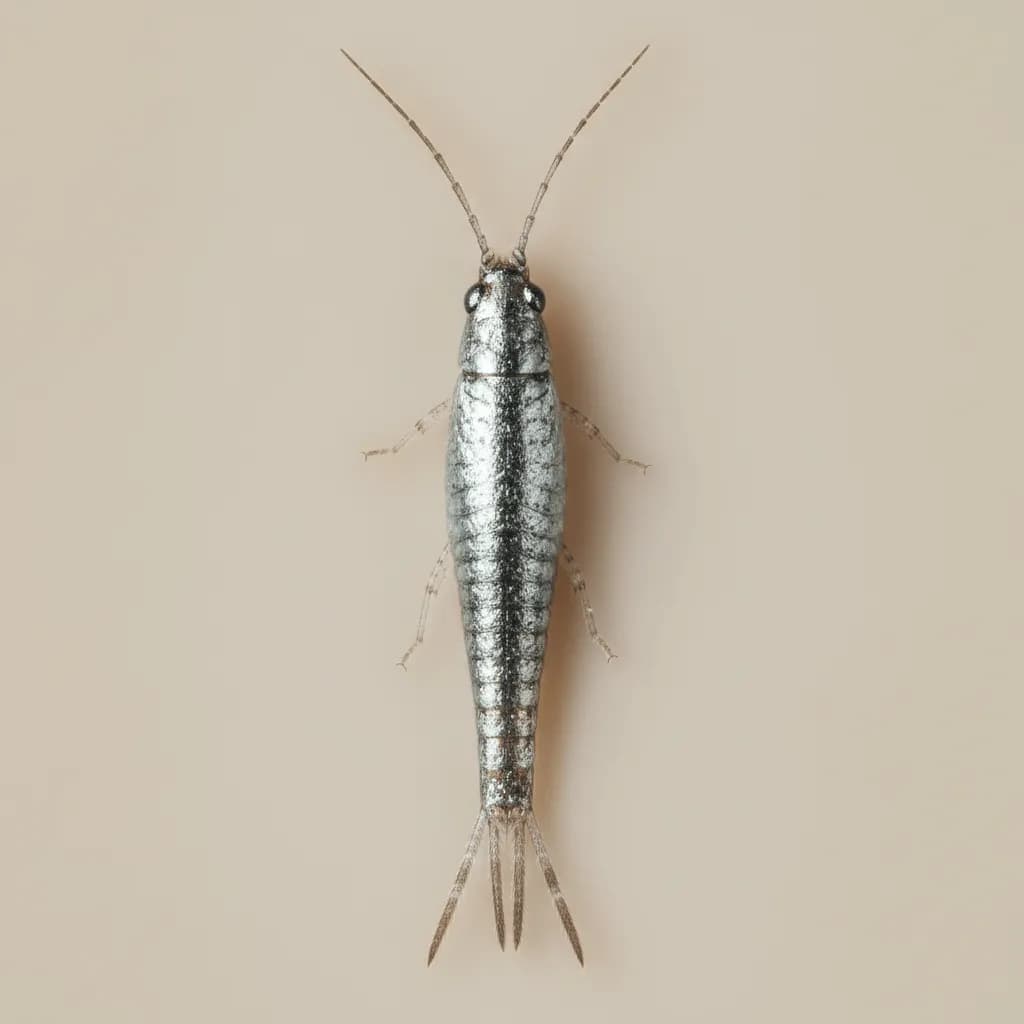
Silverfish
Lepisma saccharinum
Silverfish are primitive, wingless insects that thrive in dark, humid environments.
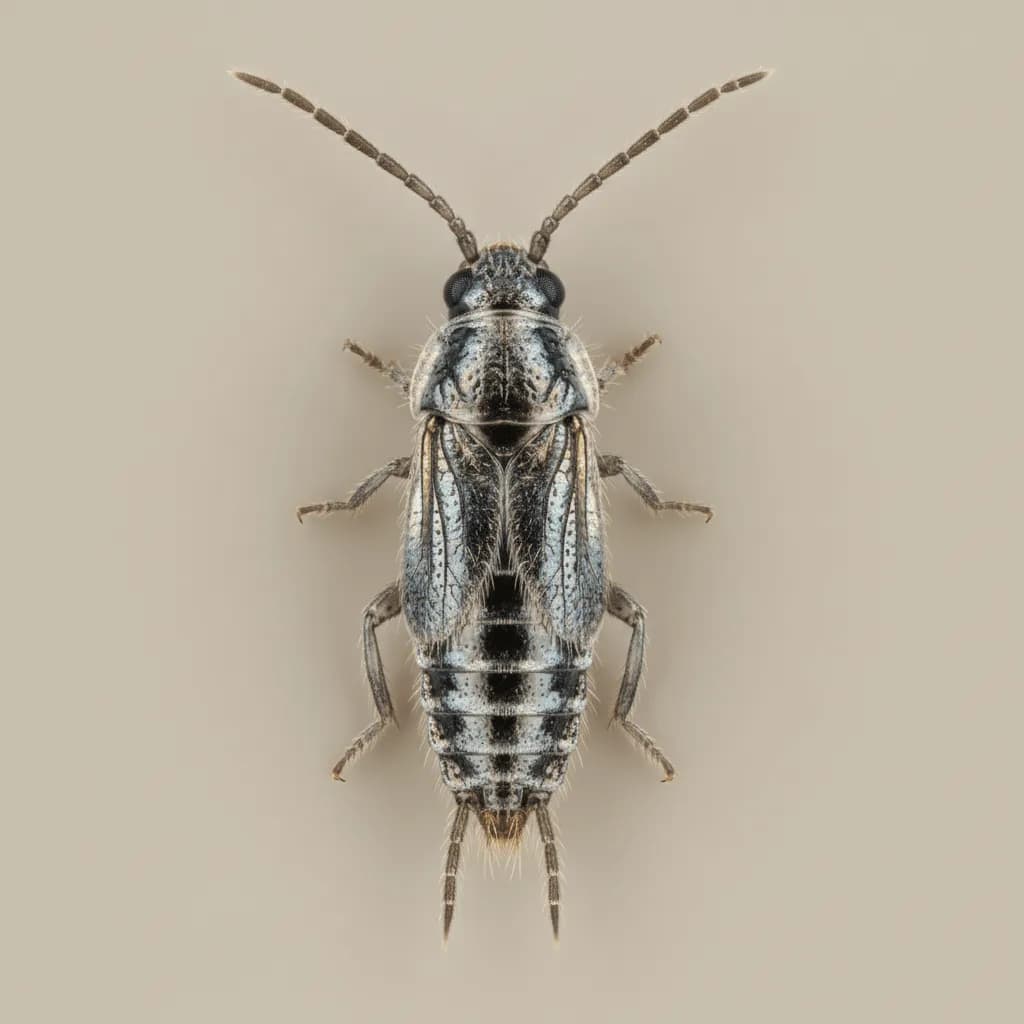
Firebrat
Thermobia domestica
The Firebrat is closely related to the silverfish but prefers hot, dry environments such as areas near furnaces, ovens, and hot water heaters.
Key Behaviors
Silverfish are nocturnal and extremely fast runners that avoid light. They prefer environments with 75 to 95 percent humidity and temperatures between 70 and 80F. They feed on paper, book bindings, wallpaper paste, starch in clothing, and sugary food residues. They are commonly found in bathrooms, basements, laundry rooms, and behind wallpaper. They can survive months without food if moisture is available.
Risks & Concerns
Silverfish damage books, documents, photographs, wallpaper, and starchy fabrics. In libraries and archives, they are a significant preservation concern. Their feeding leaves irregular holes and surface damage on paper products. They do not bite or transmit disease. Controlling humidity below 60 percent is the most effective long-term management strategy.
Quick Comparison
| Species | Size | Color | Key Trait |
|---|---|---|---|
| Silverfish | 12-19 mm | Silvery metallic gray with a shimmering, scaled body | Carrot-shaped body covered in tiny silvery scales; three long tail-like appendages (cerci); fishlike wriggling movement. |
| Firebrat | 10-14 mm | Mottled gray-brown with darker and lighter patches; lacks the uniform silvery sheen of silverfish | Similar shape to silverfish but with mottled brown coloring instead of uniform silver; prefers much warmer environments (above 90 degrees F). |
Need Help With Silverfish?
If you're seeing signs of silverfish in or around your home, professional treatment is the fastest way to stop the problem. Lotus Pest Control offers free inspections to identify the issue and recommend the right solution.