
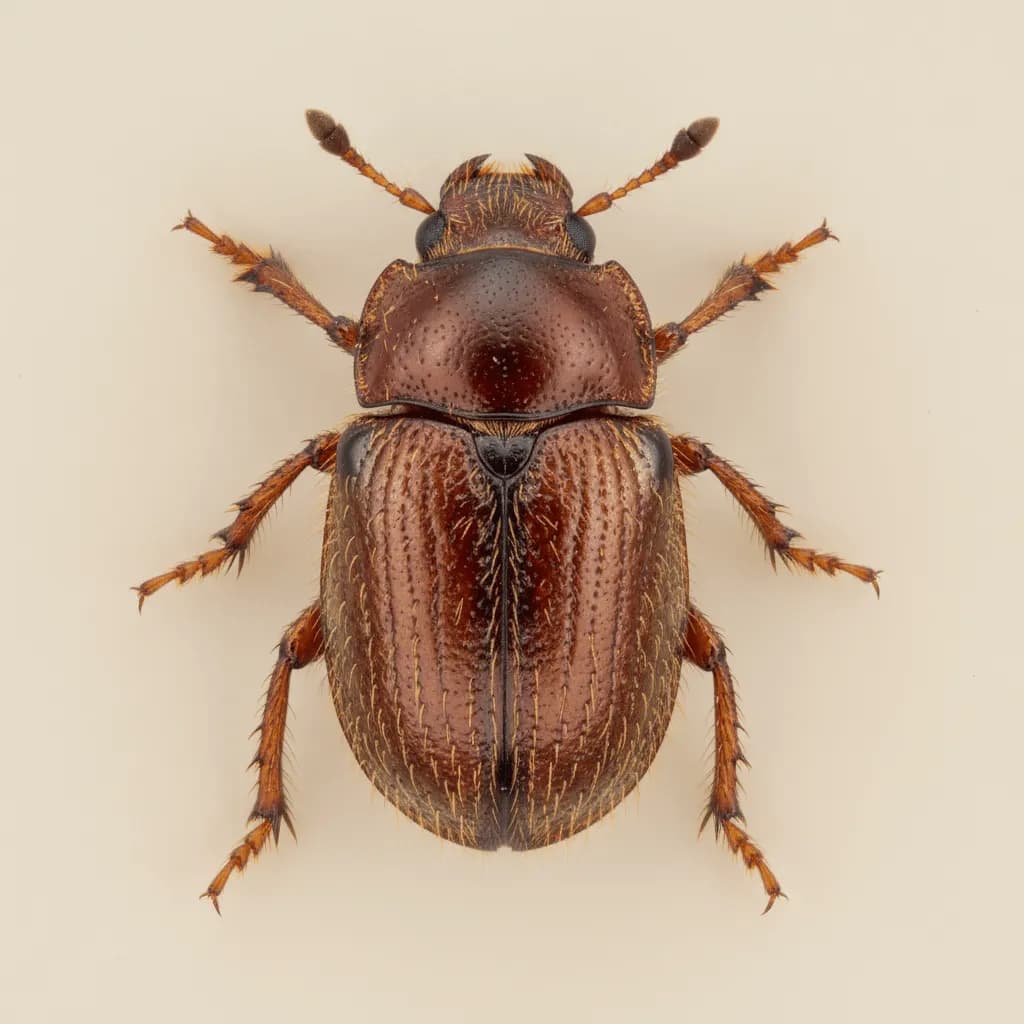
Drugstore Beetle
Stegobium paniceum
Also known as: Bread Beetle, Biscuit Beetle
The Drugstore Beetle earned its name from its habit of infesting dried herbs and pharmaceutical preparations in old apothecaries. It has one of the broadest diets of any stored-product pest, feeding on everything from bread and spices to leather, wool, and even strychnine.
Identification
Size
2-3.5 mm
Color
Reddish-brown with a rounded, oval body
Key Trait
Rounded body with fine longitudinal grooves on wing covers; infests an astonishing range of materials including pharmaceuticals, spices, and books.
Behavior & Habitat
Larvae bore through an extraordinary variety of materials. Adults are strong fliers attracted to light. Can complete development on materials with almost no nutritional value thanks to symbiotic yeast.
Habitat: Pantries, spice cabinets, pharmacies, museums, and libraries. Infests stored food, dried herbs, leather, books, and a wide variety of organic materials.
Diet: Bread, flour, spices, dried herbs, pet food, leather, wool, museum specimens, book bindings, and even toxic substances like strychnine.
Signs of Infestation
- Small round beetles in spice containers and dried herb packages
- Holes bored through packaged food, leather goods, or book bindings
- Fine powder near infested items
Risks & Damage
Infests and contaminates a wide range of stored food and non-food products.
Prevention Tips
- 1.Store spices and dried herbs in sealed glass containers
- 2.Discard old, rarely used spice containers
- 3.Inspect dried flower arrangements and potpourri
Why DIY Treatment Often Falls Short
Their incredibly broad diet means the source can be almost anything organic in the home. Finding the infested item is the challenge.
Professional Treatment
Professionals conduct an exhaustive search for the infested source, which may be an unexpected item. Treatment includes discarding infested materials, treating harborage areas, and pheromone monitoring.
Related Pests
Frequently Asked Questions
Why is it called a drugstore beetle?
What can it actually eat?
Can it damage my books?
Need Help With Drugstore beetle?
If you're seeing signs of drugstore beetle in or around your home, professional treatment is the fastest way to stop the problem. Lotus Pest Control offers free inspections to identify the issue and recommend the right solution.
At a Glance
- Category
- Pantry Pests
- Scientific Name
- Stegobium paniceum
- Size
- 2-3.5 mm
- Color
- Reddish-brown with a rounded, oval body
- Key Trait
- Rounded body with fine longitudinal grooves on wing covers; infests an astonishing range of materials including pharmaceuticals, spices, and books.
- Regions
- Southeast, Northeast, Midwest, Southwest
- Threat Level
- Low
- Risk Types
- food
- Seasonal Activity
- MarAprMayJunJulAugSepOctNovDecJanFebnonelowmoderatehighpeak