
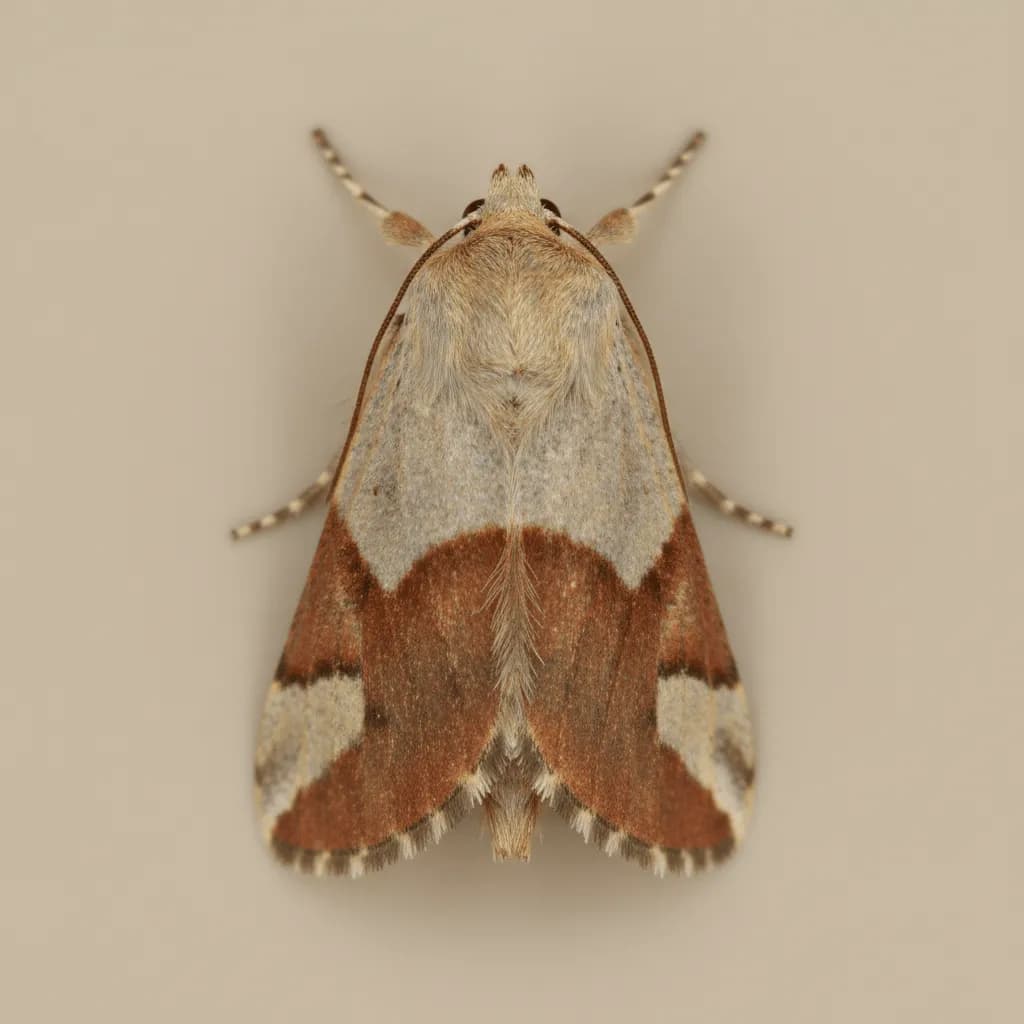
Indian Meal Moth
Plodia interpunctella
Also known as: Pantry Moth
The Indian Meal Moth is the most common pantry pest in American homes. Larvae feed on a wide range of stored foods including cereals, nuts, dried fruit, pet food, and birdseed. Adults do not feed but are attracted to lights and are often the first sign of infestation noticed by homeowners.
Identification
Size
8-10 mm body; 16-20 mm wingspan
Color
Distinctive two-toned wings: outer two-thirds are coppery-bronze, inner third is pale gray
Key Trait
Two-toned wing pattern - outer bronze and inner gray - is unmistakable among pantry pests.
Behavior & Habitat
Larvae spin silk webbing through food as they feed. Adults are nocturnal fliers attracted to lights. The infestation source can be far from where adult moths are seen.
Habitat: Pantries, pet food storage, bird seed containers, and any area where dry food products are stored.
Diet: Cereals, grain products, dried fruit, nuts, chocolate, spices, pet food, and birdseed.
Signs of Infestation
- Small moths with two-toned wings flying in kitchens and pantries
- Silk webbing on the surface of stored food products
- Tiny cream-colored larvae in food packages
- Frass (fine granular waste) in food containers
Risks & Damage
Contaminated products must be discarded; larvae can infest a wide range of stored foods.
Prevention Tips
- 1.Store all dry goods in sealed glass or hard plastic containers
- 2.Inspect new grocery purchases before putting them in the pantry
- 3.Freeze susceptible products for 48 hours after purchase to kill eggs
- 4.Clean pantry shelves regularly and vacuum cracks and crevices
- 5.Use pheromone traps to detect activity early
Why DIY Treatment Often Falls Short
Pheromone traps catch adult males but do not eliminate the infestation. All infested products must be found and discarded, and hidden sources like forgotten birdseed or pet treats in closets are often missed.
Professional Treatment
Technicians conduct a comprehensive stored-product inspection, identifying all infested items. Crack-and-crevice treatments are applied to pantry shelving. Pheromone traps are placed for long-term monitoring. Sanitation and storage recommendations are provided.
Related Pests
Frequently Asked Questions
How did pantry moths get into sealed packages?
Do pantry moth traps solve the problem?
Can pantry moths infest non-food items?
Need Help With Indian meal moth?
If you're seeing signs of indian meal moth in or around your home, professional treatment is the fastest way to stop the problem. Lotus Pest Control offers free inspections to identify the issue and recommend the right solution.
At a Glance
- Category
- Pantry Pests
- Scientific Name
- Plodia interpunctella
- Size
- 8-10 mm body; 16-20 mm wingspan
- Color
- Distinctive two-toned wings: outer two-thirds are coppery-bronze, inner third is pale gray
- Key Trait
- Two-toned wing pattern - outer bronze and inner gray - is unmistakable among pantry pests.
- Regions
- Northeast, Southeast, Midwest, Southwest, Pacific Northwest
- Threat Level
- Low
- Risk Types
- food
- Seasonal Activity
- MarAprMayJunJulAugSepOctNovDecJanFebnonelowmoderatehighpeak