
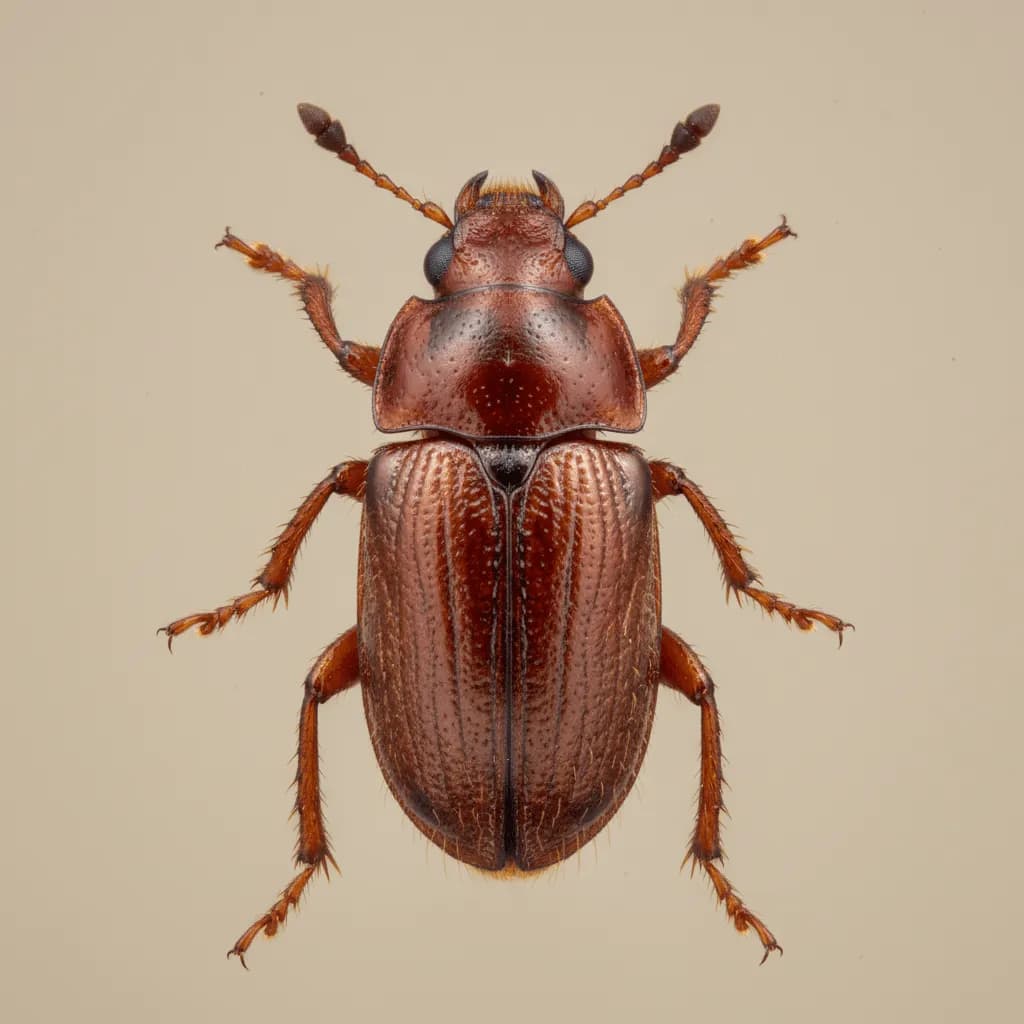
Red Flour Beetle
Tribolium castaneum
The Red Flour Beetle is a major pest of stored flour and grain products worldwide. Adults and larvae feed on broken grain, flour, and cereal products. Large infestations give flour a pinkish tinge and a pungent, unpleasant odor from defensive secretions (quinones).
Identification
Size
3-4 mm
Color
Reddish-brown
Key Trait
Small, flat, reddish-brown beetle found in flour and grain products; antennae gradually enlarge into a 3-segmented club.
Behavior & Habitat
Adults are strong fliers and can spread between food sources. Both adults and larvae feed on and contaminate stored products. Defensive quinone secretions give infested flour a foul taste and pink discoloration.
Habitat: Flour mills, bakeries, grocery stores, and home pantries. Thrives in warm conditions and infests flour, cereal, pasta, and other processed grain products.
Diet: Flour, cereal, crackers, pasta, spices, dried fruit, and broken grain.
Signs of Infestation
- Small reddish-brown beetles in flour and cereal containers
- Pinkish tinge to infested flour
- Unpleasant odor from heavily infested products
Risks & Damage
Contaminates stored food with beetles, larvae, frass, and foul-smelling quinone secretions.
Prevention Tips
- 1.Store flour and cereals in sealed containers
- 2.Rotate stock and use older products first
- 3.Keep pantry shelves clean and free of spilled flour
Why DIY Treatment Often Falls Short
All infested products must be identified and discarded. Beetle populations can persist in flour dust accumulated in shelf cracks and crevices.
Professional Treatment
Professionals discard infested products, vacuum and treat pantry shelving cracks, and apply insect growth regulators. In commercial facilities, fumigation or heat treatment may be required.
Related Pests
Frequently Asked Questions
Can I still eat flour with a few beetles?
How did beetles get into my sealed flour bag?
What is the difference between red and confused flour beetles?
Need Help With Red flour beetle?
If you're seeing signs of red flour beetle in or around your home, professional treatment is the fastest way to stop the problem. Lotus Pest Control offers free inspections to identify the issue and recommend the right solution.
At a Glance
- Category
- Pantry Pests
- Scientific Name
- Tribolium castaneum
- Size
- 3-4 mm
- Color
- Reddish-brown
- Key Trait
- Small, flat, reddish-brown beetle found in flour and grain products; antennae gradually enlarge into a 3-segmented club.
- Regions
- Southeast, South Central, Midwest, Northeast
- Threat Level
- Low
- Risk Types
- food
- Seasonal Activity
- MarAprMayJunJulAugSepOctNovDecJanFebnonelowmoderatehighpeak