
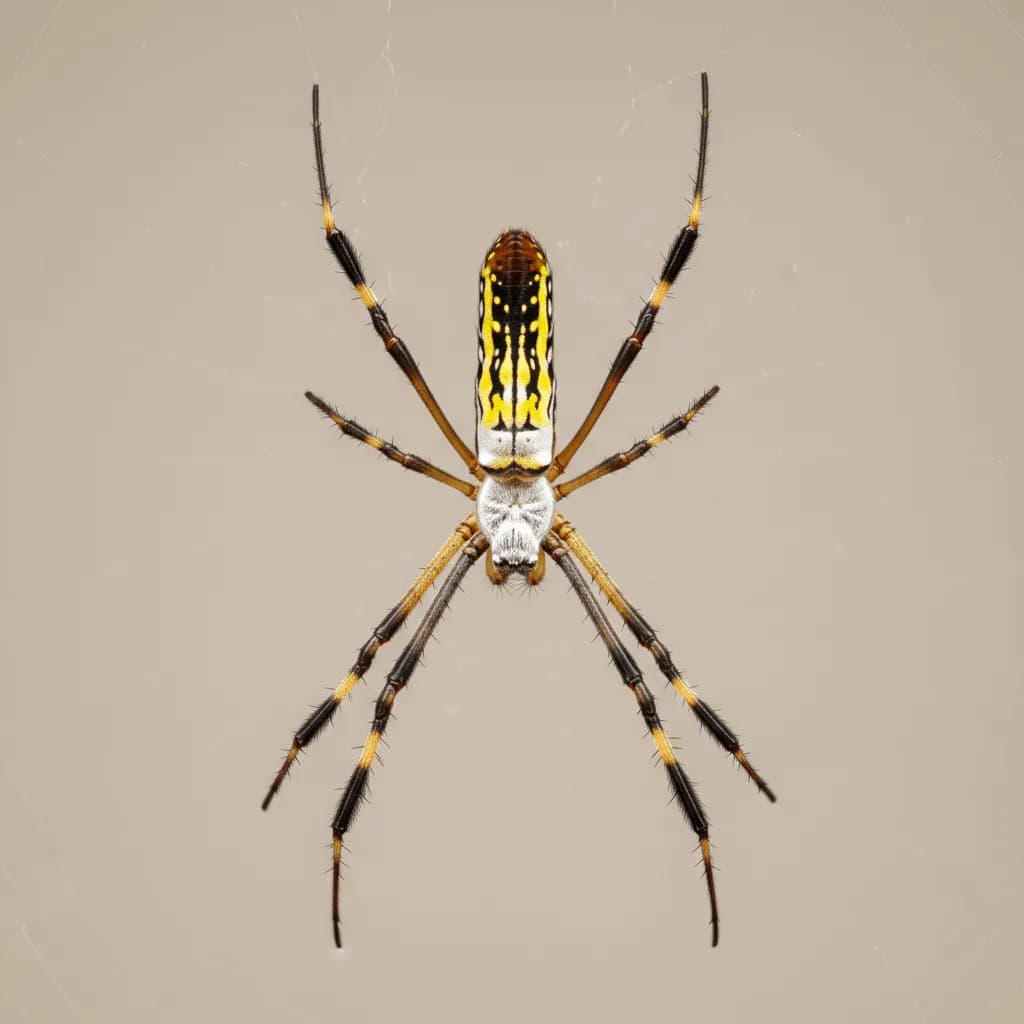
Banana Spider
Trichonephila clavipes
Also known as: Golden Silk Orb-Weaver, Golden Silk Spider, Calico Spider
The Banana Spider, more accurately called the Golden Silk Orb-Weaver, is one of the largest and most conspicuous spiders in the southeastern United States. Females produce enormous webs of golden-colored silk that can span pathways and gaps between trees. Despite their intimidating size, they are not aggressive and their bite is comparable to a bee sting.
Identification
Size
24-40 mm (females, body length); males 5-8 mm
Color
Females have yellow-green bodies with distinctive white tufts on long, banded legs; males are small and inconspicuous dark brown
Key Trait
Extremely large females with conspicuous yellow-gold silk webs that can span several feet; dramatic size difference between large females and tiny males.
Behavior & Habitat
Females build large, semi-permanent golden-silk orb webs in open areas between trees, shrubs, and structures. Webs are incredibly strong and may persist for weeks. Tiny males live on the edges of the female's web. Not aggressive toward humans.
Habitat: Forests, gardens, parks, and wooded residential areas throughout the Southeast. Webs are built in open areas between trees and structures, often across pathways and trails.
Diet: Flying insects including flies, beetles, moths, grasshoppers, and dragonflies captured in the large orb web.
Signs of Infestation
- Very large golden-colored webs spanning between trees or structures
- Large yellow-green female spiders conspicuous in the center of webs
- Webs positioned across walkways, porches, and garden paths
Risks & Damage
Their enormous size and large webs across walkways are alarming, though they are not medically significant and are beneficial predators of pest insects.
Prevention Tips
- 1.Regularly remove webs from walkways and frequently used areas
- 2.Trim vegetation to reduce web attachment points near living areas
- 3.Use a walking stick to clear webs across trails and pathways
Why DIY Treatment Often Falls Short
Banana spiders are beneficial and not harmful. Killing them removes a natural pest control agent. Web removal alone is temporary as they rebuild. Chemical treatments are unnecessary and counterproductive.
Professional Treatment
Professional intervention is rarely warranted for banana spiders since they are beneficial. When webs are in problematic locations, professionals can relocate spiders or modify habitat to redirect web building away from high-traffic areas.
Related Pests
Frequently Asked Questions
Are banana spiders venomous?
Why is the silk golden?
Should I kill them?
Need Help With Banana spider?
If you're seeing signs of banana spider in or around your home, professional treatment is the fastest way to stop the problem. Lotus Pest Control offers free inspections to identify the issue and recommend the right solution.
At a Glance
- Category
- Spiders
- Scientific Name
- Trichonephila clavipes
- Size
- 24-40 mm (females, body length); males 5-8 mm
- Color
- Females have yellow-green bodies with distinctive white tufts on long, banded legs; males are small and inconspicuous dark brown
- Key Trait
- Extremely large females with conspicuous yellow-gold silk webs that can span several feet; dramatic size difference between large females and tiny males.
- Regions
- Southeast, Gulf Coast, Mid Atlantic
- Threat Level
- Very Low
- Risk Types
- nuisance
- Seasonal Activity
- MarAprMayJunJulAugSepOctNovDecJanFebnonelowmoderatehighpeak