
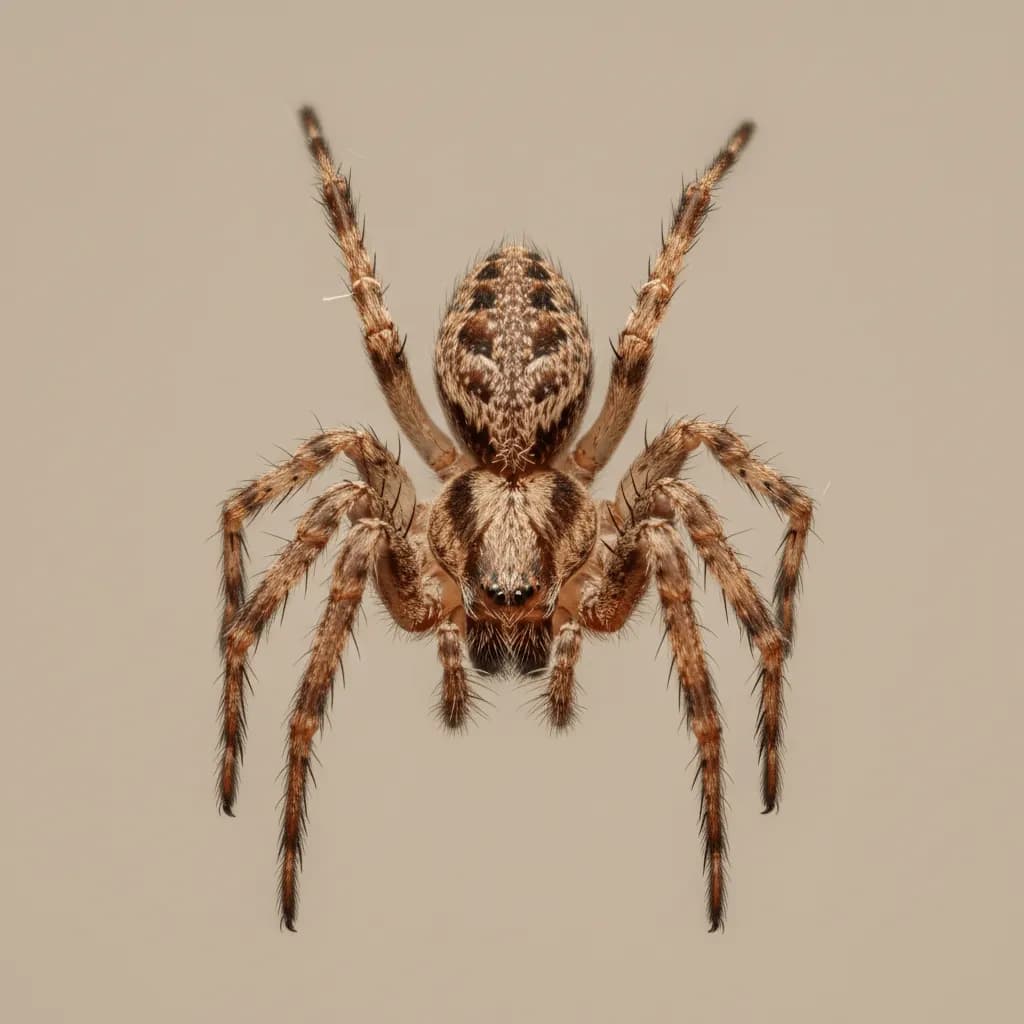
Common House Spider
Parasteatoda tepidariorum
Also known as: American House Spider
The Common House Spider is responsible for most of the cobwebs found in homes. It builds tangled, irregular webs in corners, window frames, and along ceiling edges. While considered a nuisance due to web accumulation, it is harmless and beneficial as a predator of household insects.
Identification
Size
5-8 mm
Color
Tan to brownish-gray with darker mottled patterns
Key Trait
Bulbous abdomen with mottled pattern; builds messy cobwebs in corners and along ceiling edges.
Behavior & Habitat
Sedentary web-builder that waits in or near its web for prey. Abandons webs that do not catch prey and builds new ones, leading to cobweb accumulation. Shy and retreats quickly when disturbed.
Habitat: Indoor corners, window frames, closets, garages, basements, and behind furniture. Also found on exterior walls, under eaves, and around light fixtures.
Diet: Small insects including flies, mosquitoes, and ants caught in webs.
Signs of Infestation
- Cobwebs accumulating in corners and along ceilings
- Small tan spiders with bulbous abdomens near webs
- Webs around windows, light fixtures, and door frames
Risks & Damage
Web accumulation is unsightly but the spider is completely harmless and beneficial.
Prevention Tips
- 1.Remove webs regularly with a vacuum or duster
- 2.Seal cracks around windows and doors to reduce indoor prey insects
- 3.Reduce exterior lighting that attracts prey insects near entry points
- 4.Maintain regular housekeeping in corners and behind furniture
Why DIY Treatment Often Falls Short
Spraying individual spiders is unnecessary and wasteful. Reducing prey insects and removing webs regularly is the most practical approach. Pesticide use is not recommended for harmless house spiders.
Professional Treatment
Professional treatment is generally unnecessary for common house spiders. If persistent cobwebbing is a concern, technicians focus on exterior perimeter treatments to reduce prey insect populations and web removal service.
Frequently Asked Questions
Are common house spiders dangerous?
Why do I have so many cobwebs?
Should I kill house spiders?
Need Help With Common house spider?
If you're seeing signs of common house spider in or around your home, professional treatment is the fastest way to stop the problem. Lotus Pest Control offers free inspections to identify the issue and recommend the right solution.
At a Glance
- Category
- Spiders
- Scientific Name
- Parasteatoda tepidariorum
- Size
- 5-8 mm
- Color
- Tan to brownish-gray with darker mottled patterns
- Key Trait
- Bulbous abdomen with mottled pattern; builds messy cobwebs in corners and along ceiling edges.
- Regions
- Northeast, Midwest, Southeast, Southwest, Pacific Northwest
- Threat Level
- Very Low
- Risk Types
- nuisance
- Seasonal Activity
- MarAprMayJunJulAugSepOctNovDecJanFebnonelowmoderatehighpeak