
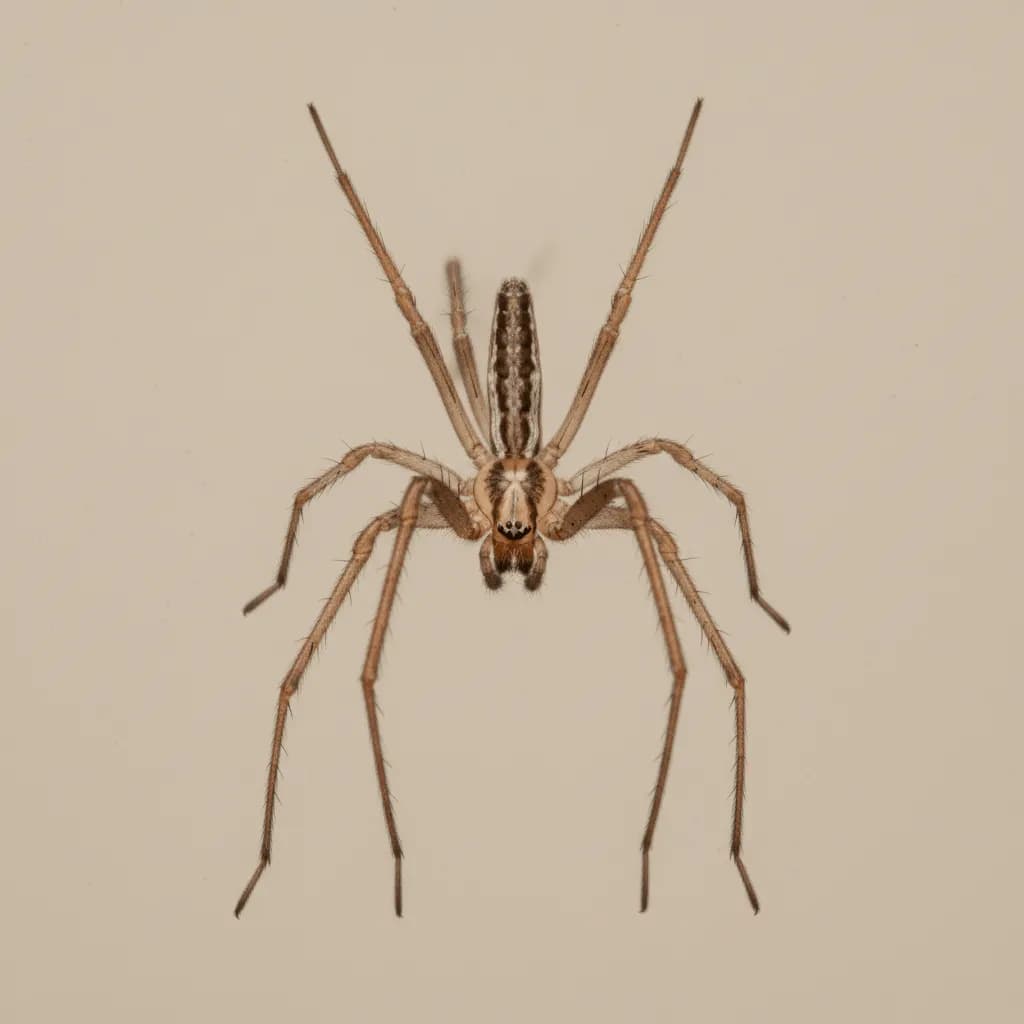
Long-Bodied Cellar Spider
Pholcus phalangioides
Also known as: Daddy Longlegs Spider, Skull Spider
The Long-Bodied Cellar Spider is the archetypal 'daddy longlegs spider' found in basements, cellars, and dark corners of homes worldwide. It builds irregular, sheet-like webs and hangs inverted within them. When threatened, it vibrates rapidly in its web, becoming a blur. It is completely harmless and preys on other spiders including brown recluse.
Identification
Size
6-9 mm (body), leg span up to 50 mm
Color
Pale tan to light gray with very long, thin legs
Key Trait
Extremely long, thin legs; hangs inverted in messy webs in basements and cellars; vibrates rapidly when disturbed.
Behavior & Habitat
Hangs inverted in its loose web. When disturbed, vibrates rapidly in the web as a defensive behavior. Preys on other spiders by wrapping them in silk from a distance. Can accumulate extensive webs over time.
Habitat: Basements, cellars, garages, crawl spaces, closets, and dark corners of any indoor space. Thrives in undisturbed areas with moderate humidity.
Diet: Other spiders (including brown recluse and black widows), mosquitoes, flies, and small insects.
Signs of Infestation
- Extensive loose cobwebs in basement corners and along ceilings
- Pale, long-legged spiders hanging inverted in webs
- Accumulated web material in undisturbed areas
Risks & Damage
Extensive cobweb accumulation in basements is unsightly but the spider is harmless and beneficial.
Prevention Tips
- 1.Remove webs regularly with a vacuum
- 2.Reduce humidity in basements with dehumidifiers
- 3.Seal foundation cracks to reduce prey insect entry
Why DIY Treatment Often Falls Short
Treatment is unnecessary and counterproductive since cellar spiders prey on more harmful spiders. Regular web removal is the most practical management.
Professional Treatment
Professional treatment is not recommended. Cellar spiders are beneficial. If cobweb accumulation is severe, a one-time web-removal service combined with humidity reduction and prey insect control is appropriate.
Frequently Asked Questions
Is the myth true that cellar spiders have deadly venom?
Do cellar spiders eat brown recluse spiders?
Why do they vibrate in their web?
Need Help With Long-bodied cellar spider?
If you're seeing signs of long-bodied cellar spider in or around your home, professional treatment is the fastest way to stop the problem. Lotus Pest Control offers free inspections to identify the issue and recommend the right solution.
At a Glance
- Category
- Spiders
- Scientific Name
- Pholcus phalangioides
- Size
- 6-9 mm (body), leg span up to 50 mm
- Color
- Pale tan to light gray with very long, thin legs
- Key Trait
- Extremely long, thin legs; hangs inverted in messy webs in basements and cellars; vibrates rapidly when disturbed.
- Regions
- Northeast, Midwest, Southeast, Southwest, Pacific Northwest
- Threat Level
- Very Low
- Risk Types
- nuisance
- Seasonal Activity
- MarAprMayJunJulAugSepOctNovDecJanFebnonelowmoderatehighpeak