
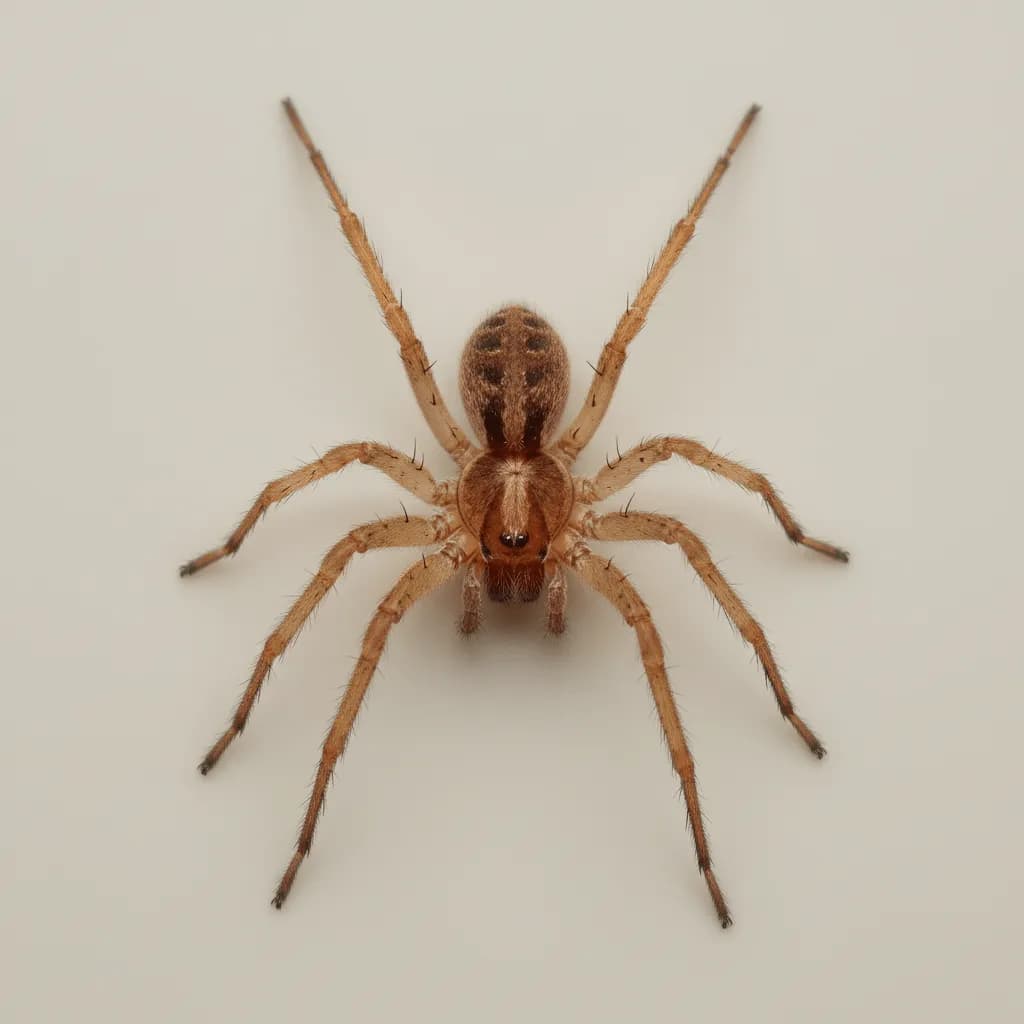
Brown Recluse Spider
Loxosceles reclusa
Also known as: Fiddleback Spider, Violin Spider
The Brown Recluse is one of the few medically significant spiders in North America. Its venom contains sphingomyelinase D, which can cause necrotic skin lesions. It is reclusive by nature, hiding in undisturbed areas and biting only when pressed against skin. Populations can grow large in structures without detection because of their secretive habits.
Identification
Size
6-20 mm
Color
Tan to dark brown with a distinctive darker violin-shaped marking on the cephalothorax
Key Trait
Violin-shaped marking pointing toward the abdomen; six eyes arranged in three pairs instead of the typical eight.
Behavior & Habitat
Nocturnal hunters that do not use webs to capture prey. They wander at night searching for insects and retreat to dark, undisturbed hiding spots during the day. They are not aggressive and bite only when physically trapped against skin.
Habitat: Closets, storage boxes, attics, basements, behind furniture, inside shoes, and between stacked items. Outdoors under rocks and bark. Most common in the south-central United States.
Diet: Small insects, particularly cockroaches, crickets, and other soft-bodied prey.
Signs of Infestation
- Spiders found in stored clothing, boxes, and seldom-used closets
- Irregular, loose cobwebs near floor level in undisturbed areas
- Shed skins in storage areas
- Sightings increase at night when spiders are active
Risks & Damage
Bites can cause necrotic lesions that ulcerate and are slow to heal; systemic reactions are rare but possible.
Prevention Tips
- 1.Shake out clothing and shoes that have been stored or left on the floor before wearing
- 2.Reduce clutter in closets, garages, and storage areas
- 3.Seal cracks around baseboards, door frames, and utility penetrations
- 4.Use sticky traps along walls to monitor for activity
- 5.Move beds away from walls and keep bedding off the floor
Why DIY Treatment Often Falls Short
Brown recluse spiders hide deep inside wall voids, boxes, and clutter where sprays cannot reach. They are resistant to many consumer insecticides and their secretive habits make it nearly impossible to achieve contact. Reducing their prey and harborage requires an integrated professional approach.
Professional Treatment
Professionals implement IPM programs that combine targeted crack-and-crevice treatments with residual dust in wall voids, strategic placement of sticky traps, and detailed sanitation and exclusion recommendations. Treatment typically spans several months to reduce the population in an infested structure.
Frequently Asked Questions
How dangerous is a brown recluse bite?
Are brown recluse spiders found outside the Midwest and South?
How can I reduce brown recluse spiders in my home?
Need Help With Brown recluse spider?
If you're seeing signs of brown recluse spider in or around your home, professional treatment is the fastest way to stop the problem. Lotus Pest Control offers free inspections to identify the issue and recommend the right solution.
At a Glance
- Category
- Spiders
- Scientific Name
- Loxosceles reclusa
- Size
- 6-20 mm
- Color
- Tan to dark brown with a distinctive darker violin-shaped marking on the cephalothorax
- Key Trait
- Violin-shaped marking pointing toward the abdomen; six eyes arranged in three pairs instead of the typical eight.
- Regions
- South Central, Midwest, Southeast
- Threat Level
- High
- Risk Types
- health
- Seasonal Activity
- MarAprMayJunJulAugSepOctNovDecJanFebnonelowmoderatehighpeak