
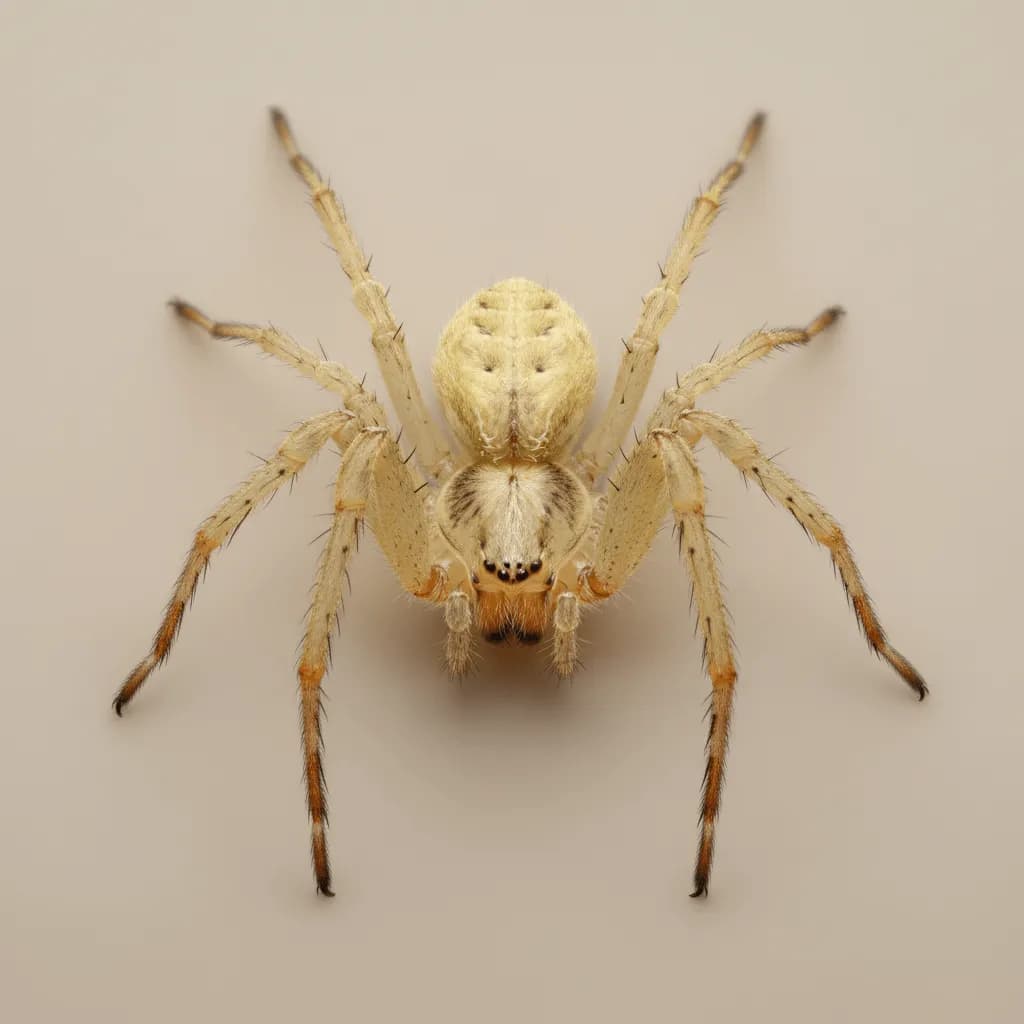
Yellow Sac Spider
Cheiracanthium inclusum
The Yellow Sac Spider is one of the more commonly encountered biting spiders in U.S. homes. It builds small silken retreat sacs in upper corners of rooms and hunts at night. Bites typically occur when the spider is trapped against skin in clothing or bedding and produce localized pain, redness, and swelling.
Identification
Size
5-10 mm
Color
Pale yellow to light green with darker chelicerae
Key Trait
Pale yellow color; builds small silken sacs in corners where walls meet ceilings; nocturnal hunter.
Behavior & Habitat
Nocturnal hunter that does not build prey-catching webs. Constructs a silken sac retreat where it rests during the day. Active at night, wandering across walls and ceilings in search of prey. May drop onto sleeping occupants.
Habitat: Upper corners where walls meet ceilings, behind picture frames, inside folded clothing, and in leaf litter outdoors. Very common in homes across the United States.
Diet: Small insects and other spiders.
Signs of Infestation
- Small silken sacs in upper corners of rooms
- Pale yellow spiders on walls and ceilings at night
- Unexplained bites that develop redness and localized swelling
Risks & Damage
Bites cause localized pain, redness, and swelling. While not necrotic, they can be confused with brown recluse bites. Secondary infection is possible if the bite is not kept clean.
Prevention Tips
- 1.Remove silken sacs from ceiling corners during regular cleaning
- 2.Shake out clothing and bedding before use
- 3.Seal cracks around windows and doors
- 4.Move beds slightly away from walls
Why DIY Treatment Often Falls Short
Yellow sac spiders are highly mobile nocturnal hunters. Spraying corners kills individuals but new spiders readily recolonize. Reducing prey insects and consistent sac removal provide better results.
Professional Treatment
Professionals apply residual treatments to known harborage areas, treat the exterior perimeter to reduce prey populations, and provide guidance on sanitation and exclusion. Regular service reduces populations over time.
Frequently Asked Questions
Are yellow sac spider bites serious?
Why do they bite people at night?
What are those small white sacs in my ceiling corners?
Need Help With Yellow sac spider?
If you're seeing signs of yellow sac spider in or around your home, professional treatment is the fastest way to stop the problem. Lotus Pest Control offers free inspections to identify the issue and recommend the right solution.
At a Glance
- Category
- Spiders
- Scientific Name
- Cheiracanthium inclusum
- Size
- 5-10 mm
- Color
- Pale yellow to light green with darker chelicerae
- Key Trait
- Pale yellow color; builds small silken sacs in corners where walls meet ceilings; nocturnal hunter.
- Regions
- Northeast, Southeast, Midwest, Southwest, Pacific Northwest
- Threat Level
- Low
- Risk Types
- health
- Seasonal Activity
- MarAprMayJunJulAugSepOctNovDecJanFebnonelowmoderatehighpeak