
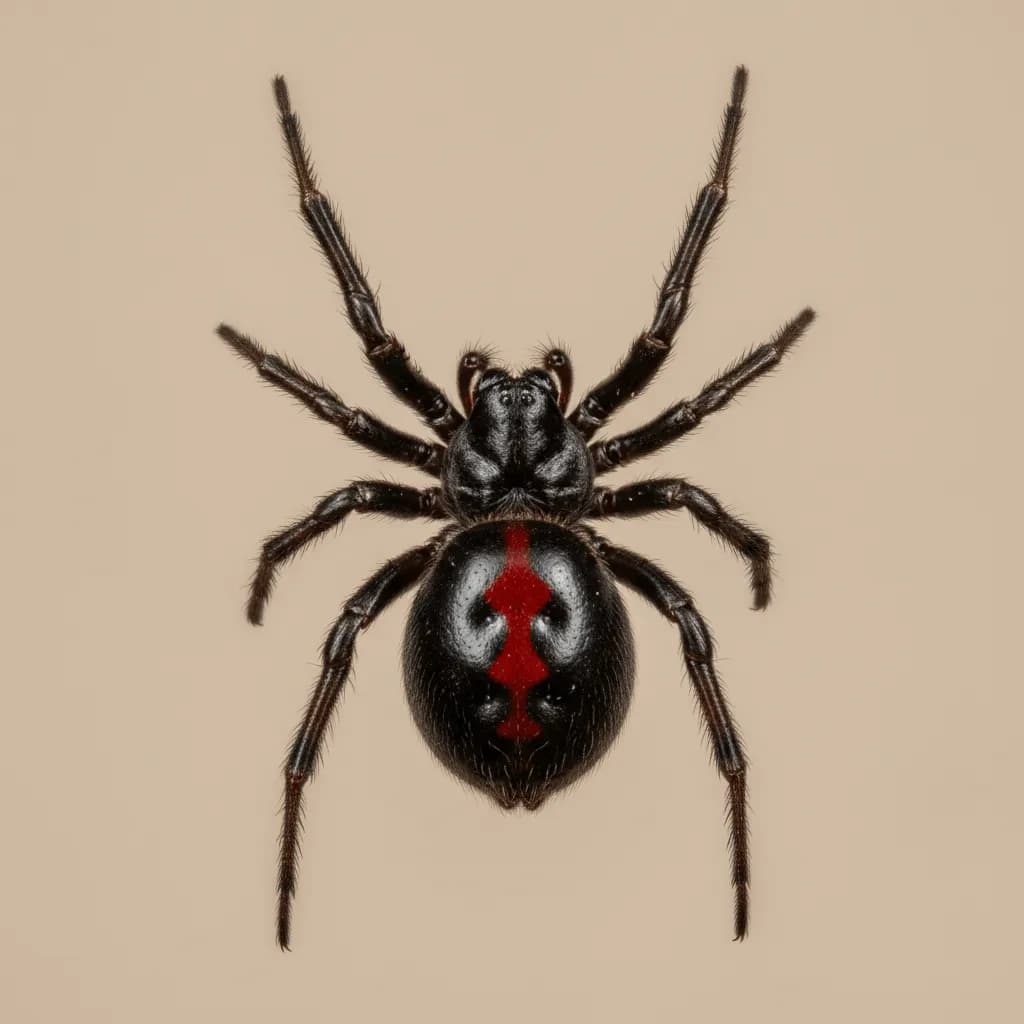
Southern Black Widow
Latrodectus mactans
Also known as: Black Widow Spider
The Southern Black Widow is the most recognized venomous spider in North America. Females possess neurotoxic venom that can cause latrodectism - painful muscle cramps, abdominal rigidity, and autonomic disturbances. Despite their fearsome reputation, bites are rarely fatal with modern medical treatment. They are shy spiders that bite only when their web is disturbed or they are pressed against skin.
Identification
Size
8-13 mm (female body)
Color
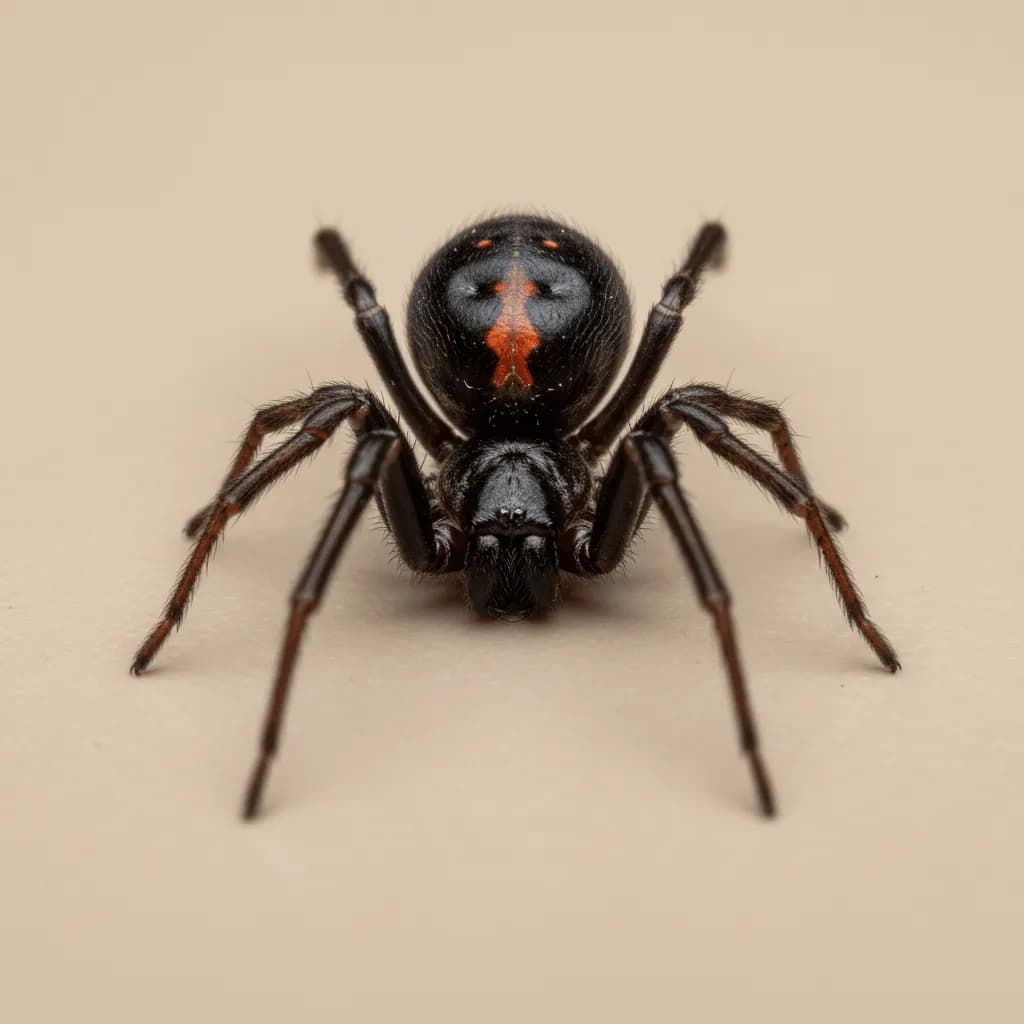
Females are glossy black with a red hourglass on the underside of the abdomen
Key Trait
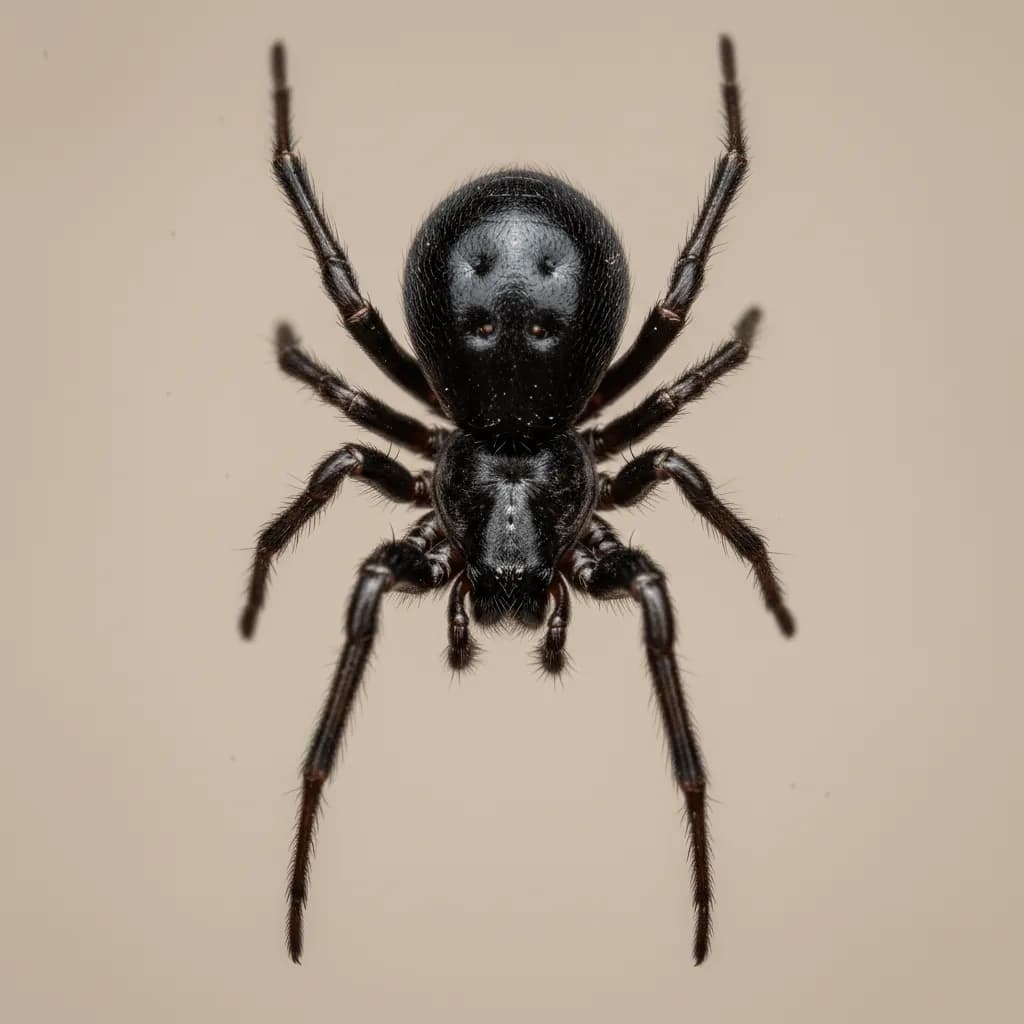
Glossy black female with a bright red hourglass marking on the ventral abdomen; male is much smaller and brown.
Behavior & Habitat
Females build irregular, tangled webs in sheltered locations close to the ground. They hang inverted in the web waiting for prey. Males are rarely seen and are much smaller. Females may cannibalize the male after mating, though this is less common in the wild than popularly believed.
Habitat: Under logs, rocks, and debris outdoors. Around homes in garages, sheds, meter boxes, outdoor furniture, and cluttered storage. Common in the southeastern United States.
Diet: Insects and other small arthropods caught in the web.
Signs of Infestation
- Irregular, messy cobwebs in sheltered spots near ground level
- Glossy black spider with red markings hanging inverted in a web
- Webs in garages, sheds, crawl spaces, and around outdoor furniture
Risks & Damage
Neurotoxic venom causes painful muscle cramps and systemic symptoms (latrodectism); medical attention is recommended for all bites.
Prevention Tips
- 1.Wear gloves when reaching into dark spaces, woodpiles, or storage areas
- 2.Reduce clutter in garages, sheds, and basements
- 3.Seal cracks around doors, windows, and utility entry points
- 4.Shake out shoes and gloves before use if stored in garages
- 5.Install yellow or sodium-vapor lights that attract fewer insects near doorways
Why DIY Treatment Often Falls Short
Black widows hide in recessed, hard-to-reach areas. Spraying visible webs kills individual spiders but does not prevent new ones from establishing in the same sheltered locations. A perimeter program that reduces prey insects and treats harborage areas is more effective.
Professional Treatment
Technicians apply residual insecticide to known harborage areas, treat the exterior perimeter to reduce prey insect populations, and remove accessible webs. Ongoing quarterly service is recommended in high-risk areas.
Frequently Asked Questions
How dangerous is a black widow bite?
Do black widows always have a red hourglass?
Where are black widows most commonly found?
Need Help With Southern black widow?
If you're seeing signs of southern black widow in or around your home, professional treatment is the fastest way to stop the problem. Lotus Pest Control offers free inspections to identify the issue and recommend the right solution.
At a Glance
- Category
- Spiders
- Scientific Name
- Latrodectus mactans
- Size
- 8-13 mm (female body)
- Color
- Females are glossy black with a red hourglass on the underside of the abdomen
- Key Trait
- Glossy black female with a bright red hourglass marking on the ventral abdomen; male is much smaller and brown.
- Regions
- Southeast, South Central, Southwest, Mid Atlantic
- Threat Level
- High
- Risk Types
- health
- Seasonal Activity
- MarAprMayJunJulAugSepOctNovDecJanFebnonelowmoderatehighpeak