
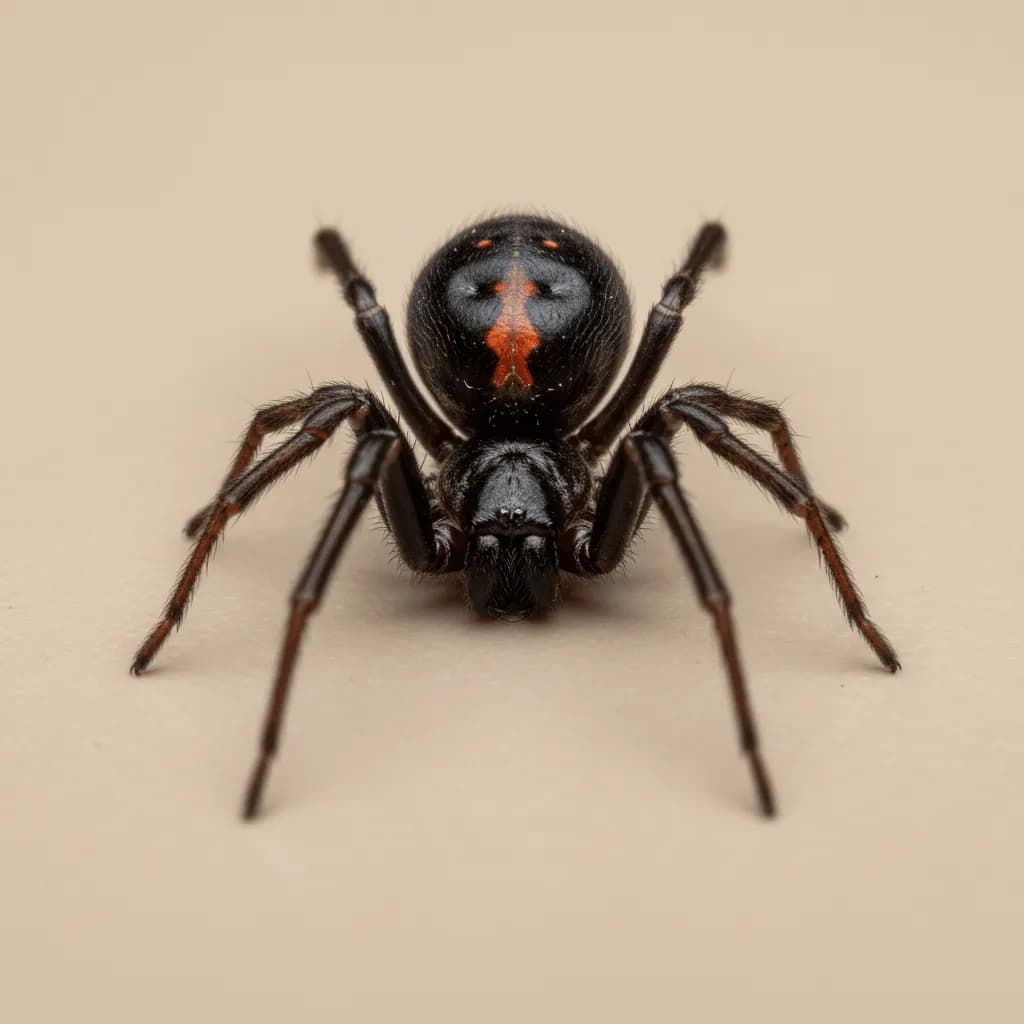
Northern Black Widow
Latrodectus variolus
The Northern Black Widow is found in the northeastern and midwestern United States, overlapping with the Southern species in the mid-Atlantic. Its venom is similarly neurotoxic. It is less common than the Southern Black Widow and tends to inhabit more wooded, natural habitats.
Identification
Size
8-11 mm (female body)
Color
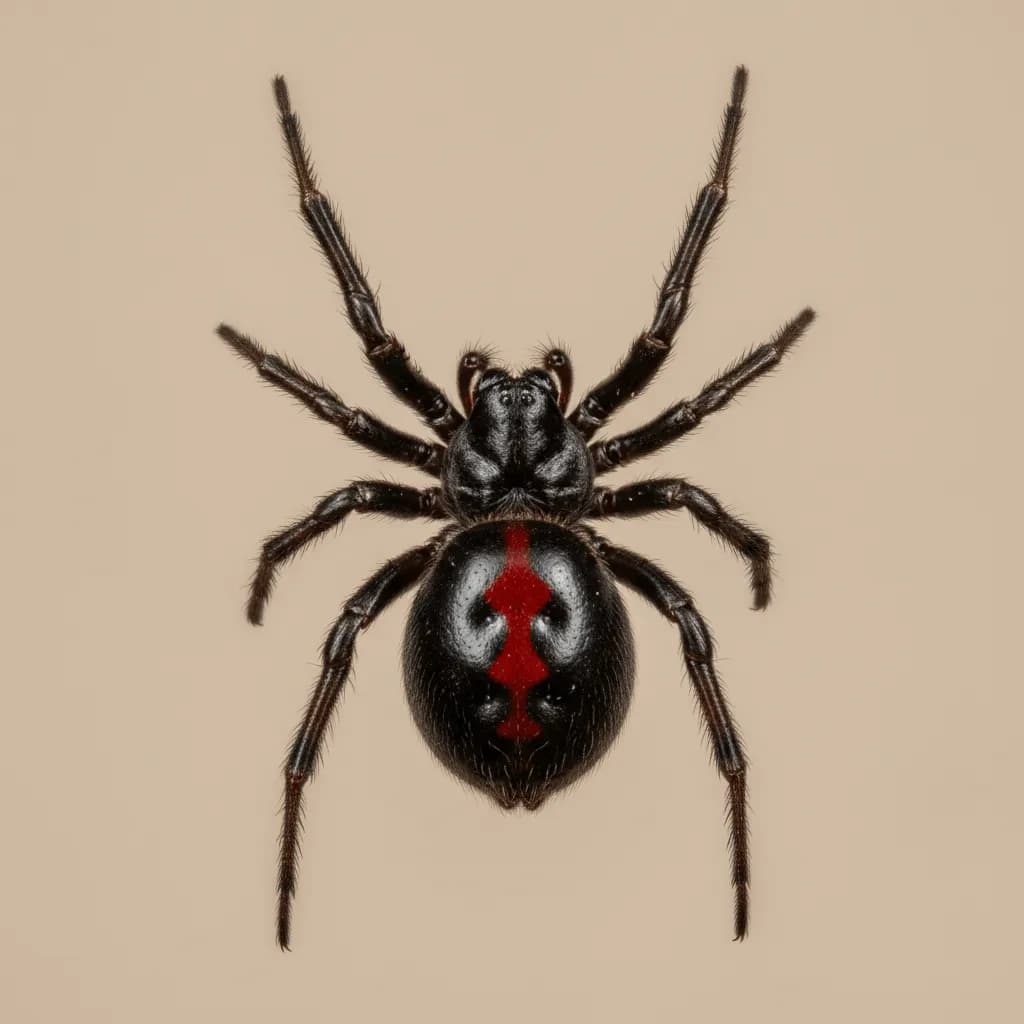
Black with a broken red hourglass and red spots on the dorsal abdomen
Key Trait
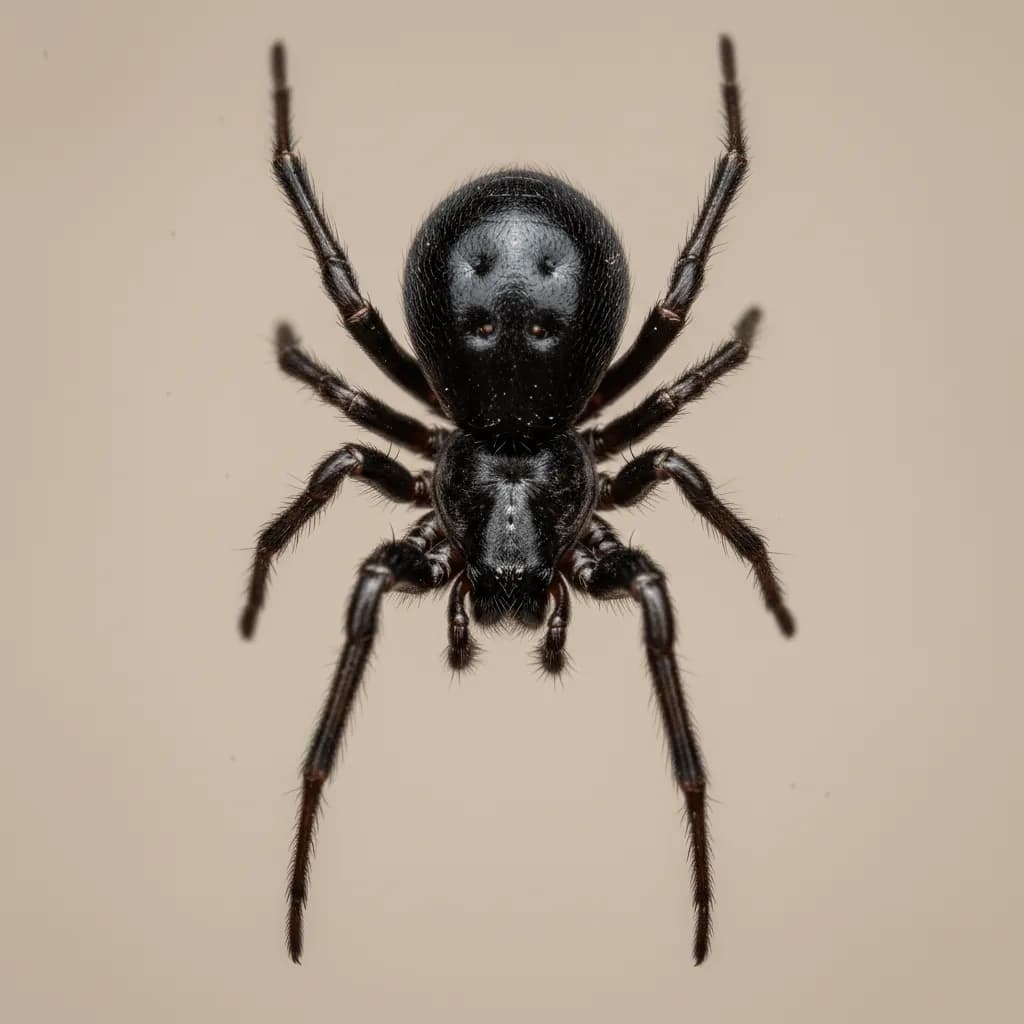
Hourglass marking is often broken into two separate red triangles; red spots on the top of the abdomen.
Behavior & Habitat
Builds irregular webs in sheltered spots, often higher off the ground than the Southern species - in tree stumps, stone walls, and forest debris. Shy and rarely encountered in urban settings.
Habitat: Wooded areas, stone walls, stumps, fallen logs, and occasionally in sheds or barns. Less commonly found in suburban garages compared to the Southern species.
Diet: Insects caught in irregular webs.
Signs of Infestation
- Messy webs in woodpiles, stone walls, or forest debris
- Black spider with red markings found in outdoor sheltered spots
Risks & Damage
Neurotoxic venom can cause latrodectism requiring medical attention.
Prevention Tips
- 1.Wear gloves when handling firewood or working around stone walls
- 2.Keep woodpiles and debris away from living areas
- 3.Inspect outdoor work areas before reaching into crevices
Why DIY Treatment Often Falls Short
Northern black widows inhabit natural outdoor settings where consumer sprays have limited effectiveness. Habitat modification and professional perimeter treatments are more practical.
Professional Treatment
Technicians treat exterior harborage areas and apply perimeter sprays to reduce spider and prey populations. Web removal and habitat modification around the home supplement chemical treatment.
Frequently Asked Questions
Is the Northern Black Widow as dangerous as the Southern?
Where does the Northern Black Widow live?
How do I tell it from the Southern species?
Need Help With Northern black widow?
If you're seeing signs of northern black widow in or around your home, professional treatment is the fastest way to stop the problem. Lotus Pest Control offers free inspections to identify the issue and recommend the right solution.
At a Glance
- Category
- Spiders
- Scientific Name
- Latrodectus variolus
- Size
- 8-11 mm (female body)
- Color
- Black with a broken red hourglass and red spots on the dorsal abdomen
- Key Trait
- Hourglass marking is often broken into two separate red triangles; red spots on the top of the abdomen.
- Regions
- Northeast, Midwest, Mid Atlantic
- Threat Level
- High
- Risk Types
- health
- Seasonal Activity
- MarAprMayJunJulAugSepOctNovDecJanFebnonelowmoderatehighpeak