
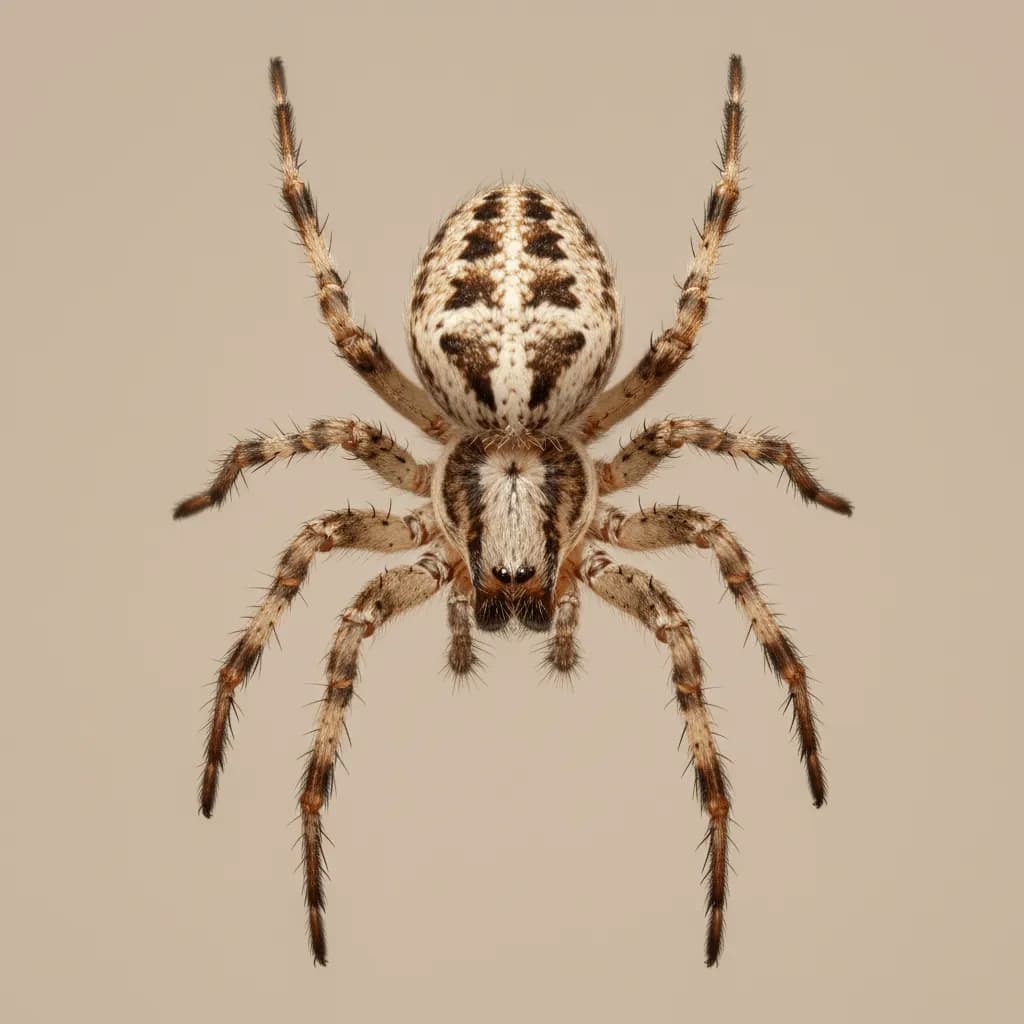
Brown Widow
Latrodectus geometricus
Also known as: Grey Widow
The Brown Widow is a cosmopolitan species that has expanded rapidly across the southern United States. While its venom is potent, it injects far less venom per bite than the black widow, making bites less medically significant. It is displacing Southern Black Widows in many suburban areas.
Identification
Size
7-10 mm (female body)
Color
Tan to dark brown with an orange-red hourglass marking; legs banded light and dark
Key Trait
Tan to brown coloring with banded legs and a spiky egg sac, unlike the smooth sac of black widows.
Behavior & Habitat
Builds webs in sheltered outdoor locations similar to black widows. Less inclined to bite than black widows and injects less venom when it does. Produces distinctively spiky, tufted egg sacs.
Habitat: Under outdoor furniture, in mail boxes, behind shutters, around eaves, in garage door tracks, and in garden pots. Strongly associated with human structures.
Diet: Small insects caught in irregular webs.
Signs of Infestation
- Tan spider with banded legs and orange hourglass in sheltered spots
- Distinctive spiky egg sacs in corners and under furniture
- Webs in mail boxes, garage door tracks, and behind shutters
Risks & Damage
Bite produces localized pain; systemic symptoms are usually milder than black widow bites but medical evaluation is still advisable.
Prevention Tips
- 1.Check mailboxes, garden pots, and outdoor furniture before reaching in
- 2.Remove webs and egg sacs from around the home regularly
- 3.Seal gaps around doors, windows, and utility entry points
- 4.Reduce outdoor clutter that provides harborage
Why DIY Treatment Often Falls Short
Brown widows proliferate rapidly in suburban environments. Removing individual webs does not address the population living in hidden harborage sites throughout the property exterior.
Professional Treatment
Technicians apply residual perimeter treatments, remove webs and egg sacs, and treat common harborage areas. Quarterly service controls population buildup.
Frequently Asked Questions
Are brown widows dangerous?
Are brown widows displacing black widows?
How do I identify a brown widow egg sac?
Need Help With Brown widow?
If you're seeing signs of brown widow in or around your home, professional treatment is the fastest way to stop the problem. Lotus Pest Control offers free inspections to identify the issue and recommend the right solution.
At a Glance
- Category
- Spiders
- Scientific Name
- Latrodectus geometricus
- Size
- 7-10 mm (female body)
- Color
- Tan to dark brown with an orange-red hourglass marking; legs banded light and dark
- Key Trait
- Tan to brown coloring with banded legs and a spiky egg sac, unlike the smooth sac of black widows.
- Regions
- Southeast, South Central, Southwest
- Threat Level
- Moderate
- Risk Types
- health
- Seasonal Activity
- MarAprMayJunJulAugSepOctNovDecJanFebnonelowmoderatehighpeak