
Woodlouse Spider
Dysdera crocata
Also known as: Pillbug Hunter, Sowbug Killer
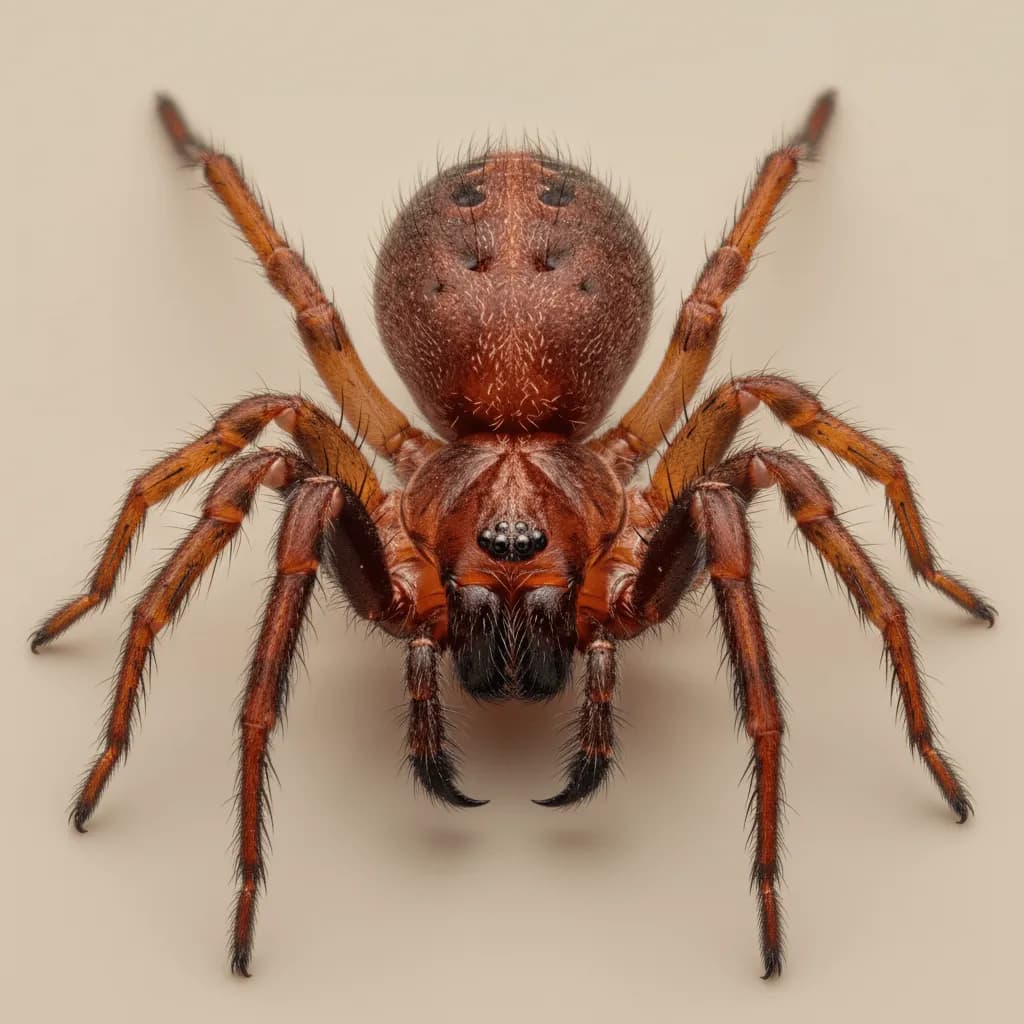
The Woodlouse Spider is a specialist predator of woodlice (pillbugs and sowbugs). Its large, forward-projecting fangs are specifically adapted to penetrate the hard exoskeletons of its armored prey. Originally from the Mediterranean, it is now found throughout much of North America. It is often found in damp areas where woodlice are abundant.
Identification
Size
9-15 mm (body length)
Color
Dark reddish-orange cephalothorax and legs with a pale grayish-cream abdomen
Key Trait
Striking two-tone coloration with oversized fangs designed to pierce the armored shells of woodlice (pillbugs and sowbugs); six eyes arranged in a tight oval cluster.
Behavior & Habitat
Nocturnal hunter that does not build webs. Actively stalks and captures woodlice using its oversized fangs. Hides during the day under rocks, logs, flower pots, and debris. May enter homes following woodlice populations into damp basements and crawlspaces.
Habitat: Under rocks, logs, flower pots, leaf litter, and other damp sheltered locations where woodlice congregate. Indoors in basements, crawlspaces, and garages with moisture issues.
Diet: Almost exclusively woodlice (pillbugs and sowbugs). Occasionally takes other small invertebrates.
Signs of Infestation
- Reddish-orange spiders found under rocks, flower pots, or debris near the foundation
- Spiders encountered in damp basements or crawlspaces
- Presence alongside significant woodlice populations
Risks & Damage
Their alarming appearance with large fangs and vivid coloration causes concern, though bites are uncommon and not medically significant.
Prevention Tips
- 1.Reduce woodlice populations by eliminating damp debris, leaf litter, and decaying wood near the foundation
- 2.Address moisture issues in basements and crawlspaces
- 3.Move flower pots, rocks, and landscape timbers away from the foundation
Why DIY Treatment Often Falls Short
The spider is present because of its prey. Without addressing the underlying woodlice population and the moisture conditions that sustain both species, removal of individual spiders is futile.
Professional Treatment
Professionals address the underlying moisture conditions and woodlice populations that attract woodlouse spiders. Perimeter treatments, habitat modification, and moisture management provide long-term results.
Related Pests
Frequently Asked Questions
Why does it have such big fangs?
Can it bite humans?
How do I get rid of them?
Need Help With Woodlouse spider?
If you're seeing signs of woodlouse spider in or around your home, professional treatment is the fastest way to stop the problem. Lotus Pest Control offers free inspections to identify the issue and recommend the right solution.
At a Glance
- Category
- Spiders
- Scientific Name
- Dysdera crocata
- Size
- 9-15 mm (body length)
- Color
- Dark reddish-orange cephalothorax and legs with a pale grayish-cream abdomen
- Key Trait
- Striking two-tone coloration with oversized fangs designed to pierce the armored shells of woodlice (pillbugs and sowbugs); six eyes arranged in a tight oval cluster.
- Regions
- Northeast, Mid Atlantic, West Coast, Pacific Northwest, Midwest
- Threat Level
- Very Low
- Risk Types
- nuisance
- Seasonal Activity
- MarAprMayJunJulAugSepOctNovDecJanFebnonelowmoderatehighpeak