
Carpenter Bees
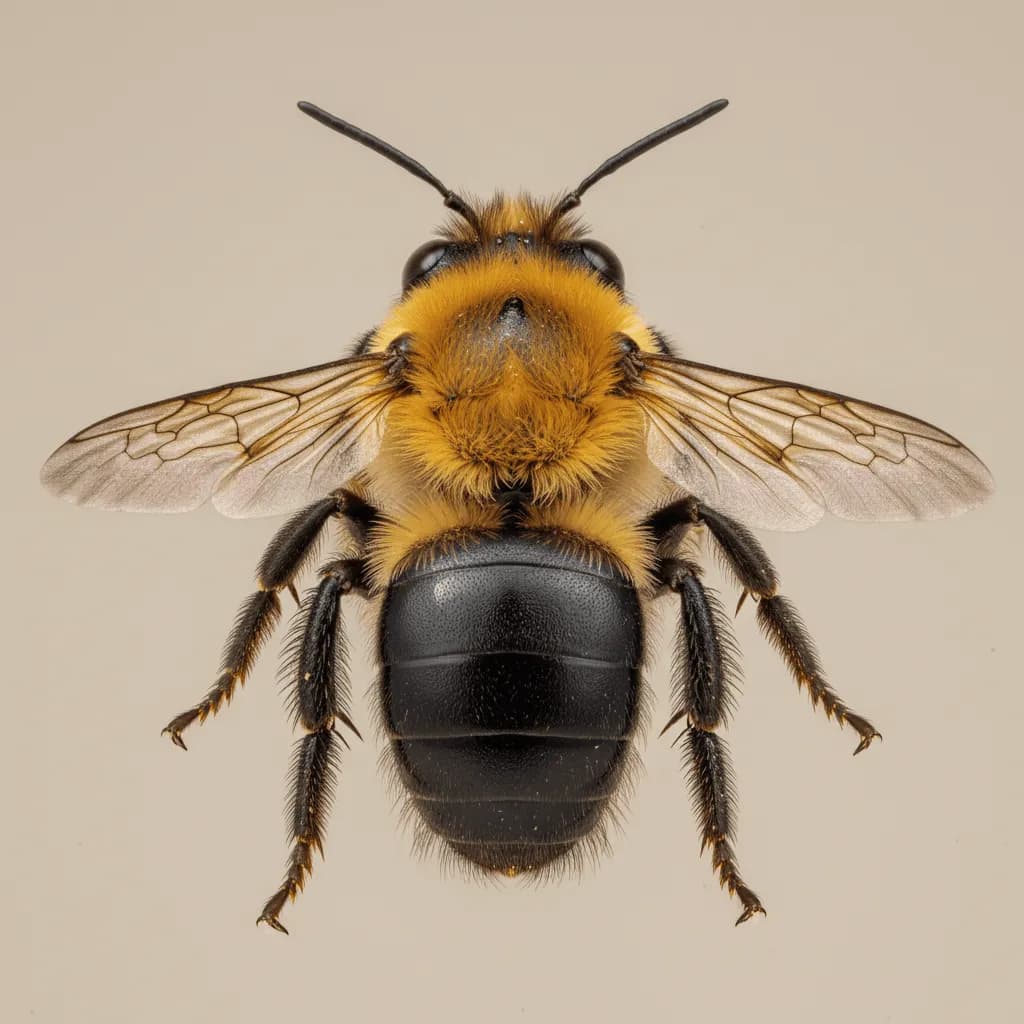
Carpenter bees are large, robust bees that bore perfectly round, half-inch-diameter holes into unpainted or weathered wood to create nesting galleries. They resemble bumble bees but have a shiny, hairless black abdomen rather than a fuzzy one. They are solitary bees, with each female excavating and provisioning her own nest. Preferred nesting sites include fascia boards, deck rails, pergolas, cedar siding, and unpainted trim. Galleries are reused and expanded year after year, with accumulated damage becoming structurally significant over time.
Species in This Group (1)
Key Behaviors
Female carpenter bees bore into the wood surface, then turn 90 degrees to excavate a gallery running with the grain. Each gallery is divided into cells provisioned with a pollen-nectar ball and a single egg. Males are conspicuously territorial, hovering and dive-bombing perceived threats near nesting areas, but they lack stingers and cannot sting. Females can sting but rarely do unless directly handled.
Risks & Concerns
Carpenter bee damage accumulates over years as daughters reuse and extend maternal galleries. Extensive tunneling can weaken fascia boards, deck rails, and structural timbers. Woodpecker damage from birds excavating galleries to reach larvae compounds the destruction. Frass and staining below entry holes are cosmetically objectionable. Unpainted softwood structures in warm, sunny exposures are most at risk.
Identification Tip
Distinguished from bumble bees by the shiny, hairless, black abdomen. Bumble bees have fuzzy, yellow-and-black banded abdomens and nest in ground cavities. Carpenter bees create perfectly round holes in wood, while carpenter ants create oval galleries in wood with smooth, clean walls.
Need Help With Carpenter bees?
If you're seeing signs of carpenter bees in or around your home, professional treatment is the fastest way to stop the problem. Lotus Pest Control offers free inspections to identify the issue and recommend the right solution.