
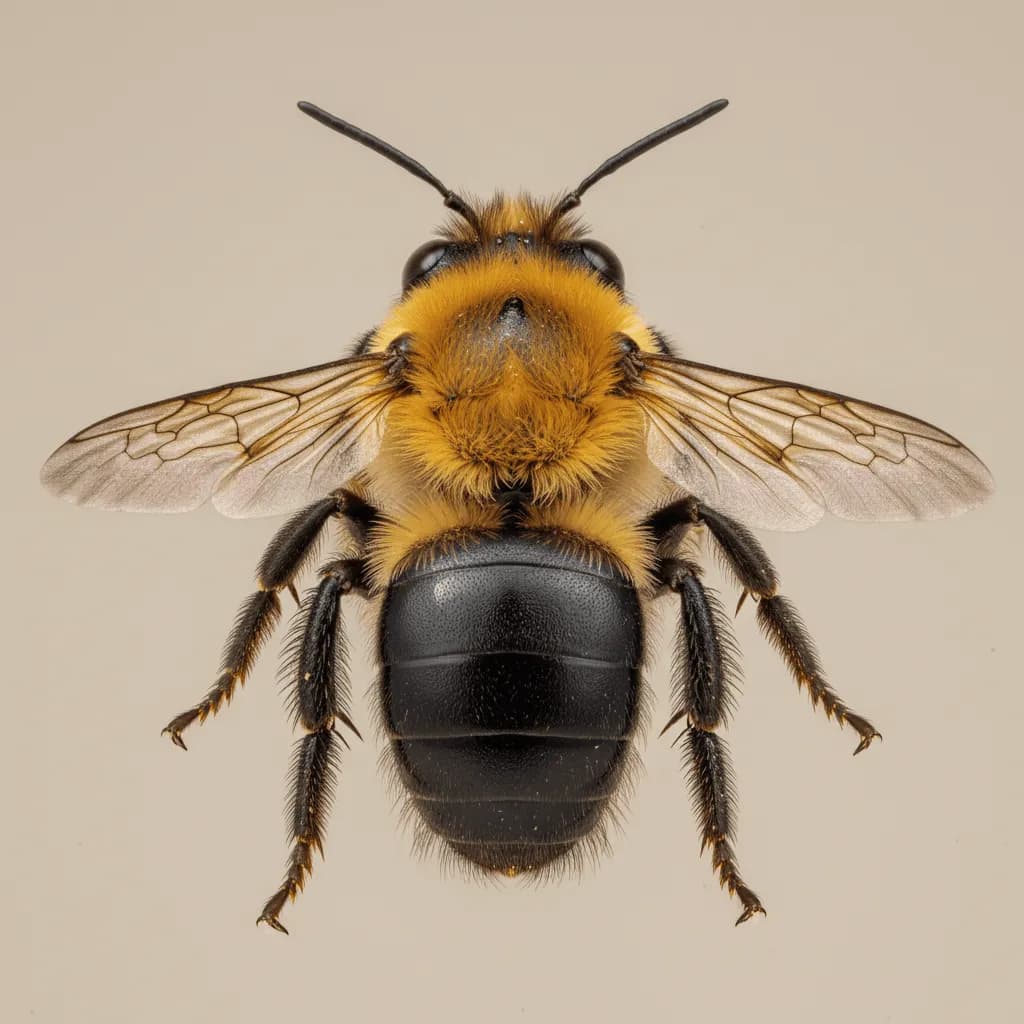
Eastern Carpenter Bee
Xylocopa virginica
Also known as: Wood Bee
Eastern Carpenter Bees drill perfectly round half-inch diameter holes into untreated wood to create nesting galleries. While a single bee causes minimal damage, successive generations reuse and expand the same gallery system, leading to significant structural weakening over years. Males are territorial and hover aggressively near people but cannot sting.
Identification
Size
19-25 mm
Color
Black with a shiny, hairless abdomen (distinguishes from bumble bees which have fuzzy abdomens)
Key Trait
Resembles a bumble bee but with a shiny, hairless black abdomen; drills perfectly round half-inch holes in wood.
Behavior & Habitat
Females drill into wood to create brood galleries. Males hover aggressively near people but are stingless. Females can sting but rarely do unless handled. Galleries are reused and expanded year after year, causing cumulative damage.
Habitat: Untreated, unpainted softwood including deck railings, fascia boards, porch ceilings, swing sets, and siding. Prefers cedar, redwood, cypress, and pine.
Diet: Adults feed on pollen and nectar; larvae eat pollen balls provisioned by the female.
Signs of Infestation
- Perfectly round, half-inch diameter holes in wood surfaces
- Sawdust-like frass below entry holes
- Large bees hovering aggressively near wood structures
- Yellowish staining below holes from fecal deposits
Risks & Damage
Cumulative gallery expansion weakens deck railings, fascia, and structural trim over successive years.
Hovering males alarm homeowners and guests, though they cannot sting.
Prevention Tips
- 1.Paint or stain all exposed wood surfaces
- 2.Fill existing holes with steel wool and wood putty
- 3.Use hardwoods or composite materials for vulnerable structures
- 4.Apply residual insecticide to wood surfaces in spring before nesting begins
Why DIY Treatment Often Falls Short
Filling holes without treating the gallery does not eliminate the developing larvae, which will emerge and drill new holes. Consumer sprays do not penetrate deep enough into gallery systems.
Professional Treatment
Technicians inject dust or aerosol insecticide deep into gallery systems, treat wood surfaces with residual products, and seal entrance holes after treatment. Preventive applications in spring deter new gallery construction.
Related Pests
Frequently Asked Questions
Do carpenter bees sting?
How can I tell carpenter bees from bumble bees?
Can carpenter bees destroy my deck?
Need Help With Eastern carpenter bee?
If you're seeing signs of eastern carpenter bee in or around your home, professional treatment is the fastest way to stop the problem. Lotus Pest Control offers free inspections to identify the issue and recommend the right solution.
At a Glance
- Category
- Stinging Insects
- Scientific Name
- Xylocopa virginica
- Size
- 19-25 mm
- Color
- Black with a shiny, hairless abdomen (distinguishes from bumble bees which have fuzzy abdomens)
- Key Trait
- Resembles a bumble bee but with a shiny, hairless black abdomen; drills perfectly round half-inch holes in wood.
- Regions
- Northeast, Southeast, Midwest, Mid Atlantic
- Threat Level
- Moderate
- Risk Types
- structuralnuisance
- Seasonal Activity
- MarAprMayJunJulAugSepOctNovDecJanFebnonelowmoderatehighpeak