
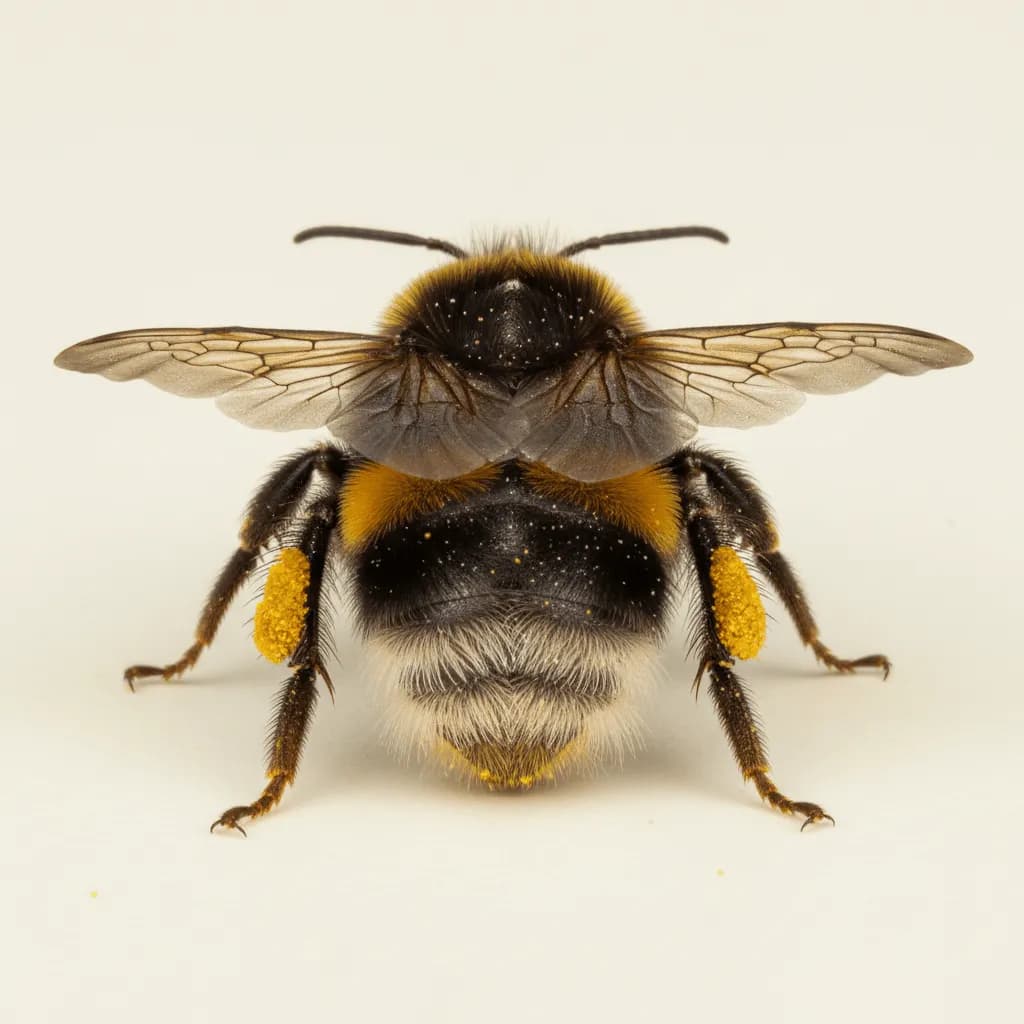
Common Eastern Bumble Bee
Bombus impatiens
The Common Eastern Bumble Bee is the most frequently encountered bumble bee in the eastern United States and an essential native pollinator. Colonies are small (50-500 workers), annual, and usually nest in or near the ground. They are generally docile but can sting if the nest is directly disturbed.
Identification
Size
12-23 mm
Color
Black with a yellow thorax and first abdominal segment
Key Trait
Fuzzy, robust body; nests in or near the ground in abandoned rodent burrows; important pollinator.
Behavior & Habitat
Queens emerge in spring to establish new colonies. Workers forage actively on flowers. Colonies are annual and die off in fall. Will sting to defend the nest but are not aggressive when foraging.
Habitat: Abandoned rodent burrows, under concrete slabs, in mulch piles, and in tussock grass. Sometimes nests in wall voids and under porches.
Diet: Pollen and nectar from a wide variety of flowers.
Signs of Infestation
- Bees entering and exiting a hole in the ground or gap in concrete
- Bumble bees buzzing in a specific area of the yard repeatedly
Risks & Damage
Can sting if the nest is disturbed; less aggressive than yellowjackets.
Prevention Tips
- 1.Fill abandoned rodent burrows to prevent nesting
- 2.When possible, leave bumble bee nests alone until fall die-off
- 3.Mark nest locations to avoid disturbance
Why DIY Treatment Often Falls Short
Bumble bees are important pollinators and should not be killed when avoidable. Most nests can be left alone until the natural fall die-off.
Professional Treatment
If a nest is in a high-traffic area and poses a sting risk, professionals can relocate or treat the nest. In most cases, marking the area and waiting until fall is recommended since colonies are annual.
Frequently Asked Questions
Should I kill a bumble bee nest in my yard?
Can bumble bees sting more than once?
Why is a bumble bee nesting in my yard?
Need Help With Common eastern bumble bee?
If you're seeing signs of common eastern bumble bee in or around your home, professional treatment is the fastest way to stop the problem. Lotus Pest Control offers free inspections to identify the issue and recommend the right solution.
At a Glance
- Category
- Stinging Insects
- Scientific Name
- Bombus impatiens
- Size
- 12-23 mm
- Color
- Black with a yellow thorax and first abdominal segment
- Key Trait
- Fuzzy, robust body; nests in or near the ground in abandoned rodent burrows; important pollinator.
- Regions
- Northeast, Midwest, Southeast, Mid Atlantic
- Threat Level
- Low
- Risk Types
- health
- Seasonal Activity
- MarAprMayJunJulAugSepOctNovDecJanFebnonelowmoderatehighpeak