
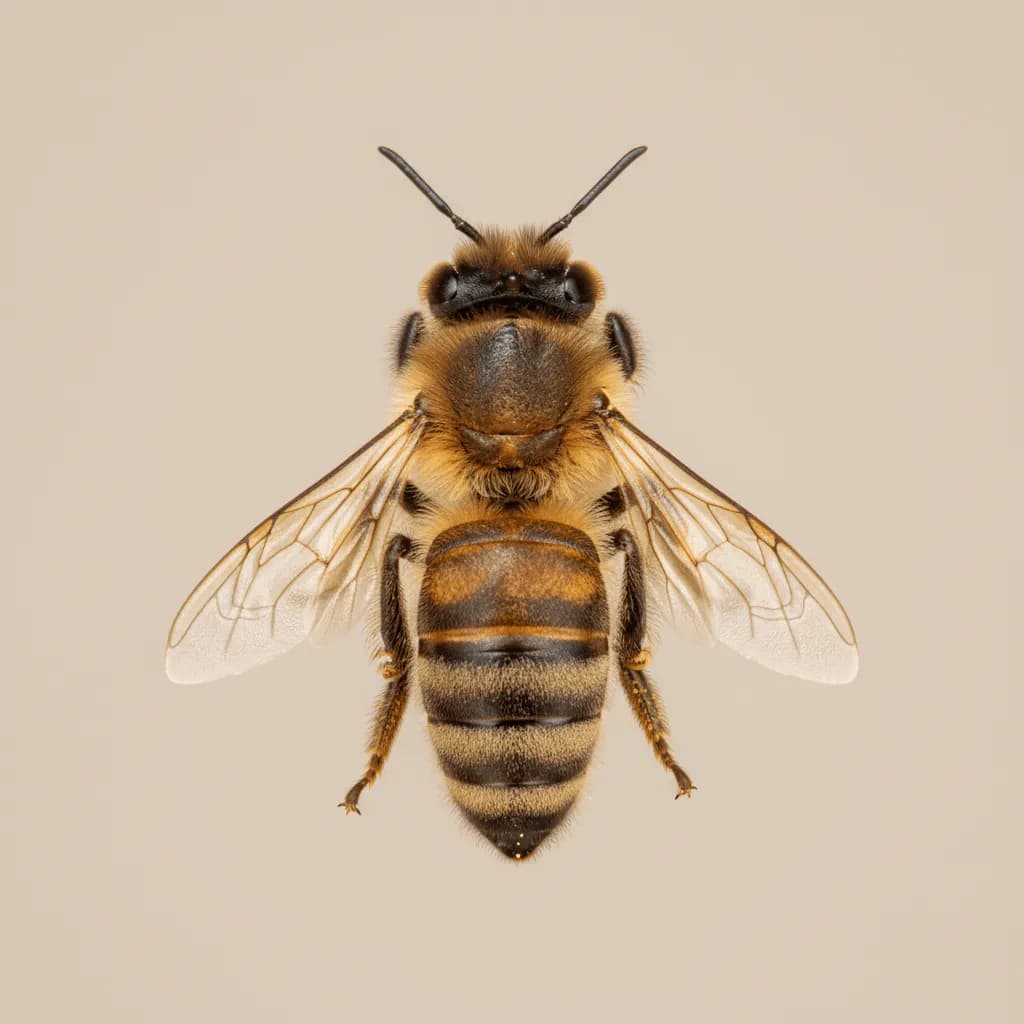
Western Honey Bee
Apis mellifera
Also known as: European Honey Bee
The Western Honey Bee is vital to agriculture as the world's most important pollinator. Swarms sometimes establish colonies in wall voids, soffits, and other structural cavities, creating serious pest situations that require specialized removal. Honey stored in walls can attract secondary pests and cause moisture damage.
Identification
Size
12-15 mm
Color
Golden-brown with dark brown banding
Key Trait
Fuzzy golden-brown body; lives in large social colonies; stinger is barbed and tears from the bee's body after stinging.
Behavior & Habitat
Highly social colonies of 20,000-80,000 bees. Swarms are generally docile and temporary. Established colonies in structures are defensive, especially in hot weather. Barbed stinger means each worker can sting only once.
Habitat: Managed hives, hollow trees, and structural voids in buildings. Swarms temporarily cluster on branches, fences, and buildings while scouts search for permanent nest sites.
Diet: Pollen and nectar from flowers; honey is stored as a food reserve.
Signs of Infestation
- Bees entering and exiting a gap in siding, soffits, or trim
- Honey staining or moisture on interior walls
- Temporary swarm cluster on a branch or structure
- Buzzing sound from within a wall or ceiling
Risks & Damage
Stings cause pain and allergic reactions; established colonies can be defensive.
Honey and wax combs in wall voids attract secondary pests and can cause moisture damage and staining.
Prevention Tips
- 1.Seal all gaps in siding and soffits to prevent colony establishment
- 2.Contact a beekeeper promptly for swarm removal before they establish in a structure
- 3.Have established colonies removed professionally rather than killed when possible
Why DIY Treatment Often Falls Short
Simply killing a honey bee colony in a wall leaves pounds of honey and wax that ferment, attract ants, cockroaches, and wax moths, and cause moisture damage. The comb must be physically removed.
Professional Treatment
Removal of established colonies requires opening the wall, extracting the bees and comb, and repairing the structure. Many pest control companies partner with beekeepers for live removal. If live removal is not possible, the colony is treated and the comb must still be removed to prevent secondary problems.
Frequently Asked Questions
There is a swarm of bees on my tree - what should I do?
Why is there honey dripping from my ceiling?
Is it illegal to kill honey bees?
Need Help With Western honey bee?
If you're seeing signs of western honey bee in or around your home, professional treatment is the fastest way to stop the problem. Lotus Pest Control offers free inspections to identify the issue and recommend the right solution.
At a Glance
- Category
- Stinging Insects
- Scientific Name
- Apis mellifera
- Size
- 12-15 mm
- Color
- Golden-brown with dark brown banding
- Key Trait
- Fuzzy golden-brown body; lives in large social colonies; stinger is barbed and tears from the bee's body after stinging.
- Regions
- Southeast, Northeast, Midwest, Southwest, South Central
- Threat Level
- Moderate
- Risk Types
- healthstructural
- Seasonal Activity
- MarAprMayJunJulAugSepOctNovDecJanFebnonelowmoderatehighpeak