
Honey Bees
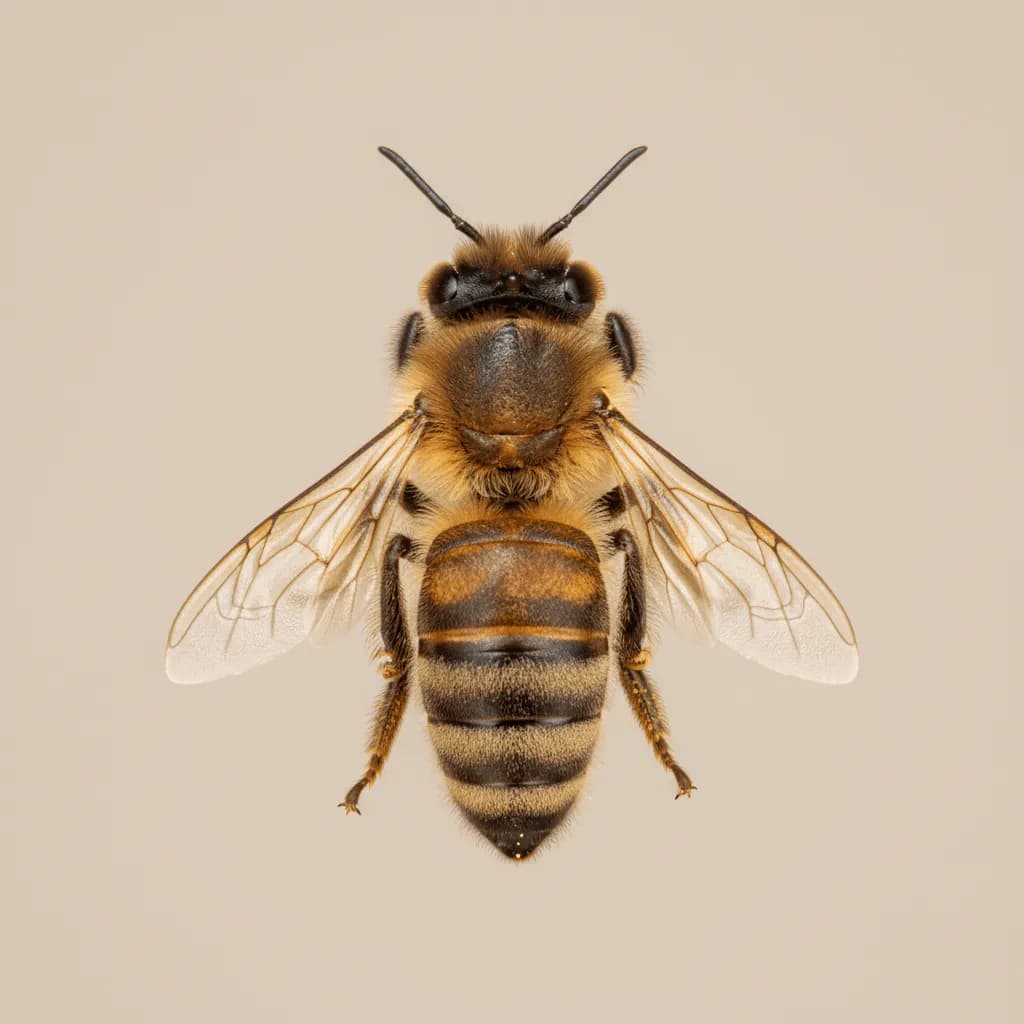
Honey bees are highly social, colony-forming bees that are essential agricultural pollinators but can become structural and safety pests when they establish hives in wall voids, soffits, chimneys, and other building cavities. A mature hive contains 20,000 to 60,000 bees and stores large quantities of honey and wax. Established hives in structures cause secondary damage from honey seepage, wax moth infestations, and attraction of other pests. The Africanized honey bee, present in the southern tier states, is more defensive and poses greater sting risk than European honey bees.
Species in This Group (1)
Key Behaviors
Honey bees are social insects with a complex colony structure of queens, workers, and drones. Swarms occur in spring when a portion of the colony departs with the old queen to establish a new hive, creating conspicuous clusters on branches, fences, and structures. Established hives in buildings produce substantial quantities of honey and wax. Foraging workers visit flowers within a three-mile radius. Africanized bees respond to disturbance with larger numbers of stinging workers and pursue threats farther from the hive.
Risks & Concerns
Honey bee stings can cause anaphylaxis in sensitized individuals. Established hives in structures cause cosmetic and structural damage from honey seepage, staining, and secondary pest infestations. Abandoned hives attract wax moths, carpet beetles, and ants. Africanized honey bees are responsible for serious mass-stinging incidents, particularly when hives are disturbed by yard maintenance, construction, or pets.
Need Help With Honey bees?
If you're seeing signs of honey bees in or around your home, professional treatment is the fastest way to stop the problem. Lotus Pest Control offers free inspections to identify the issue and recommend the right solution.