
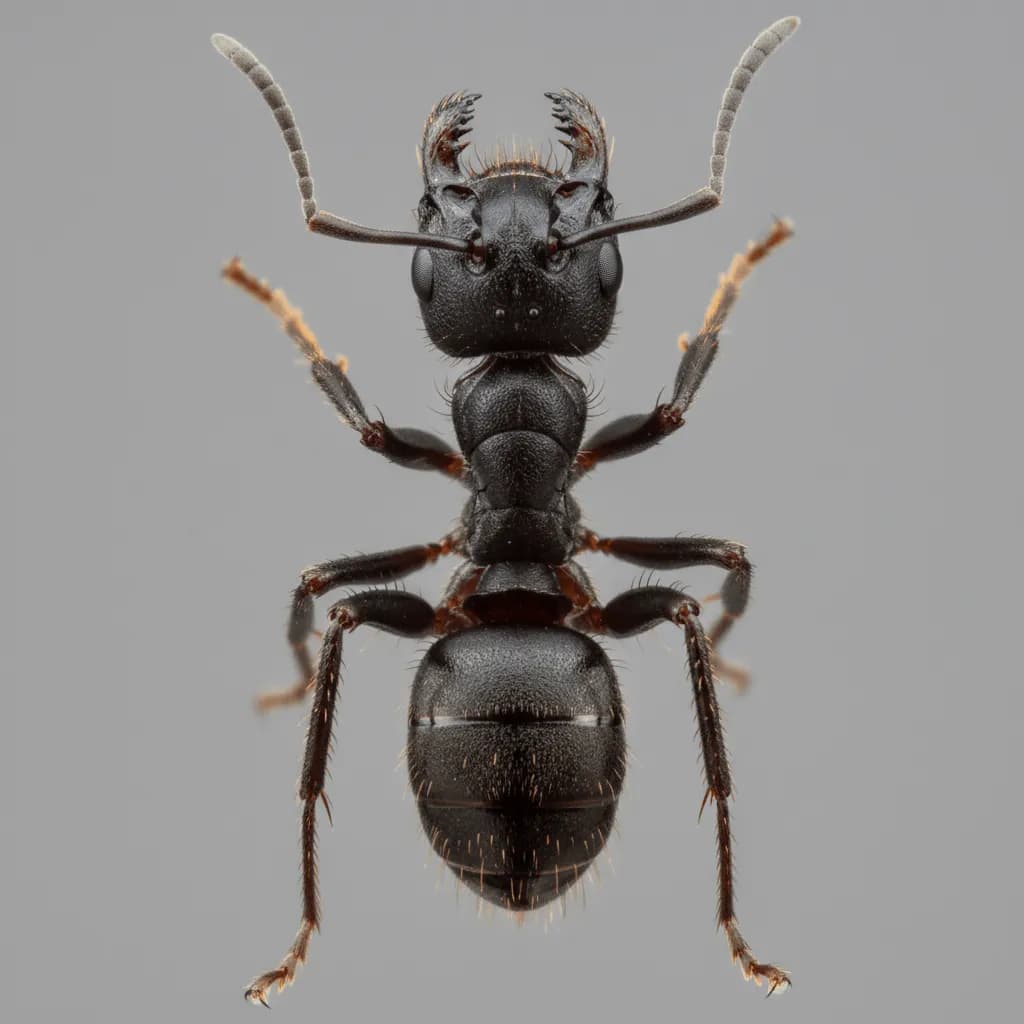
Black Carpenter Ant
Camponotus pennsylvanicus
Also known as: Carpenter Ant, Large Black Ant
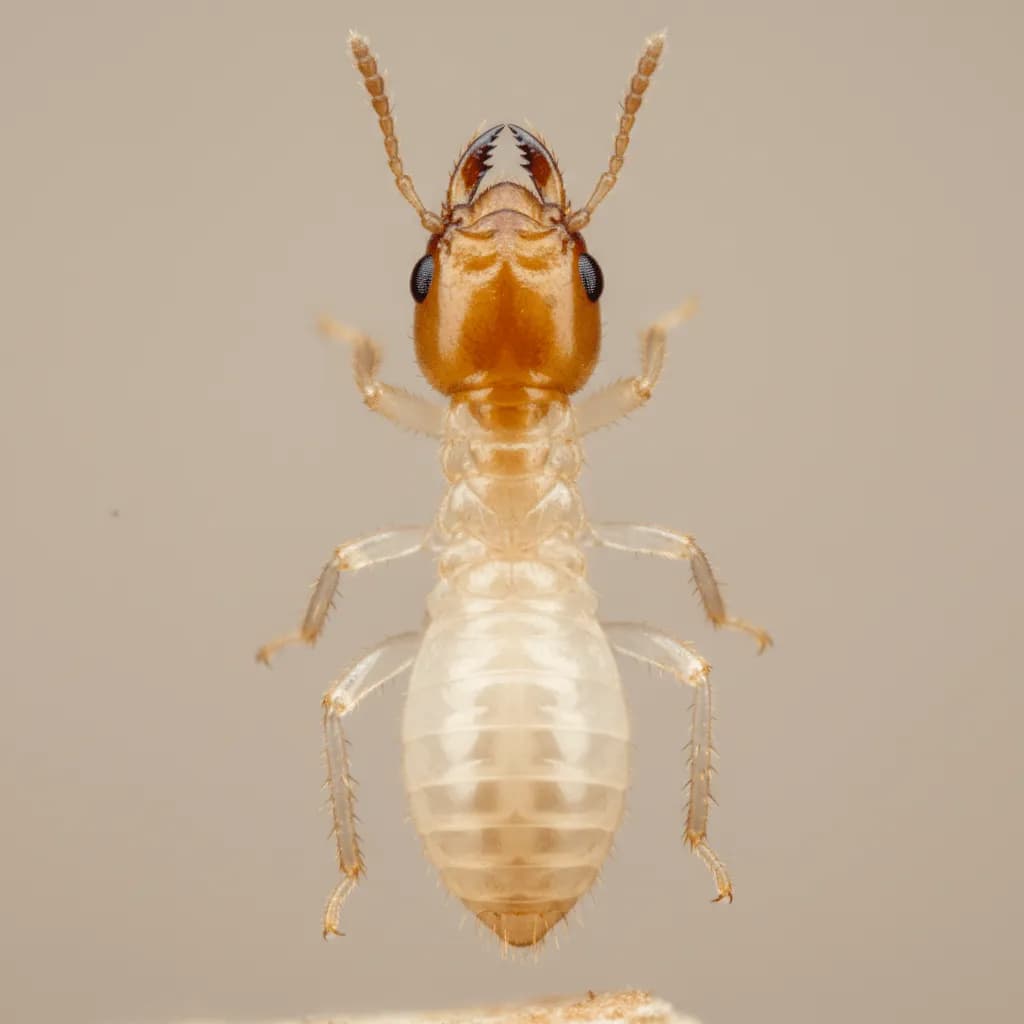
The Black Carpenter Ant is the most common structural-pest ant in North America. Workers excavate galleries in moist or decaying wood to establish nests, weakening beams, joists, and sill plates over time. Mature colonies can contain 3,000 or more workers and produce winged swarmers in late spring. Unlike termites, carpenter ants do not eat wood; they remove it to create smooth nesting galleries.
Identification
Size
6-13 mm
Color
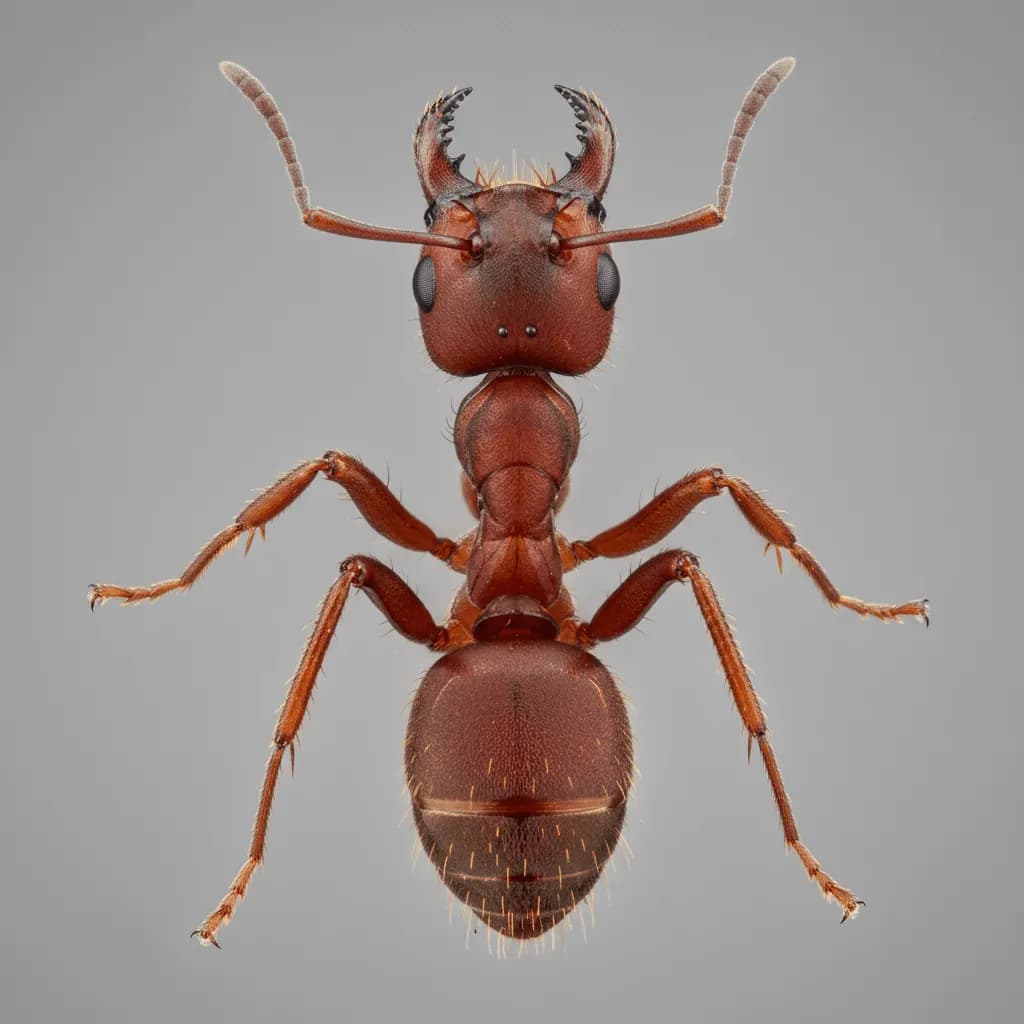
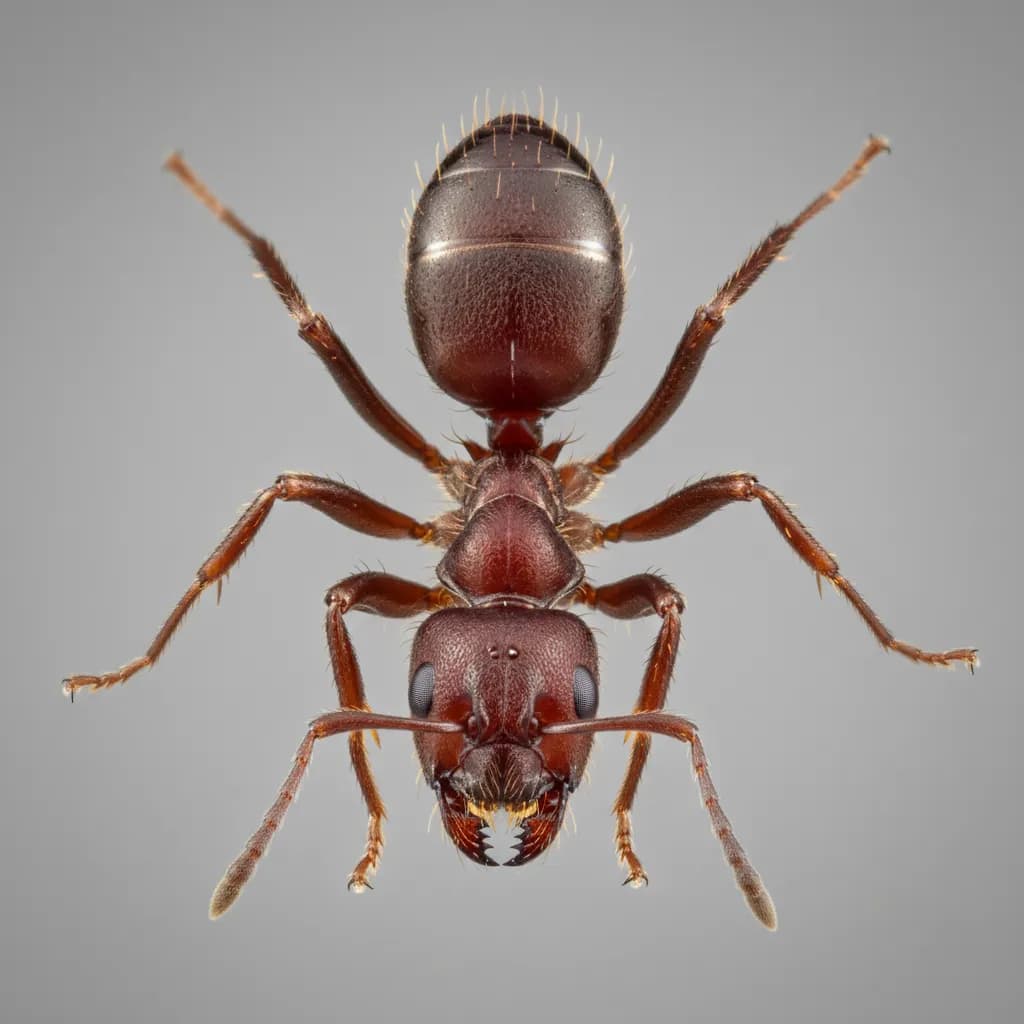
Black, sometimes dark reddish-brown
Key Trait
Large size with a single node between thorax and abdomen and an evenly rounded thorax profile.
Behavior & Habitat
Primarily nocturnal, workers follow scent trails between satellite nests and food sources that can be 100 yards apart. They communicate through pheromones and tapping mandibles against the wood, producing an audible rustling sound inside walls.
Habitat: Prefers moist or water-damaged wood in wall voids, roof eaves, foam insulation, and hollow doors. Outdoors they nest in dead trees, stumps, and landscape timbers. Satellite colonies often bridge the gap between outdoor parent nests and indoor food sources.
Diet: Honeydew from aphids, other insects, sweets, grease, and protein-rich household scraps.
Signs of Infestation
- Small piles of coarse, sawdust-like frass near baseboards or window sills
- Faint rustling or tapping sounds inside walls, especially at night
- Winged swarmers emerging indoors during spring
- Visible trailing of large black ants along foundation edges or wiring conduits
Risks & Damage
Excavation weakens load-bearing timbers and can compromise structural integrity over several years.
Large foraging trails inside kitchens and bathrooms alarm homeowners.
Nesting in wall voids can damage wiring insulation and increase short-circuit risk.
Prevention Tips
- 1.Repair all water leaks and replace water-damaged wood promptly
- 2.Store firewood at least 20 feet from the house and elevated off the ground
- 3.Trim tree branches and shrubs so they do not touch the structure
- 4.Seal cracks and gaps around utility penetrations with caulk or expanding foam
- 5.Remove dead stumps and decaying landscape timbers from the yard
Why DIY Treatment Often Falls Short
Over-the-counter sprays only kill the foragers you can see. Carpenter ants maintain multiple satellite nests connected by hidden trails, so killing surface workers does not reach the queen or eliminate the colony. Without locating every nest, the infestation rebounds within weeks.
Professional Treatment
A licensed technician performs a thorough inspection to locate the parent nest and all satellite colonies. Treatment typically combines targeted liquid or foam injection into wall voids with non-repellent perimeter applications and tamper-resistant bait stations. Follow-up monitoring ensures the entire colony network is eliminated.
Frequently Asked Questions
Do carpenter ants eat wood?
How do I tell carpenter ants from termites?
Can a carpenter ant infestation damage my home as badly as termites?
Need Help With Black carpenter ant?
If you're seeing signs of black carpenter ant in or around your home, professional treatment is the fastest way to stop the problem. Lotus Pest Control offers free inspections to identify the issue and recommend the right solution.
At a Glance
- Category
- Ants
- Scientific Name
- Camponotus pennsylvanicus
- Size
- 6-13 mm
- Color
- Black, sometimes dark reddish-brown
- Key Trait
- Large size with a single node between thorax and abdomen and an evenly rounded thorax profile.
- Regions
- Northeast, Midwest, Southeast, Pacific Northwest
- Threat Level
- High
- Risk Types
- structuralnuisanceelectrical
- Seasonal Activity
- MarAprMayJunJulAugSepOctNovDecJanFebnonelowmoderatehighpeak