
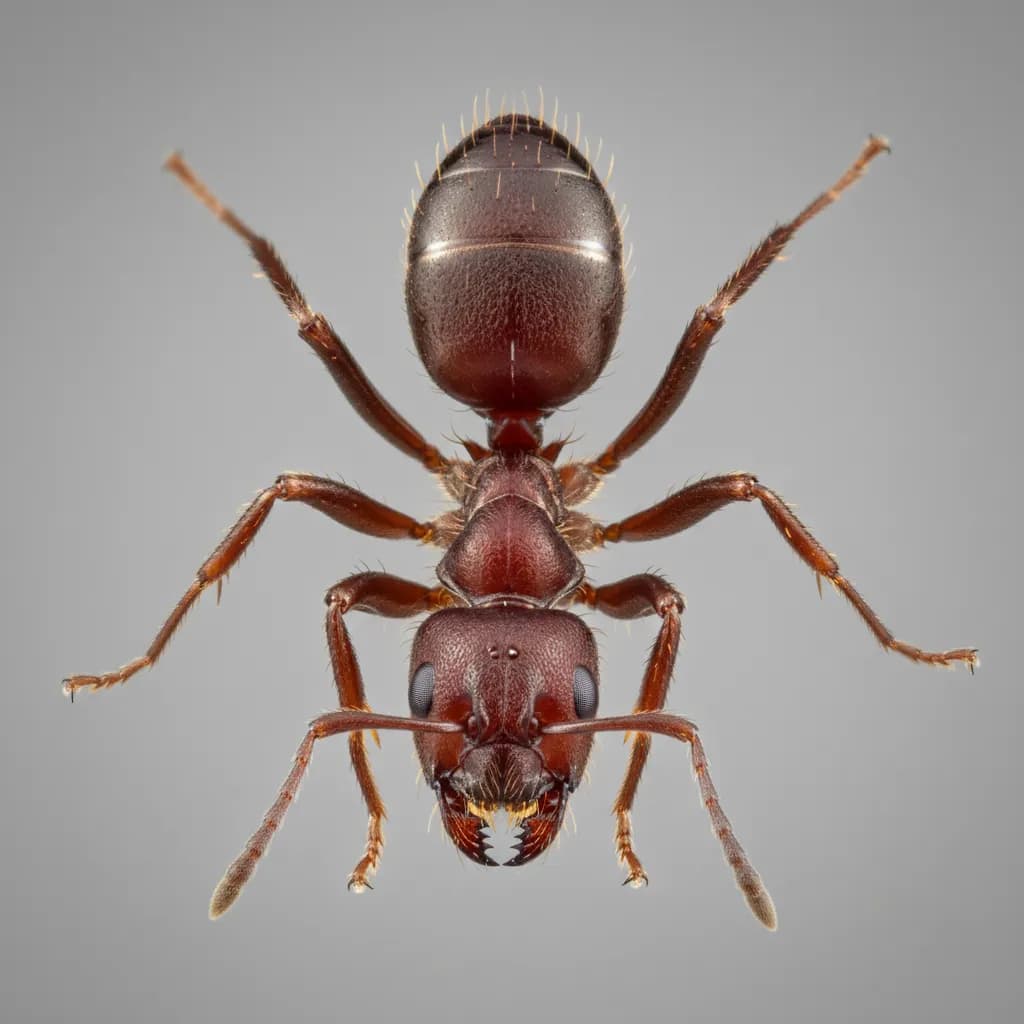
Acrobat Ant
Crematogaster spp.
Also known as: Valentine Ant
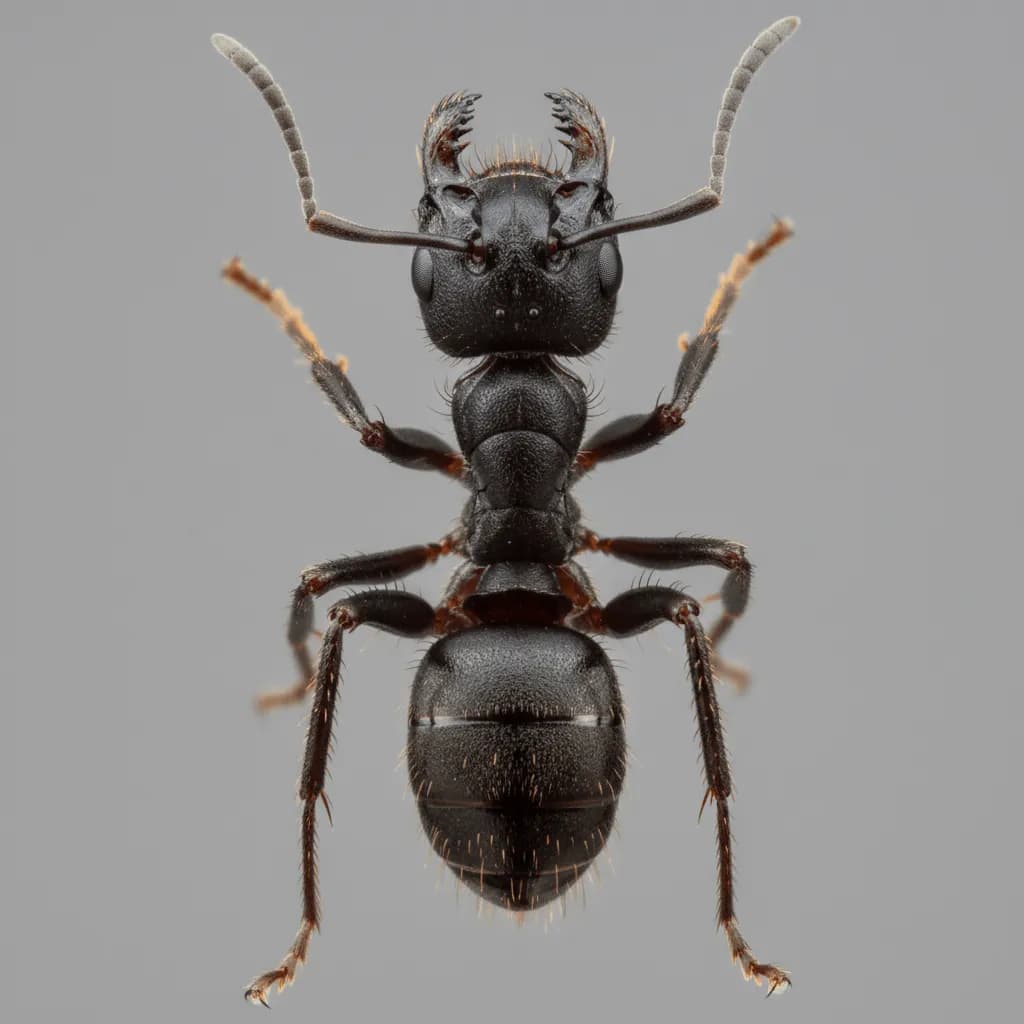
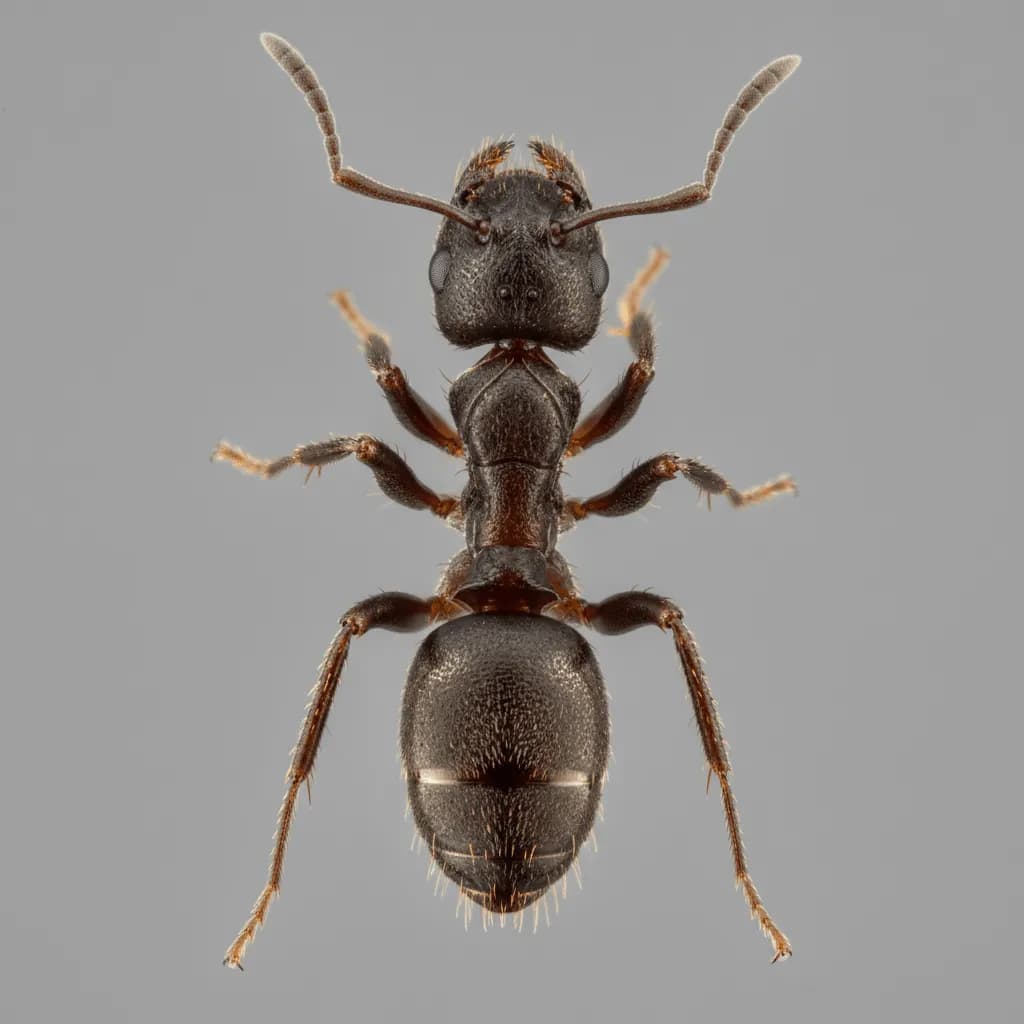
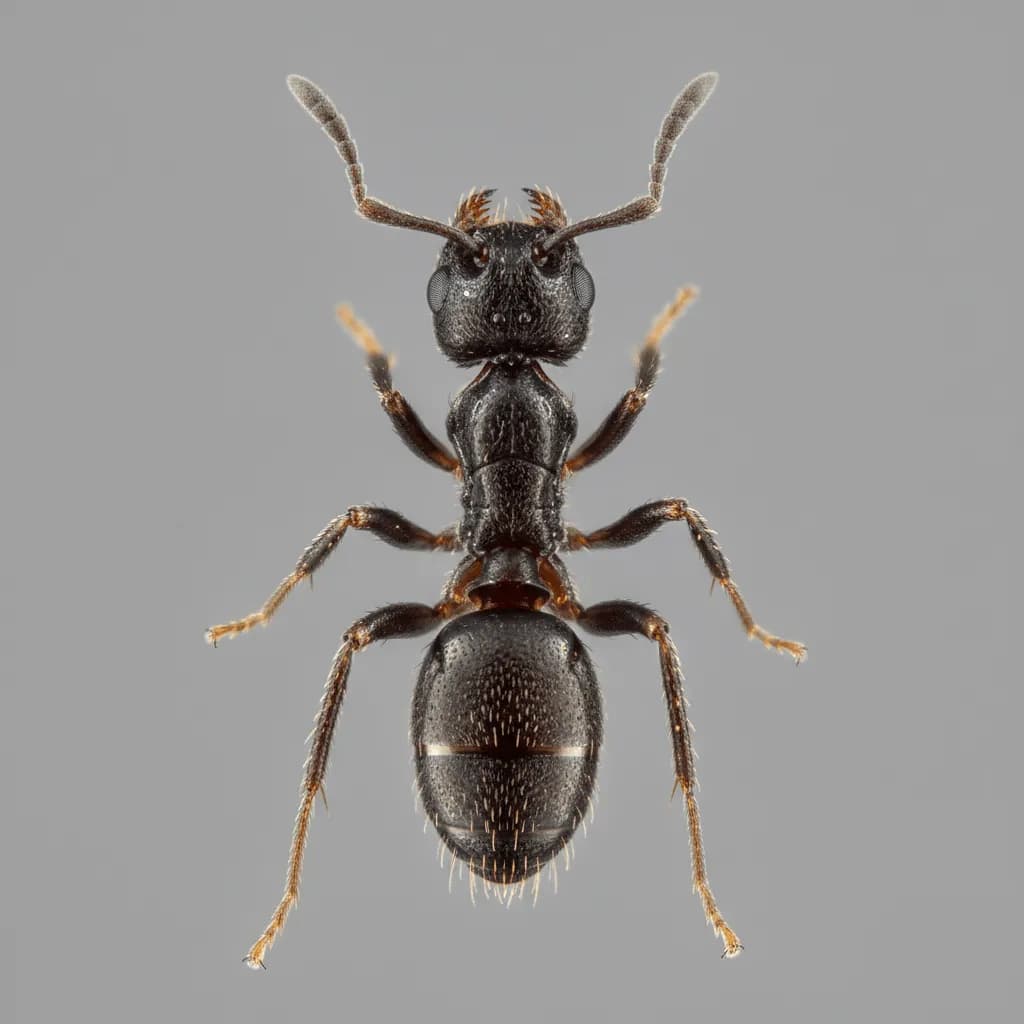
Acrobat Ants are cavity-nesting ants that commonly inhabit moisture-damaged wood and abandoned insect galleries in structures. Their signature defensive posture - raising the heart-shaped abdomen over the head - gives them their common name. They can deliver a mild sting and emit an unpleasant odor when threatened.
Identification
Size
2.5-3.2 mm
Color
Light brown to black, sometimes bicolored
Key Trait
Heart-shaped gaster (abdomen) that workers raise above the thorax when alarmed, as if performing acrobatics.
Behavior & Habitat
Workers trail along tree limbs, utility lines, and the edges of siding to reach indoor food sources. They nest in existing cavities rather than excavating like carpenter ants. When disturbed they raise their abdomen and may bite and sting.
Habitat: Nests in wood previously damaged by moisture, termites, or other wood-boring insects. Common sites include rotting window frames, door casings, foam insulation, and tree cavities. They also nest under bark and in dead branches.
Diet: Honeydew from aphids, sweets, proteins, and dead insects.
Signs of Infestation
- Small debris piles of insulation fragments and wood scraps pushed from nest openings
- Ants trailing along utility lines or tree branches that contact the roof
- Workers raising their abdomen when disturbed on window sills or counters
- Nests in old termite-damaged wood or foam insulation
Risks & Damage
While they do not excavate sound wood, their presence indicates pre-existing moisture or termite damage that needs repair.
Nesting in wall voids near wiring can strip insulation and increase short-circuit risk.
Prevention Tips
- 1.Replace all moisture-damaged and termite-damaged wood promptly
- 2.Trim tree branches away from the roofline and utility entry points
- 3.Seal cracks around windows, doors, and soffits
- 4.Repair foam insulation that shows signs of pest activity
- 5.Address underlying moisture issues such as leaking gutters
Why DIY Treatment Often Falls Short
Acrobat ant nests are hidden deep within wall voids and damaged wood. Surface sprays do not penetrate the cavity, and baits placed far from trails are ignored. Additionally, the underlying moisture or termite damage must be addressed or new colonies will reoccupy the same voids.
Professional Treatment
Technicians locate nests by inspecting moisture-damaged areas and following ant trails. Treatment includes dust or foam injection into wall cavities and a non-repellent perimeter application. Addressing the root cause of wood damage is a critical part of the long-term solution.
Frequently Asked Questions
Do acrobat ants damage wood like carpenter ants?
Can acrobat ants sting?
Why are acrobat ants entering my home?
Need Help With Acrobat ant?
If you're seeing signs of acrobat ant in or around your home, professional treatment is the fastest way to stop the problem. Lotus Pest Control offers free inspections to identify the issue and recommend the right solution.
At a Glance
- Category
- Ants
- Scientific Name
- Crematogaster spp.
- Size
- 2.5-3.2 mm
- Color
- Light brown to black, sometimes bicolored
- Key Trait
- Heart-shaped gaster (abdomen) that workers raise above the thorax when alarmed, as if performing acrobatics.
- Regions
- Southeast, Northeast, Midwest, Mid Atlantic
- Threat Level
- Low
- Risk Types
- structuralelectrical
- Seasonal Activity
- MarAprMayJunJulAugSepOctNovDecJanFebnonelowmoderatehighpeak