
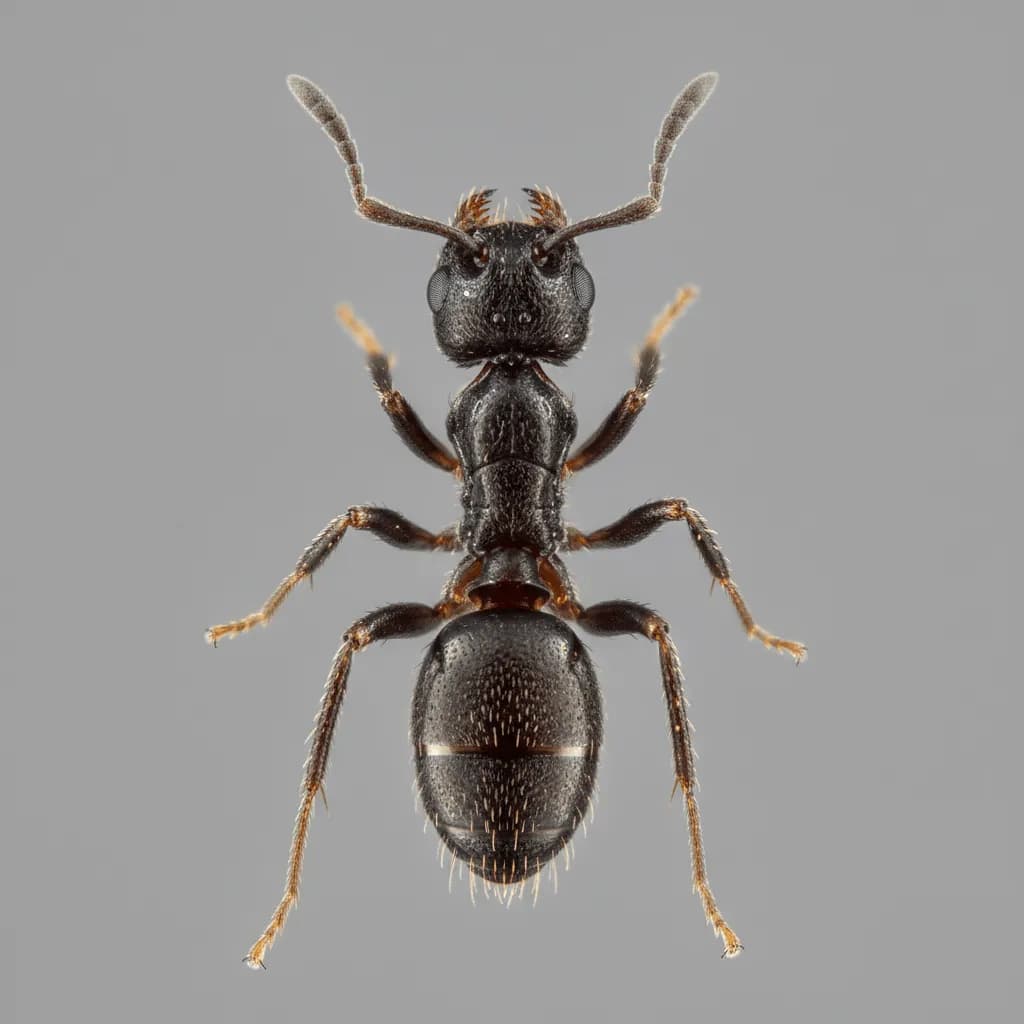
Little Black Ant
Monomorium minimum
The Little Black Ant is one of the most common and widespread ant species in the eastern United States. Tiny and jet black, it nests in soil, under debris, and inside wall voids. Colonies typically have multiple queens and can contain several thousand workers. While it is primarily a nuisance pest, its persistent indoor foraging makes it a frequent cause of service calls.
Identification
Size
1.5-2 mm
Color
Dark brown to jet black
Key Trait
Very small and uniformly dark; forms slow-moving, well-defined trails on countertops and sidewalks.
Behavior & Habitat
Workers form slow, well-organized trails to food sources and are attracted to both sweets and greasy foods. Colonies are moderately sized but multiple colonies may exist in a single property. They are most active in warmer months.
Habitat: Soil beneath stones, landscape timbers, and mulch; cracks in pavement; and wall voids indoors. They exploit tiny cracks to enter homes and are commonly found in kitchens and bathrooms.
Diet: Sweets, grease, meats, fruit, vegetables, and other insects.
Signs of Infestation
- Thin trails of tiny black ants on kitchen counters and bathroom fixtures
- Small mounds of fine soil along sidewalk cracks and foundation edges
- Ants clustering around pet food bowls or sugary spills
Risks & Damage
Persistent trailing indoors, especially in kitchens, is the primary complaint.
Workers forage across food preparation surfaces and contaminate stored items.
Prevention Tips
- 1.Keep counters, floors, and stovetops free of crumbs and spills
- 2.Store sweets and pet food in sealed containers
- 3.Caulk gaps around windows, baseboards, and pipe penetrations
- 4.Remove leaf litter and debris from the foundation perimeter
Why DIY Treatment Often Falls Short
Multiple-queen colonies recover quickly from partial treatments. Over-the-counter sprays eliminate visible workers but do not affect the queens or brood deep in wall voids or soil nests.
Professional Treatment
Technicians apply targeted gel baits along active trails and a non-repellent exterior perimeter treatment to intercept foragers before they enter the home. Follow-up monitoring ensures all colony satellites are eliminated.
Related Pests
Frequently Asked Questions
Are little black ants harmful?
How do I tell them apart from pavement ants?
Why do little black ants keep coming back?
Need Help With Little black ant?
If you're seeing signs of little black ant in or around your home, professional treatment is the fastest way to stop the problem. Lotus Pest Control offers free inspections to identify the issue and recommend the right solution.
At a Glance
- Category
- Ants
- Scientific Name
- Monomorium minimum
- Size
- 1.5-2 mm
- Color
- Dark brown to jet black
- Key Trait
- Very small and uniformly dark; forms slow-moving, well-defined trails on countertops and sidewalks.
- Regions
- Northeast, Midwest, Southeast, Mid Atlantic
- Threat Level
- Very Low
- Risk Types
- nuisancefood
- Seasonal Activity
- MarAprMayJunJulAugSepOctNovDecJanFebnonelowmoderatehighpeak