
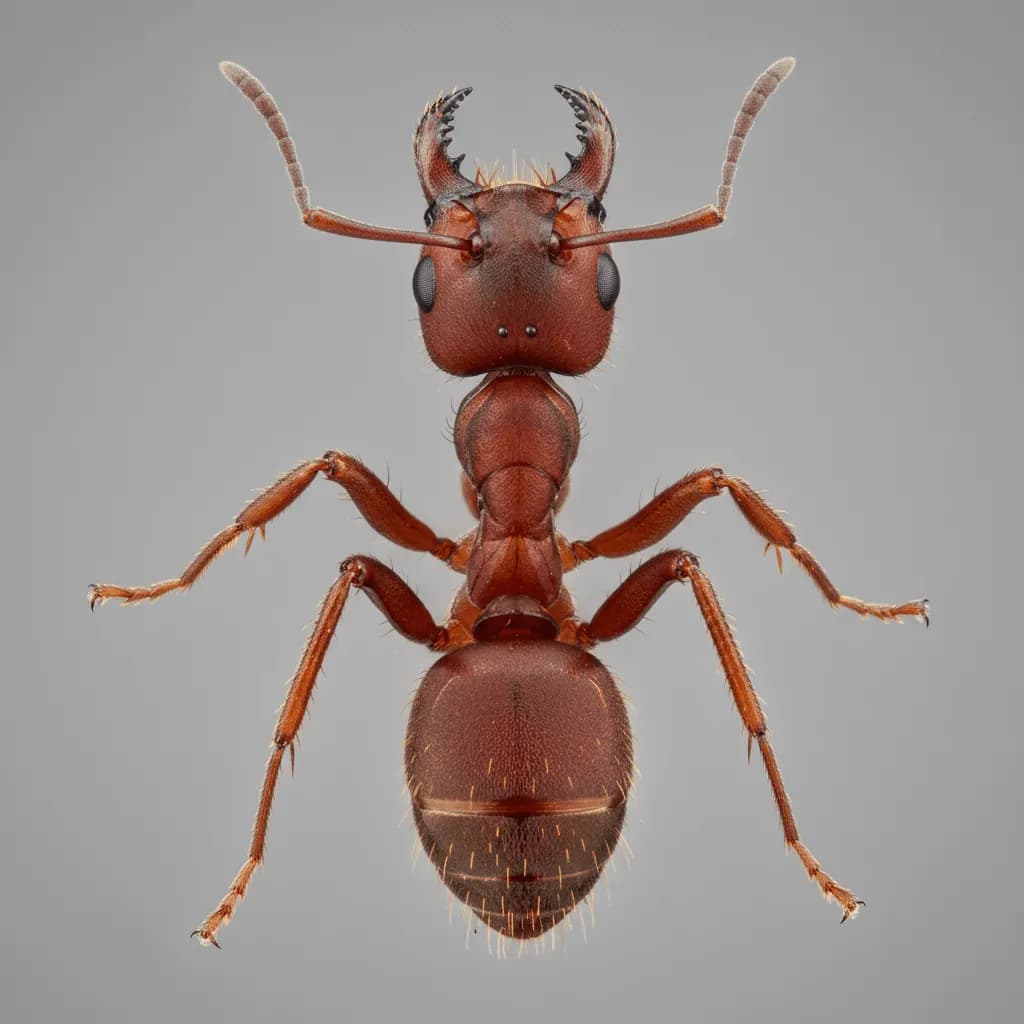
Red Carpenter Ant
Camponotus chromaiodes
Also known as: Red-Black Carpenter Ant
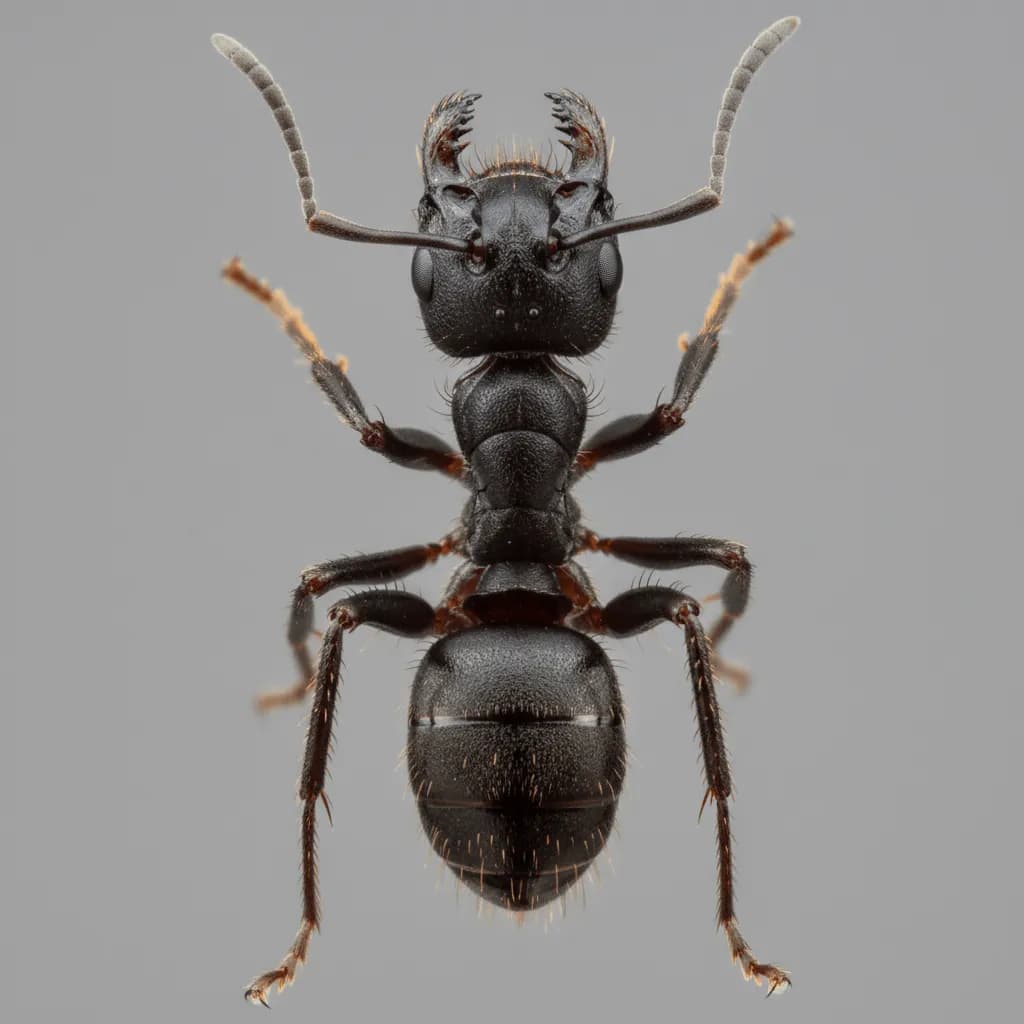
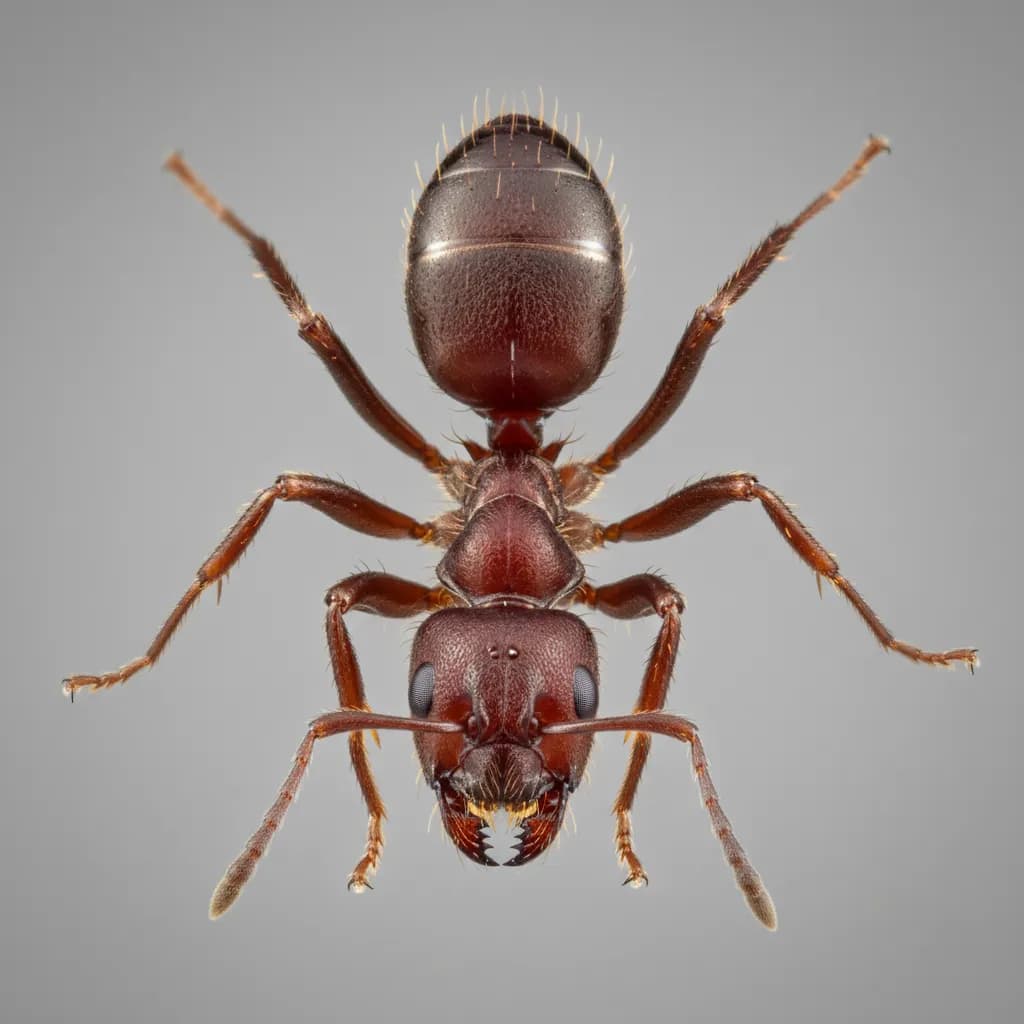
The Red Carpenter Ant shares the wood-excavating habits of its black cousin but favors hardwood forests across the eastern United States. Colonies mature slowly, reaching several thousand workers over five or more years. It often invades structures from nearby woodland nests, targeting water-softened lumber.
Identification
Size
6-13 mm
Color
Dark red to reddish-brown thorax with a black abdomen
Key Trait
Bicolored body with a distinctly red thorax and black gaster, otherwise shaped like the black species.
Behavior & Habitat
Workers forage along well-established scent trails at dusk and dawn. They tend aphid colonies on nearby trees and collect honeydew as a primary carbohydrate source. Swarming flights occur in late spring to early summer.
Habitat: Nests in dead portions of living trees, fallen logs, and structural lumber with moisture damage. Indoor satellite nests form in wall voids, attic rafters, and foam insulation near plumbing leaks.
Diet: Honeydew, live and dead insects, sweets, and protein-rich food scraps.
Signs of Infestation
- Piles of fibrous frass beneath sill plates or around door frames
- Red-and-black ants trailing along exterior walls at twilight
- Winged swarmers found near windows in late spring
- Hollow-sounding wood when tapped near suspected nest sites
Risks & Damage
Excavation of load-bearing wood can weaken the structural frame of a building over time.
Persistent foraging inside the home disrupts daily living and causes homeowner anxiety.
Prevention Tips
- 1.Fix roof leaks and improve attic ventilation to keep wood dry
- 2.Replace rotting fascia boards, deck posts, and window sills
- 3.Keep a vegetation-free gravel border along the foundation
- 4.Store firewood on metal racks at least 20 feet from the structure
- 5.Seal gaps around pipes and wiring with weather-resistant caulk
Why DIY Treatment Often Falls Short
Retail ant baits are often ignored by carpenter ants because the formulation does not match their dietary preferences at the time. Sprays repel workers without eliminating the queen, causing colonies to split and relocate rather than die.
Professional Treatment
Professionals use moisture meters and thermal imaging to locate hidden nests. Treatment includes direct injection of non-repellent liquid or dust into wall voids and a perimeter liquid barrier. Ongoing monitoring stations verify the colony has been fully eliminated.
Frequently Asked Questions
Are red carpenter ants more dangerous than black ones?
Why do I see carpenter ants in winter?
Can I just remove the damaged wood to solve the problem?
Need Help With Red carpenter ant?
If you're seeing signs of red carpenter ant in or around your home, professional treatment is the fastest way to stop the problem. Lotus Pest Control offers free inspections to identify the issue and recommend the right solution.
At a Glance
- Category
- Ants
- Scientific Name
- Camponotus chromaiodes
- Size
- 6-13 mm
- Color
- Dark red to reddish-brown thorax with a black abdomen
- Key Trait
- Bicolored body with a distinctly red thorax and black gaster, otherwise shaped like the black species.
- Regions
- Southeast, Northeast, Midwest
- Threat Level
- High
- Risk Types
- structuralnuisance
- Seasonal Activity
- MarAprMayJunJulAugSepOctNovDecJanFebnonelowmoderatehighpeak