
Cicada Killers
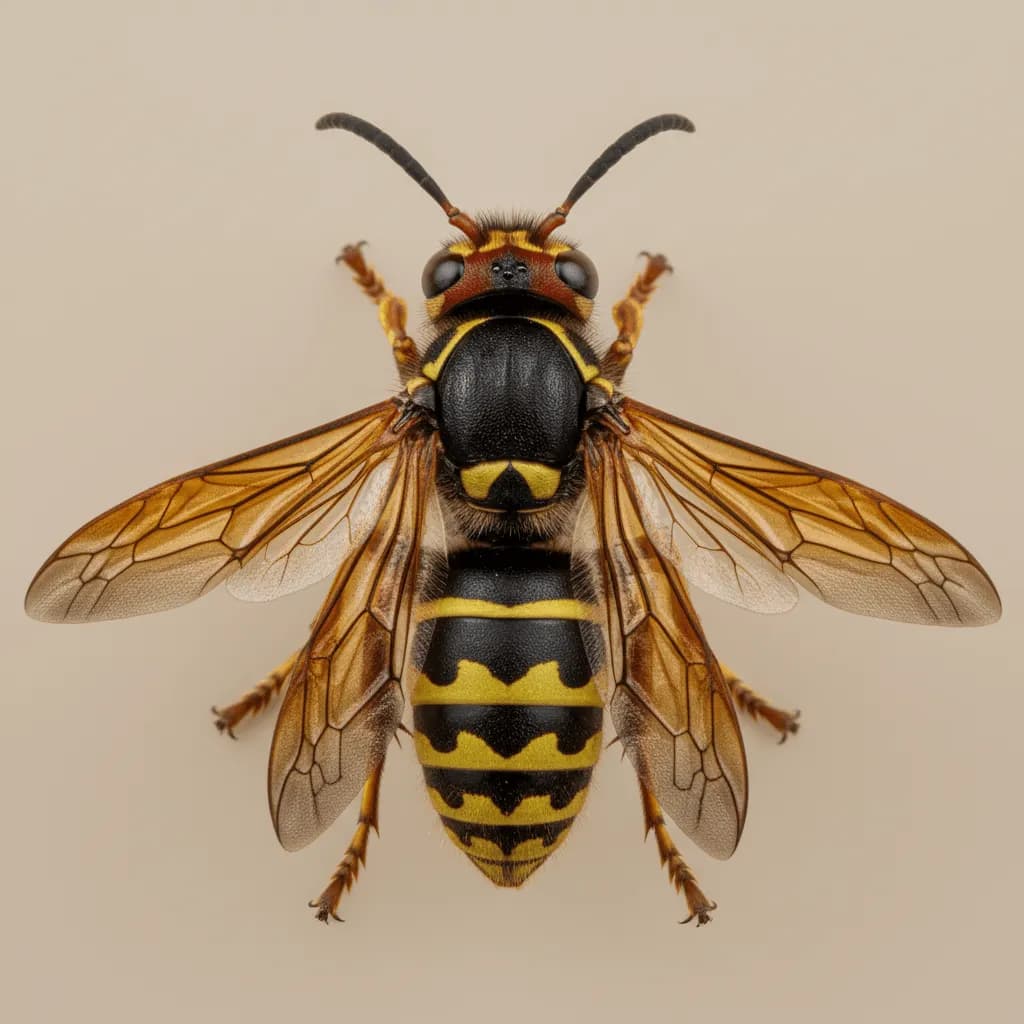
Cicada killer wasps are among the largest wasps in North America, measuring up to two inches in length with bold yellow and black markings. Despite their intimidating size, they are solitary, ground-nesting wasps that are remarkably non-aggressive toward humans. Females dig burrows in well-drained soil in lawns, gardens, and along sidewalks, creating u-shaped mounds of excavated soil at the entrance. They provision their burrows with paralyzed cicadas for their larvae to feed on. Male cicada killers are territorial and hover aggressively near nesting areas, but they are stingless.
Species in This Group (1)
Key Behaviors
Female cicada killers hunt cicadas, paralyze them with a sting, and carry or drag them back to their burrows. Each cell in the burrow receives one to three cicadas and a single egg. Males patrol nesting aggregation areas aggressively, hovering and dive-bombing perceived threats. Burrow excavation displaces large amounts of soil, creating mounds and damaging lawns. Nesting aggregations can include dozens to hundreds of burrows in a small area.
Risks & Concerns
Cicada killers are primarily a nuisance due to their intimidating size, territorial male behavior, and lawn damage from burrow excavation. Female stings are possible but rare and generally less painful than a yellowjacket sting. Extensive burrowing in lawns, gardens, and landscape beds undermines turf, flower beds, and edges of hardscaping. Their size generates disproportionate alarm relative to their actual danger.
Need Help With Cicada killers?
If you're seeing signs of cicada killers in or around your home, professional treatment is the fastest way to stop the problem. Lotus Pest Control offers free inspections to identify the issue and recommend the right solution.