
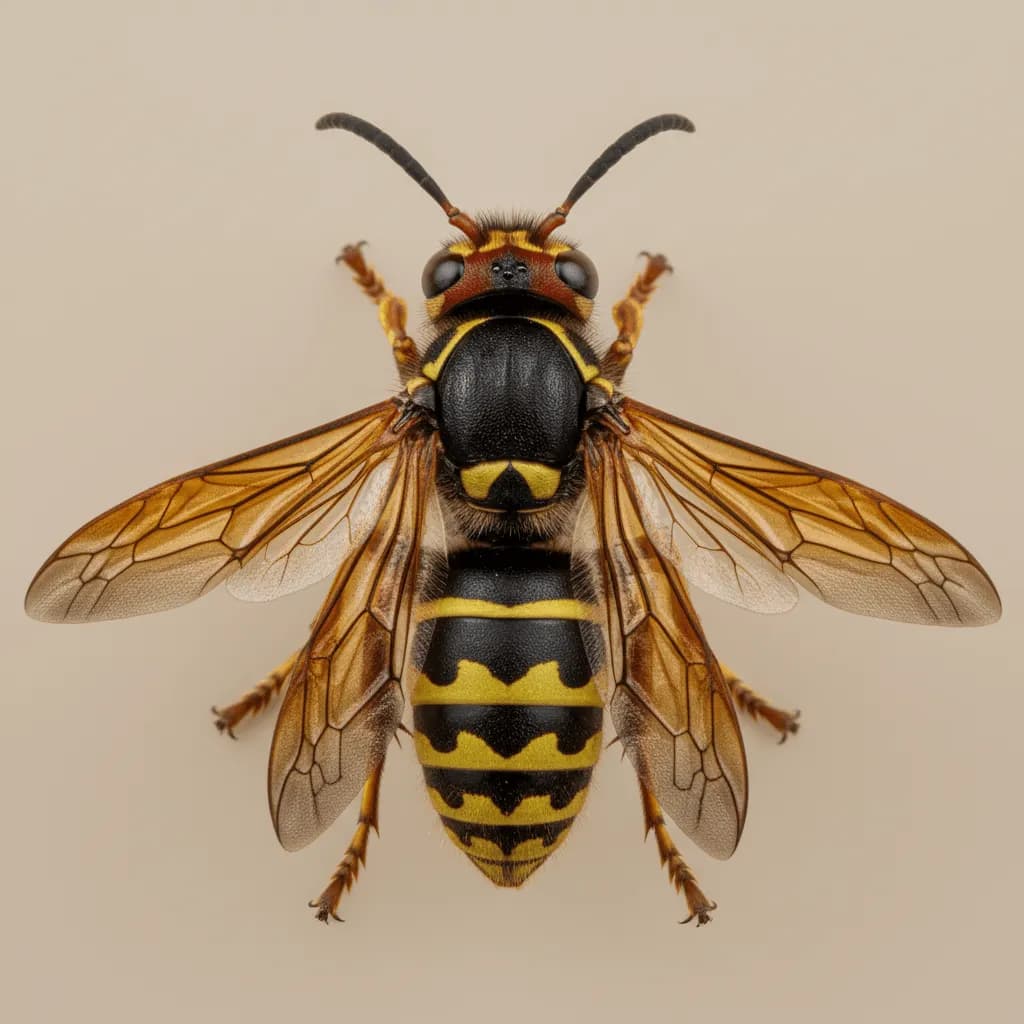
Eastern Cicada Killer
Sphecius speciosus
Also known as: Cicada Hawk
The Eastern Cicada Killer is one of the largest wasps in North America, reaching nearly two inches long. Despite its intimidating size, it is a solitary, docile species. Females dig burrows in sandy soil and provision each chamber with paralyzed cicadas for their larvae. Males are territorial and hover near people but cannot sting.
Identification
Size
30-50 mm (one of the largest wasps in the US)
Color
Black with yellow abdominal bands and reddish-brown wings
Key Trait
Very large size; burrows in sandy soil; carries paralyzed cicadas back to the nest in flight.
Behavior & Habitat
Females dig deep burrows in well-drained soil and fly out to hunt cicadas, which they paralyze and carry back in flight. Males hover and dive at anything entering their territory but cannot sting. Completely solitary - no colony to defend.
Habitat: Sandy, well-drained soil in lawns, gardens, and along sidewalks. Often creates conspicuous soil mounds at burrow entrances.
Diet: Adults feed on nectar and plant sap; larvae eat paralyzed cicadas.
Signs of Infestation
- Very large wasps digging in sandy soil
- Soil mounds along sidewalks and in lawn areas
- Hovering, territorial male wasps
Risks & Damage
Burrowing activity can undermine sidewalks and damage turf in concentrated nesting areas.
Prevention Tips
- 1.Maintain dense turf to discourage burrowing
- 2.Water lawns to firm soil that cicada killers prefer loose and dry
- 3.Mulch garden beds heavily to discourage nesting
Why DIY Treatment Often Falls Short
Cicada killers are solitary and harmless. Spraying individual burrows is unnecessary and kills a beneficial insect that controls cicada populations.
Professional Treatment
Treatment is rarely necessary. If burrowing is damaging specific areas, professionals can dust individual burrows and modify the soil conditions to discourage re-nesting. Habitat modification is preferred over chemical treatment.
Frequently Asked Questions
Are cicada killers dangerous?
Why are they digging up my lawn?
Do they eat cicadas?
Need Help With Eastern cicada killer?
If you're seeing signs of eastern cicada killer in or around your home, professional treatment is the fastest way to stop the problem. Lotus Pest Control offers free inspections to identify the issue and recommend the right solution.
At a Glance
- Category
- Stinging Insects
- Scientific Name
- Sphecius speciosus
- Size
- 30-50 mm (one of the largest wasps in the US)
- Color
- Black with yellow abdominal bands and reddish-brown wings
- Key Trait
- Very large size; burrows in sandy soil; carries paralyzed cicadas back to the nest in flight.
- Regions
- Northeast, Southeast, Midwest, South Central
- Threat Level
- Very Low
- Risk Types
- lawnnuisance
- Seasonal Activity
- MarAprMayJunJulAugSepOctNovDecJanFebnonelowmoderatehighpeak