
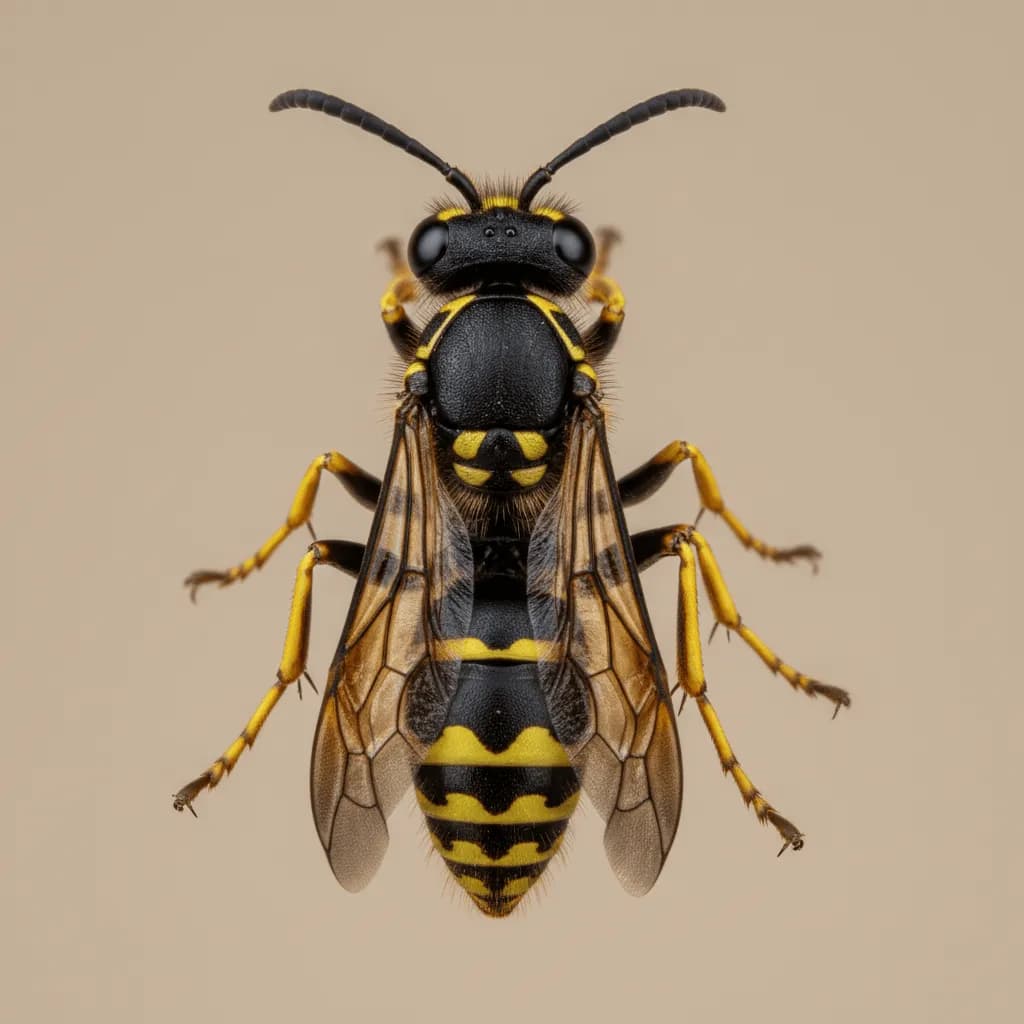
Black and Yellow Mud Dauber
Sceliphron caementarium
Also known as: Mud Wasp
The Black and Yellow Mud Dauber is a solitary wasp that builds distinctive cylindrical mud nests on walls, ceilings, and under eaves. It is not aggressive and rarely stings, even when handled. Each mud tube is provisioned with paralyzed spiders as food for the developing larva.
Identification
Size
25-30 mm
Color
Black with yellow markings and an extremely narrow, thread-like waist
Key Trait
Very thin, thread-like waist (petiole); builds cylindrical mud tubes on walls and under eaves.
Behavior & Habitat
Solitary; does not defend the nest aggressively. Females build individual mud tubes, stock each with paralyzed spiders, and lay a single egg inside. Non-aggressive and considered beneficial.
Habitat: Mud nests on exterior walls, porch ceilings, garage rafters, and under eaves. Occasionally inside attics and barns. Found across the entire United States.
Diet: Adults feed on nectar; larvae feed on paralyzed spiders provisioned by the female.
Signs of Infestation
- Cylindrical mud tubes on walls and under eaves
- Black-and-yellow wasps carrying mud to nest sites
- Old nests broken open to reveal spider remains and cocoons
Risks & Damage
Mud nests on walls and structures are unsightly but the wasp is harmless and beneficial.
Prevention Tips
- 1.Scrape off mud nests with a paint scraper
- 2.Paint or seal surfaces to discourage nest building
- 3.Screen garage and attic openings
Why DIY Treatment Often Falls Short
Treatment is unnecessary since mud daubers are harmless and beneficial. Simple nest removal is all that is needed.
Professional Treatment
Professional treatment is rarely warranted. Nest removal and preventive applications to surfaces where nesting is unwanted are sufficient.
Related Pests
Frequently Asked Questions
Do mud daubers sting?
Are the mud tubes harmful to my house?
What is inside the mud tubes?
Need Help With Black and yellow mud dauber?
If you're seeing signs of black and yellow mud dauber in or around your home, professional treatment is the fastest way to stop the problem. Lotus Pest Control offers free inspections to identify the issue and recommend the right solution.
At a Glance
- Category
- Stinging Insects
- Scientific Name
- Sceliphron caementarium
- Size
- 25-30 mm
- Color
- Black with yellow markings and an extremely narrow, thread-like waist
- Key Trait
- Very thin, thread-like waist (petiole); builds cylindrical mud tubes on walls and under eaves.
- Regions
- Northeast, Southeast, Midwest, Southwest
- Threat Level
- Very Low
- Risk Types
- nuisance
- Seasonal Activity
- MarAprMayJunJulAugSepOctNovDecJanFebnonelowmoderatehighpeak