
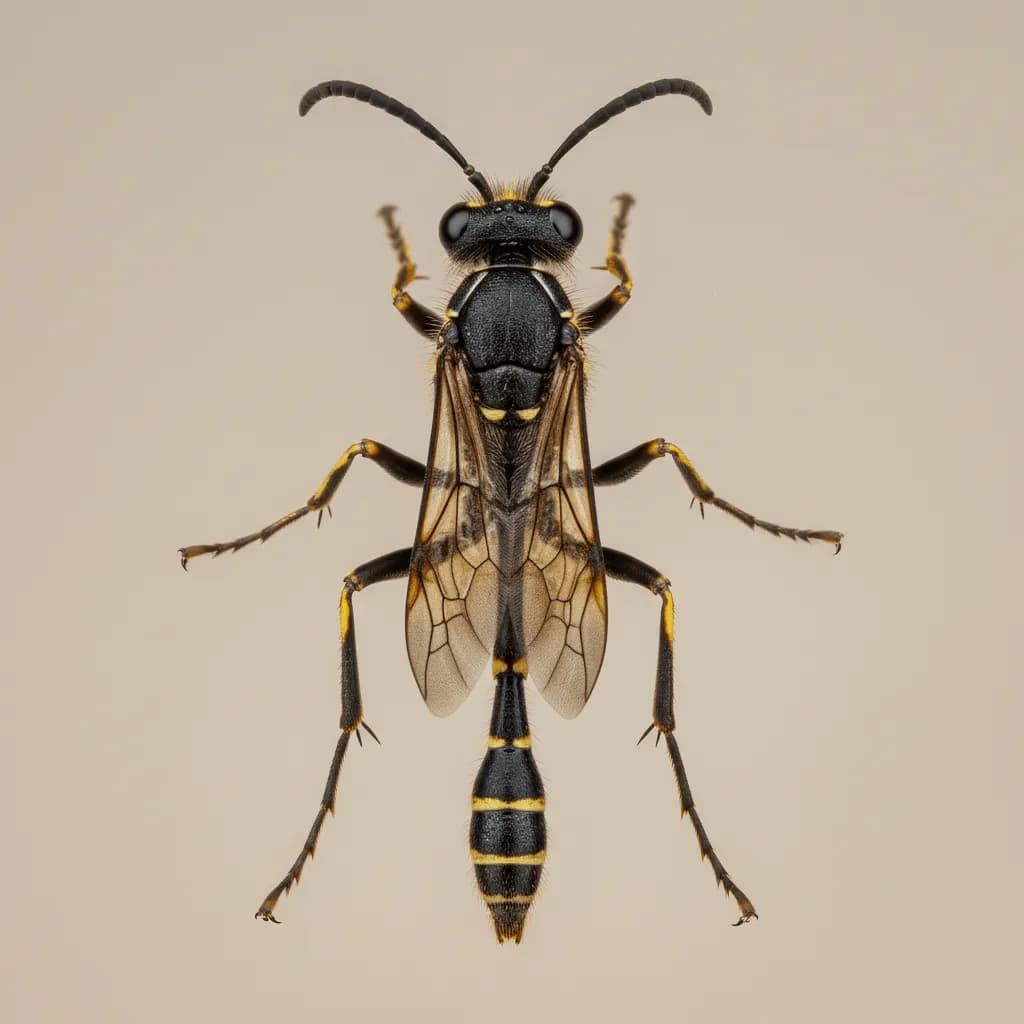
Organ Pipe Mud Dauber
Trypoxylon politum
The Organ Pipe Mud Dauber builds characteristic parallel rows of elongated mud tubes that resemble organ pipes. It is a solitary, non-aggressive wasp that provisions its nest tubes with paralyzed spiders. The male uniquely guards the nest while the female forages.
Identification
Size
15-20 mm
Color
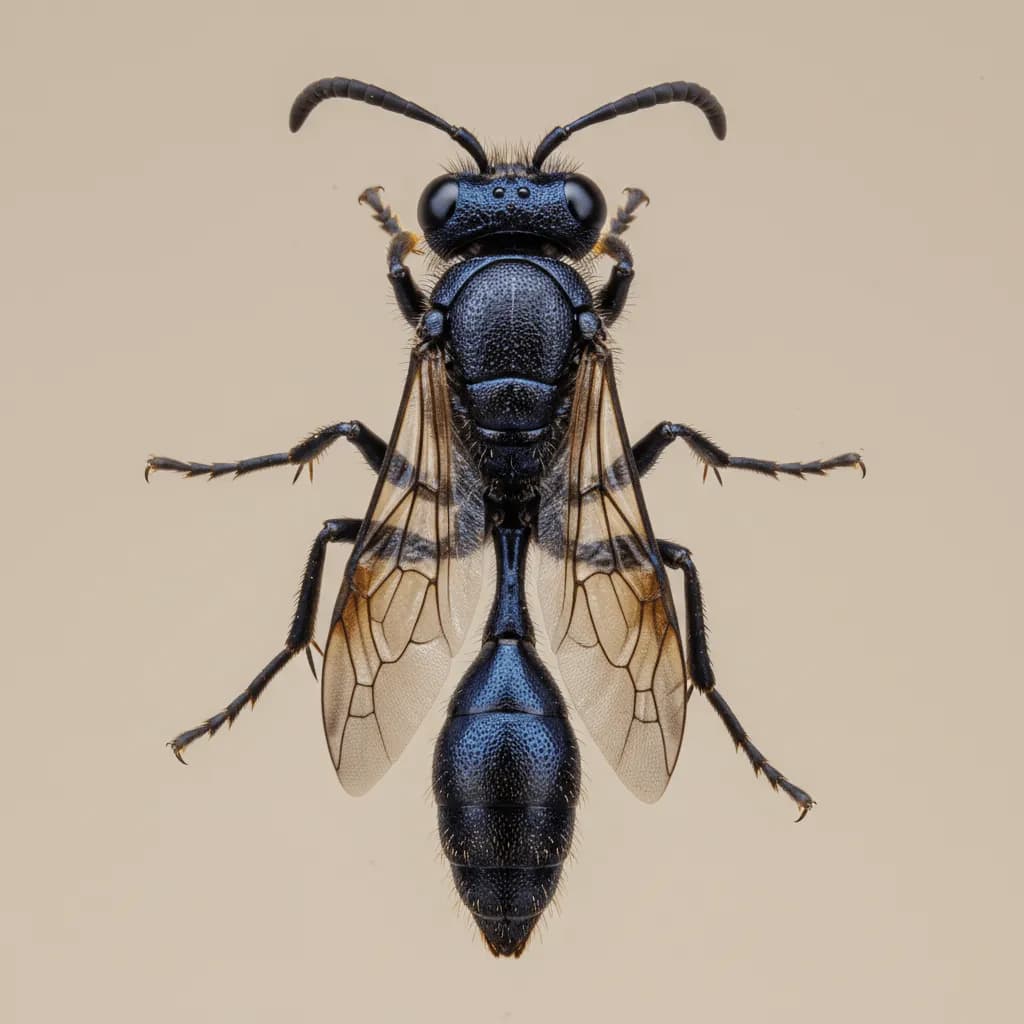
Solid black
Key Trait
Builds distinctive parallel rows of mud tubes resembling organ pipes on walls and ceilings.
Behavior & Habitat
Non-aggressive solitary nester. Males guard the nest entrance while females hunt spiders. Nests are built in sheltered locations and can accumulate into large mud formations over time.
Habitat: Protected walls, ceilings, and eaves of buildings, porches, and barns. Same general habitats as other mud daubers.
Diet: Adults feed on nectar; larvae consume paralyzed spiders.
Signs of Infestation
- Rows of parallel mud tubes on walls and ceilings
- Solid black wasps entering and exiting mud tubes
Risks & Damage
Mud accumulation on structures is unsightly but the wasp is harmless.
Prevention Tips
- 1.Scrape off unwanted nests
- 2.Paint or seal surfaces to discourage building
Why DIY Treatment Often Falls Short
Treatment is unnecessary. Physical nest removal is the only management needed.
Professional Treatment
Professional treatment is rarely needed. Simple nest removal and surface sealing are appropriate.
Frequently Asked Questions
Why are the mud tubes in rows?
Are organ pipe mud daubers aggressive?
Should I remove the nests?
Need Help With Organ pipe mud dauber?
If you're seeing signs of organ pipe mud dauber in or around your home, professional treatment is the fastest way to stop the problem. Lotus Pest Control offers free inspections to identify the issue and recommend the right solution.
At a Glance
- Category
- Stinging Insects
- Scientific Name
- Trypoxylon politum
- Size
- 15-20 mm
- Color
- Solid black
- Key Trait
- Builds distinctive parallel rows of mud tubes resembling organ pipes on walls and ceilings.
- Regions
- Southeast, South Central, Northeast, Midwest
- Threat Level
- Very Low
- Risk Types
- nuisance
- Seasonal Activity
- MarAprMayJunJulAugSepOctNovDecJanFebnonelowmoderatehighpeak