
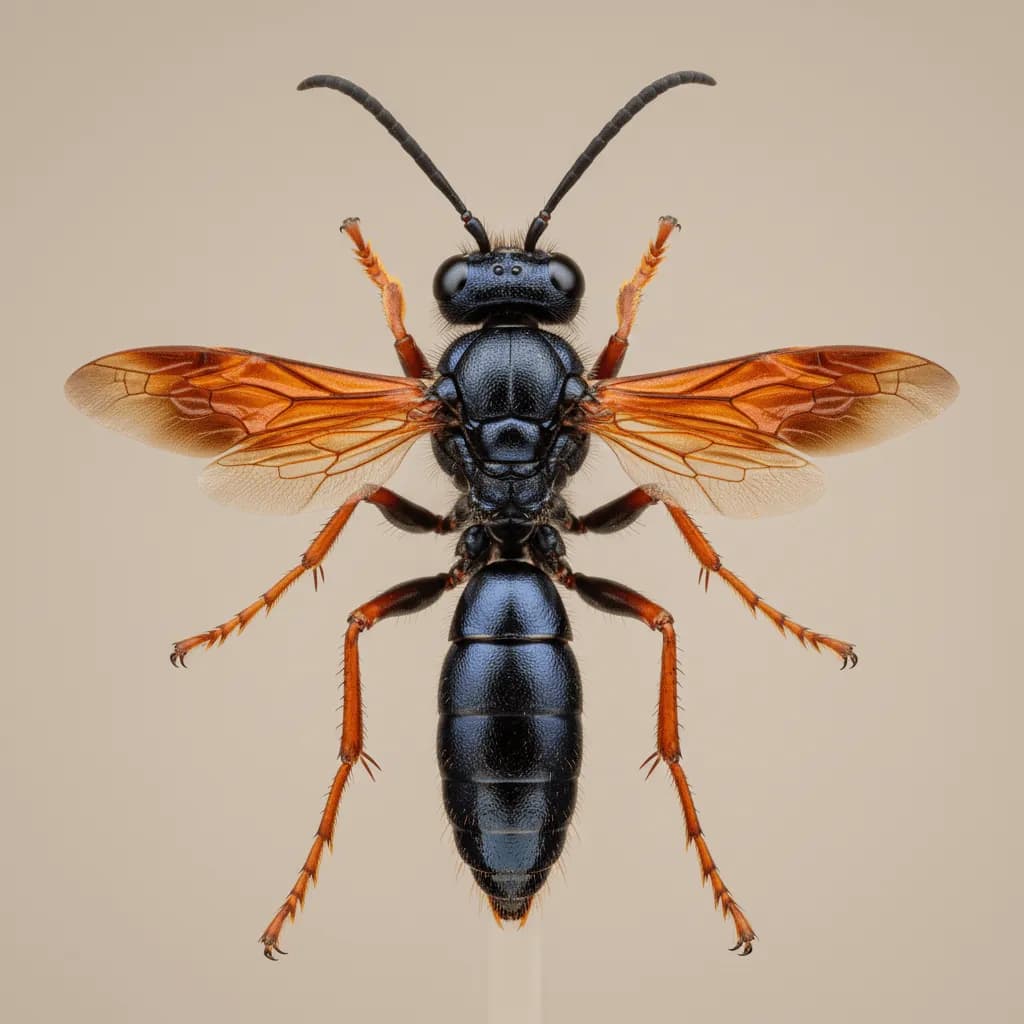
Tarantula Hawk
Pepsis grossa
Also known as: Tarantula Hawk Wasp
The Tarantula Hawk is one of the largest and most spectacular wasps in North America. It is famous for hunting tarantulas, which females paralyze and use to provision their nests. Its sting is rated among the most painful of any insect by the Schmidt Sting Pain Index, but it is not aggressive toward humans and stings are extremely rare. It is the state insect of New Mexico.
Identification
Size
30-50 mm
Color
Metallic blue-black body with vivid orange or rust-colored wings
Key Trait
One of the largest wasps in North America; metallic blue-black body with bright orange wings; delivers one of the most painful insect stings known; hunts tarantulas as larval food.
Behavior & Habitat
Solitary wasp. Females hunt tarantulas by engaging them in combat, paralyzing them with a powerful sting, and dragging them to a burrow where a single egg is laid on the spider. Males patrol hilltops and flower patches for mates. Generally docile toward humans.
Habitat: Desert and semi-arid habitats, scrublands, open grasslands, and desert gardens throughout the southwestern United States. Adults commonly visit flowers, particularly milkweed, for nectar.
Diet: Adults feed on flower nectar and fermented fruit. Larvae are ectoparasitoids that consume a single paralyzed tarantula provided by the mother.
Signs of Infestation
- Very large blue-black wasps with orange wings visiting flowers in desert and semi-arid landscapes
- Wasps seen flying low over the ground in areas where tarantulas are present
- Wasps dragging paralyzed tarantulas across the ground
Risks & Damage
Sting is extremely painful (rated 4 out of 4 on the Schmidt Pain Index) though not medically dangerous. Stings are very rare as the wasp is not aggressive toward humans.
Prevention Tips
- 1.Wear closed-toe shoes when walking in desert landscapes where these wasps are active
- 2.Avoid swatting at or attempting to handle these wasps
- 3.Appreciate them from a distance as they are beneficial and not aggressive
Why DIY Treatment Often Falls Short
Tarantula hawks are solitary, beneficial, and non-aggressive. There is typically no pest problem to solve. Attempting to kill them with pesticides is both unnecessary and risks receiving an extremely painful sting.
Professional Treatment
Professional treatment is almost never needed for tarantula hawks. In the rare case where one nests in a high-traffic area, a professional can safely relocate or treat the specific nesting site.
Related Pests
Frequently Asked Questions
How painful is the sting?
Are they dangerous?
Why do they hunt tarantulas?
Need Help With Tarantula hawk?
If you're seeing signs of tarantula hawk in or around your home, professional treatment is the fastest way to stop the problem. Lotus Pest Control offers free inspections to identify the issue and recommend the right solution.
At a Glance
- Category
- Stinging Insects
- Scientific Name
- Pepsis grossa
- Size
- 30-50 mm
- Color
- Metallic blue-black body with vivid orange or rust-colored wings
- Key Trait
- One of the largest wasps in North America; metallic blue-black body with bright orange wings; delivers one of the most painful insect stings known; hunts tarantulas as larval food.
- Regions
- Southwest, Mountain West, West Coast
- Threat Level
- Low
- Risk Types
- health
- Seasonal Activity
- MarAprMayJunJulAugSepOctNovDecJanFebnonelowmoderatehighpeak