
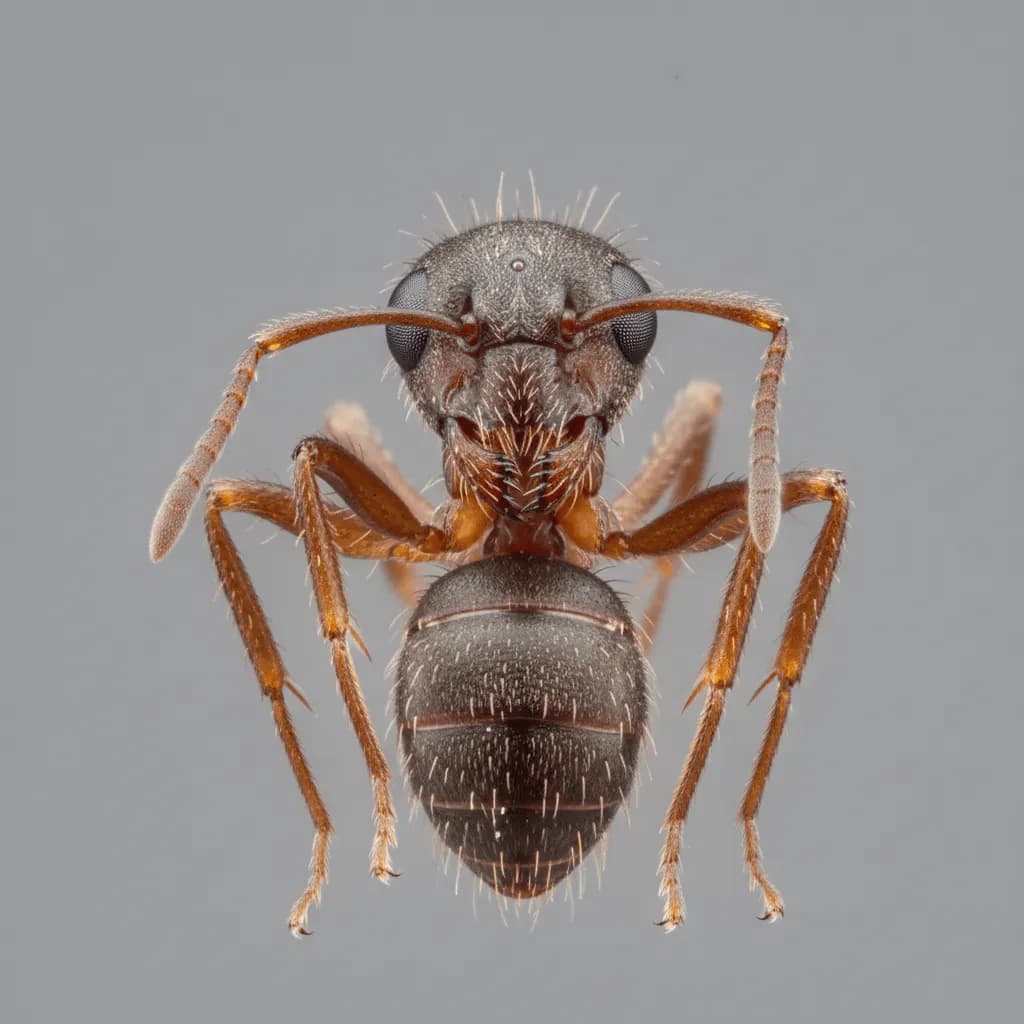
Rover Ant
Brachymyrmex patagonicus
Also known as: Dark Rover Ant
The Rover Ant is one of the smallest pest ants in North America. Originally from Argentina, it has spread rapidly across the southern United States since the 1970s. Its tiny size allows it to exploit entry points that exclude larger ant species, and colonies can nest in remarkably small cavities.
Identification
Size
1.5-2 mm
Color
Dark brown to pale yellowish-brown
Key Trait
Extremely small size; nine-segmented antennae without a club; erratic, rapid movement pattern when foraging.
Behavior & Habitat
Forages erratically and does not follow well-defined trails. Colonies are polygynous with multiple queens and can reproduce by budding. Workers are strongly attracted to sweet liquids and are commonly found near moisture sources.
Habitat: Nests outdoors in soil, mulch, leaf litter, potted plants, and under objects on the ground. Indoors, nests in wall voids, behind outlets, under carpet edges, and in bathroom and kitchen areas near moisture.
Diet: Primarily honeydew from aphids and other sap-sucking insects. Also feeds on sugary liquids, nectar, and occasionally dead insects.
Signs of Infestation
- Tiny dark ants appearing around bathroom and kitchen sinks and faucets
- Small ants congregating near exterior lights at night during warm months
- Ants emerging from electrical outlets or light switch plates
Risks & Damage
Their extremely small size allows them to invade homes through the tiniest gaps, and colonies build up rapidly indoors near moisture.
Prevention Tips
- 1.Fix leaking pipes and faucets to eliminate moisture sources
- 2.Reduce mulch depth near the foundation to less than two inches
- 3.Seal around utility penetrations and weep holes with fine mesh
Why DIY Treatment Often Falls Short
Their tiny size makes it nearly impossible to seal all entry points, and over-the-counter baits formulated for larger ant species are often ignored by rover ants.
Professional Treatment
Professionals apply non-repellent perimeter treatments and use liquid sugar-based baits specifically effective on small honeydew-feeding ants. Moisture correction and habitat modification around the structure are also addressed.
Related Pests
Frequently Asked Questions
Why are these ants so small?
Are rover ants harmful?
Why do they cluster around lights?
Need Help With Rover ant?
If you're seeing signs of rover ant in or around your home, professional treatment is the fastest way to stop the problem. Lotus Pest Control offers free inspections to identify the issue and recommend the right solution.
At a Glance
- Category
- Ants
- Scientific Name
- Brachymyrmex patagonicus
- Size
- 1.5-2 mm
- Color
- Dark brown to pale yellowish-brown
- Key Trait
- Extremely small size; nine-segmented antennae without a club; erratic, rapid movement pattern when foraging.
- Regions
- Southeast, Gulf Coast, Southwest, Mid Atlantic
- Threat Level
- Very Low
- Risk Types
- nuisance
- Seasonal Activity
- MarAprMayJunJulAugSepOctNovDecJanFebnonelowmoderatehighpeak